Exploring the Earth and Sky of the West

Latest

The Golden Gate (Bridge)

Golden_Gate_Fog_1

Bridge_Vertical1

San Francisco.

I’ve always thought that it would be one of the few large cities where I could actually stand to live. Never mind the fact that my current and projected foreseeable future income levels will not permit me to live in any of the parts of the city to which the above statement applies. Or the fact that the next major rupture of the San Andreas or Hayward faults is going to make things look…shall we say…”less attractive”. Ignore those minor details for now. All I mean to say is that it seems like a nice place to live, which is a thought that perplexes me, given that in general, the idea of living in the same metropolitan area as several million other human beings makes me want to look up job listings for “hermit” and run away into the hills screaming. San Francisco though seems to have a charm and a combination of positive attributes though that most other cities do not.

For starters it is located in one of the most scenic environs of any city in the country. Rolling grassy hills, redwood groves, long stretches of sandy and rocky beaches, rugged coastline, appealing architecture, fortified islands, all within an hours drive of the city center. Hard to match that. Seattle comes close (the view of Mt. Rainier on a clear day? ahhhhhhh) but it gets marked down because it gets, on average, 14 more inches of rain each year. Salt Lake City has gorgeous mountains but it is covered in snow for part of the year and tends to get smothered by thick layers of pollution that get rammed up against the western flanks of the Wasatch. And all cities east of the Rockies are automatically disqualified because they’re east of the Rockies. To some Phoenix might seem sort of scenic, what with the 50 foot high cacti and mountains and all, until you realize that in reality it is a sizzling hell hole with literally no sustainable water source and is totally unfit for large quantities of human habitation. At least San Francisco has Yosemite just a few hundred miles away that it can poach water from. Also, it sort of seems like everything in San Francisco is painted either white or a nice bright pastel color. Painting everything white does wonders for a city; it makes it feel larger, cleaner, less claustrophobic, and lends a nice airy, ethereal quality to everything.

San Francisco also has what in my opinion is one of the few man-made creations that actually contributes to the beauty of a place rather than besmirching it: the Golden Gate Bridge. In case you’re not familiar with the bridge, it is one of the few things in San Francisco not painted white or pastel, but rather a bright burnt orange (actually “international orange” for those of you who want to go out to your local Home Depot and pick up a gallon). The “Golden Gate” for which the bridge is named (and not vice-versa) is a narrow strait that connects the Pacific Ocean to San Francisco Bay. In a somewhat eery coincidence, U.S. Army Captain and explorer extraordinaire John C. Fremont bestowed the now famous name upon the strait in 1846, two years BEFORE the strait was used as the point of arrival for millions of millionaire wannabees seeking riches in the newly discovered gold fields east of Sacramento. Fremont had given it the name Golden Gate because he recognized the area’s potential importance in opening up trade with the Orient, completely unaware (obviously) that the discovery of real gold in California is what would cause the population of the city just to the south of the strait, San Francisco, to multiply by 18,000% in just six years, and make the Golden Gate known worldwide. In the 1920s, fed up with the 20 minute ferry ride across the strait, some folks decided it would be a bright idea to build a bridge across it, apparently thinking that sitting in traffic for more than 20 minutes waiting to cross the strait while constantly having to yell at the driver in front of you to stop futzing with their iPhone and drive would somehow be more pleasant than the leisurely ferry crossing.
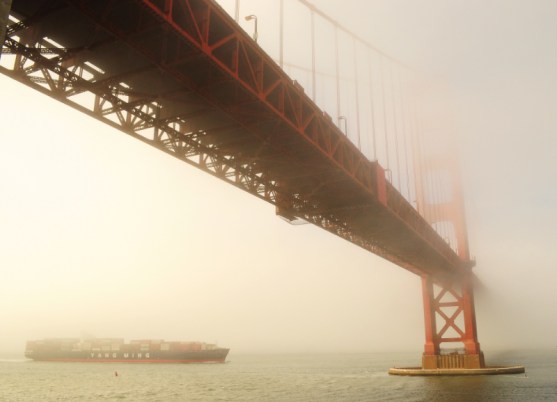
Ship_Golden_Gate

Yang Ming container ship is greeted by the Golden Gate Bridge

An unique perspective on the 1.7 mile-long suspension bridge can be obtained by going beneath it. If you don’t have a boat, fear not, in another stunning coincidence, the U.S. Army conveniently constructed a masonry fortification, Fort Point, on the point right beneath the south end of the bridge in 1853*:

Under the Bridge: the remains of Fort Point, built in 1853 to secure San Francisco Bay from enemy attack.

Under the Bridge: the remains of Fort Point, built in 1853 to secure San Francisco Bay from enemy attack.

*Actually the Army did no such thing. You know, seeming as how the technology to build a massive metal suspension bridge across a deep, windy, 1.3 kilometer wide strait didn’t exactly exist in 1853. The engineers in charge of building the bridge eighty-odd years later did however build the bridge directly above the fort (they wanted to remove the Fort entirely but cooler heads prevailed), and so the Fort, being the rather inanimate object that it is, remains there to this day, providing a nice spot to stand and look out over the bay while holding on to your hat and listening to rush-hour traffic crawl past on the bridge high over your head.

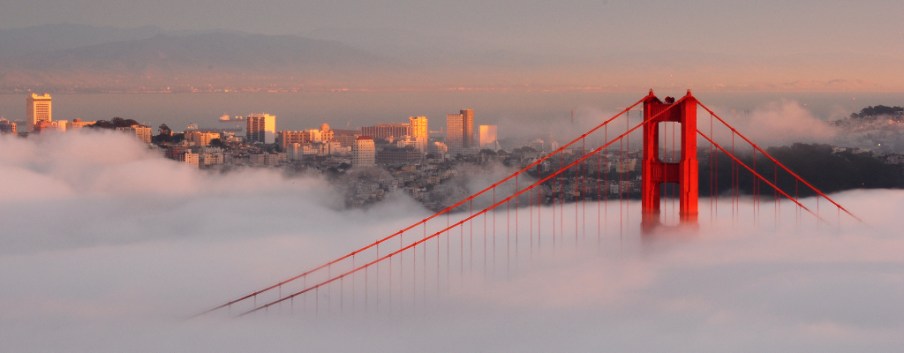
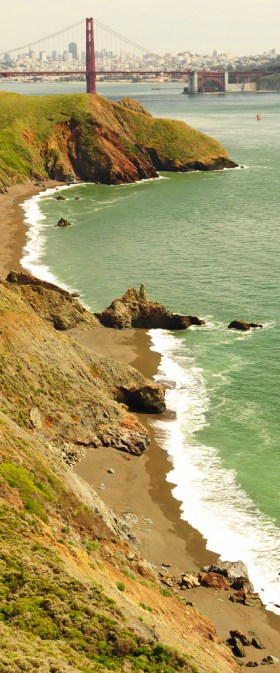
Arguably the best, although not most unique, views of the bridge can be found north of town, just off of Highway 101 in the Marin Headlands where a number of overlooks along Conzelman Road provide spectacular vantage points from which to observe or photograph the bridge.  These overlooks aren’t a secret though, the ones closest to Highway 101 are predictably packed with people and it can be impossible to find a parking spot. However, the bridge is also partially obscured here, head further and higher up the road for more expansive views that, while still busy, become less so the further from the highway you get. and. The number of tripods also increases steadily as you get further and further from the interstate which I interpreted as a good sign since one of my goals was to get some photos of the bridge at sunset. As you can see in the picture at the top of the page, these overlooks are often slightly above the fog that socks in the coast from time to time.

Most people seem to stop and turn around at the one-way-road/18% grade sign that appears along Conzelman Road just before it begins to wind its way back down through the headlands to the coast. If you proceed onwards though, you will be rewarded by getting to shift your car into low gear, and also by a plethora of quieter and more secluded, albeit more distant, views of the bridge. The road ultimately deposits one at the trail leading to the Point Bonita Lighthouse, located at the northern entrance to the Golden Gate. The lighthouse was built in 1853, and yet several hundred ships still managed to wreck themselves in this area during the influx associated with the California Gold Rush, a testament to the ability of the area’s trademark thick fog to obscure any sign of the coast until its too late.
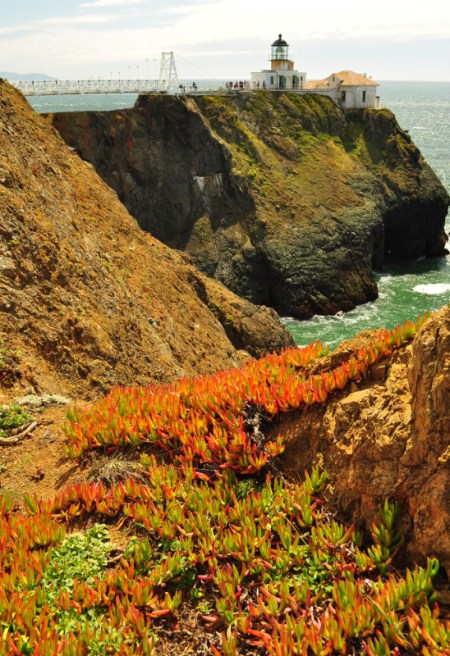
Point Bonita Lighthouse

Point Bonita Lighthouse, Marin County, California

More pictures of the local flora and fauna hopefully coming soon, including the biggest group o’ Grebes you’ve ever seen in one photograph.
A (Belated) Top 12 from 2012

Yes, I know its 2013.  Better late then never I always say. Actually, I don’t really say that often, I just made that up. 2012 was kind of a hectic year for me and as a result my posting frequency has been somewhat erratic over the course of the last year forever. While I may not have had as much free time as I would have liked, the fact that I lived in three different places over the last 12 months has afforded me the opportunity to photograph an incredibly diverse set of landscapes,  from alpine meadows and glaciers, to rainforests and tide pools, to sand dunes and deserts, and even some rare astronomical phenomenon.

Since everyone loves a good “Top 10” list, I’ve decided to take the excitement to the next level and compose a “Top 12” list of my favorite photos from 2012.  I’ll note that “favorite” is most definitely not synonymous with “best”. Some of these photos definitely won’t be winning any awards anytime soon (well, none of them will I suppose…) but nevertheless have a special place in my aortic pump for some reason or another, which I’ve tried to capture in the caption where applicable. Coming up with the list was challenging. Imagine separating wheat from chaff if what you have is mostly chaff. At one point I almost just included three pictures of chubby squirrels to round things out. I also briefly considered posting a dozen paparazzi shots of sunbathing celebrities and seeing if anyone would actually notice. As you can see, I ended up doing neither of these things but if you disagree with my final assessment, feel free to start a flame war in the comments. Or just tell me which ones you like the best…

I should note that many of the photos may look familiar if you follow this blog. If that’s the case, rather that whine about repeats, I suggest you savor them just like you might a re-run of a favorite episode of Friends, Seinfeld, or Cheers. However several of the photos on the list never made it onto the site, sometimes because I didn’t have enough photos to justify a full post, but often simply due to the fact that I am a graduate student and “free time” is a pretty foreign concept to my kind.

Ranking the photos from 1-12 seemed like a waste of time. I’ll let you form your own opinions and so I present them to you here in chronological order:

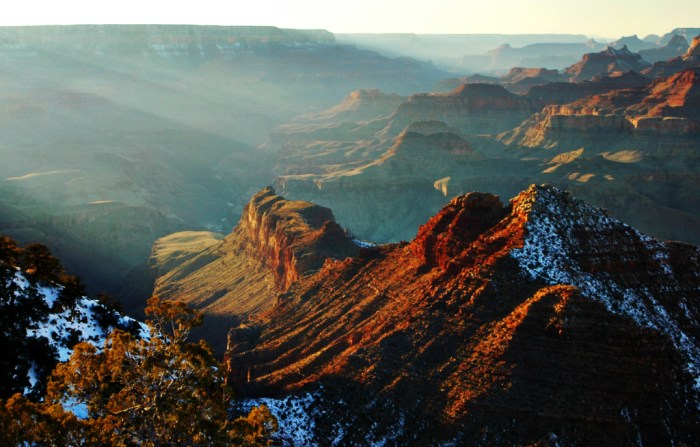
Desert_View_Sunset

1. Sunset from Desert View Overlook, Grand Canyon National Park. (I’ll come clean: I actually took this one in the waning days of 2011 but since I didn’t do a Top 11 list from 2011, I decided to include it here. Sue me.) Sadly, particulate matter and smog from major population centers in the southwest (cough cough Las cough Vegas cough cough) is obscuring the view of the canyon on an ever increasing number of days. Perhaps the only positive is that it can make for some spectacular and surreal looking scenes when the smog is backlit by the setting sun.

Pond_Reflection

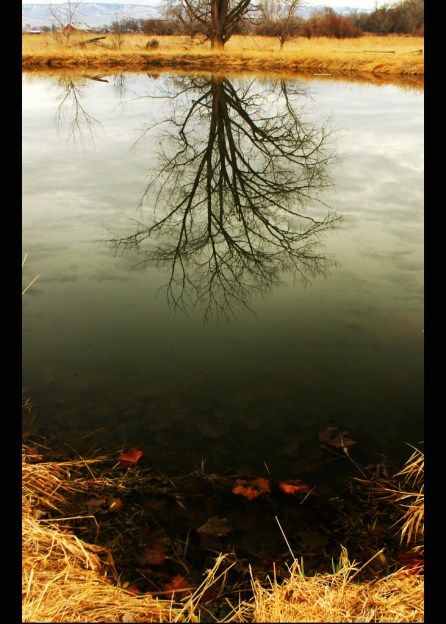
2. Pond Reflection, Whitman Mission National Historic Site, Walla Walla, WA. Water doesn’t get much smoother than this. Amazing how a picture of a gray and stormy sky is that much more interesting when it’s reflected in a pond. Also amazing that those leaves still have any color left in them considering they would have fallen about 4 months ago…

Walla_Walla_Lightning

3. Zeus Visits Walla Walla. There’s nothing quite as thrilling as getting lucky enough to take pictures of a severe thunderstorm from the comfort and (relative) safety of your own front door. I even got the added bonus of having the neighboring hotel/meth lab in the foreground! This is actually a composite of several images that I took over a period of several minutes. Lightning photography is tricky; theoretically the longer an exposure you take, the better change you have of catching a lightning strike. However, a super long exposure would have completely blown out the already extravagantly lit motel so the only way for me to capture multiple lightning strikes in this particular case was to take a time series of shorter images, and then combine them into one using Photoshop.

Palouse_Falls_Pano

4. Palouse Falls State Park, Washington. This photo is probably my favorite panorama from this year. You almost need a panorama to truly capture everything there is to see at Palouse Falls.  The powerful waterfall, swelled by snowmelt, combined with the green terraces in between the basalt colonnades (GEOLOGIC TERM ALERT!!!) is unique to spring, since by autumn the waterfall has shriveled to a trickle and all that was once green becomes brown.

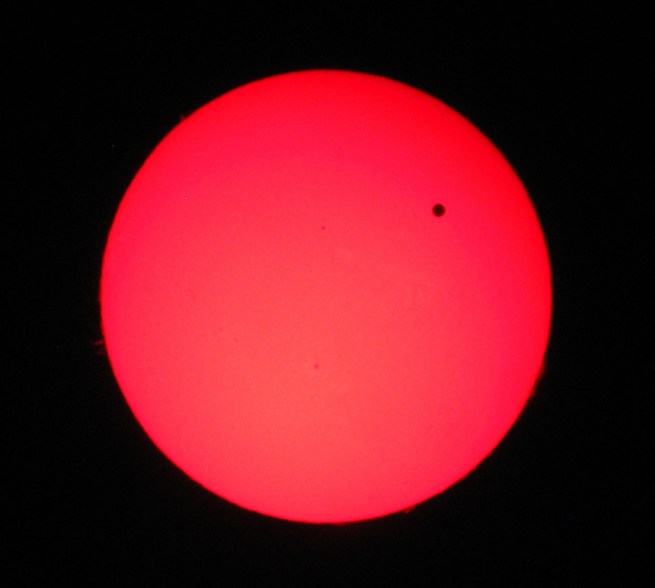
Venus_Transit_20125. Transit of Venus, June 6th 2012. A picture of something that won’t happen again for 115 years makes the list by default, even if it’s not of particularly high quality. The red orb is the Sun, as seen through a telescope fitted with a hydrogen-alpha solar filter. The black circle is the silhouette of the planet Venus as it passes directly in-between the Earth and the Sun, something that it only does in pairs about every 120 years. The things that look like dust spots are actually sunspots and the little flame-like wisps around the edge of the Sun are some small solar prominences (small=several times larger than Earth), ginormous eruptions of hot plasma that briefly travel along the Sun’s magnetic field lines before being pulled back in by the Sun’s intense gravitational field.

Sand Dune Sunset

6. Ripples in the sand sea, Great Sand Dunes National Park, Colorado. Sand dunes come alive at sunset. A surface that burns your feet and looks flat and featureless at noon is revealed to be complex and majestic as the Sun nears the horizon. The geologist in me can’t take my eyes off of the thin layer of saltating sand grains catching the last rays of sunlight as they bounce their way across the dunes.

Delicate Arch Sunset Pano

7. Delicate Arch at Sunset, Arches National Park, Utah.  There’s sort of a lot going on in this picture. I like how 99% of the crowd is seemingly oblivious to the gorgeous rainbow rising up from the desert behind them. Delicate Arch is one of those places that pretty much every landscape photographer visits at some point in their life, and for good reason. But I think think photo captures a really interesting aspect of the place, namely the fact that in reality it doesn’t even remotely approach the wild, untrodden wilderness that it is normally made out to be when you see it on glossy magazine covers. Pretty much any evening at sunset, regardless of season, you’ll find a scene more or less the same as this one (well maybe minus the rainbow..), with dozens of people staking out their spot over an hour before sunset.

San Francisco Peaks Sunset

8. Sunset from Bonito Park, Coconino National Forest, Arizona. Looking west towards the San Francisco Peaks in the late afternoon. A few late-season wildflowers hanging on to dear life. Not a whole lot I can add to this one. This is home for me. It’s quite pretty.

Anemones

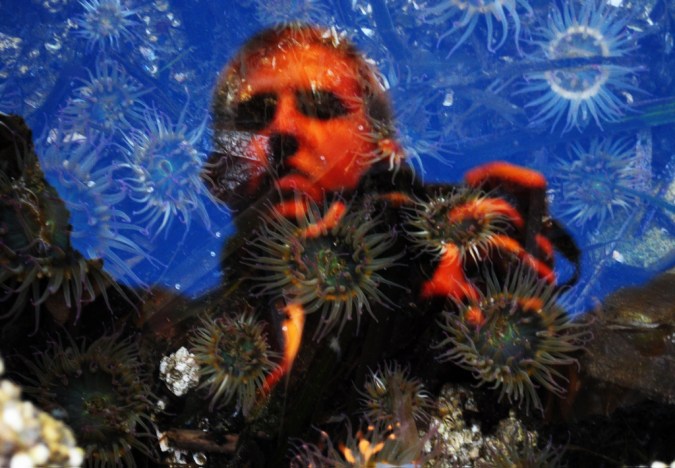
9. Self-portrait with Anemones, Larrabee State Park, Washington.  Is it weird to choose a picture of yourself for a list like this? I’m gonna go with “no” because I chose this one not because I’m particularly photogenic, but because the multi-colored anemones really steal the show and distract the viewers from my unsightly visage. Plus they shrivel up when you poke them which is kind of cool.

Larrabee State Park Sunset

10. Late-summer sunset along Samish Bay, Larrabee State Park, Washington.  This photo was a perfect example of an occasion where a little planning went a long ways. I had previously scouted out locations along the coast near Bellingham that would be ideally suited for catching the last rays of sunlight prior to sunset. This seems like one of the best spots so I stood here for about an hour before sundown waiting for the best lighting conditions. I would like to think that I got them. An exposure time of 15 seconds helped smooth out the incoming waves, giving the water its silky, silvery sheen.

Aurora Borealis from Ferndale, WA

11. Aurora Borealis display from Ferndale, Washington. While this photo may not pack the punch of the aurora shots you see coming out of Alaska, the Yukon, or Scandinavia, for me it was just as satisfying. As an avid amateur astronomy who grew up in the Southwest, I had a hard time restraining my excitement when I got to see my first ever auroral show this October. An impressive showing for the lower-48, these pillars cutting through the bowl of the Big Dipper danced around the sky for over an hour and were just a small part of a show that lasted into the wee hours of the morning. The grayish-purple light along the horizon is light pollution from Vancouver, B.C. And my classmates wondered why I was falling asleep in my 8am class the next morning. Also, you should ignore the power lines…

Sleeping Pile of Sea Lions

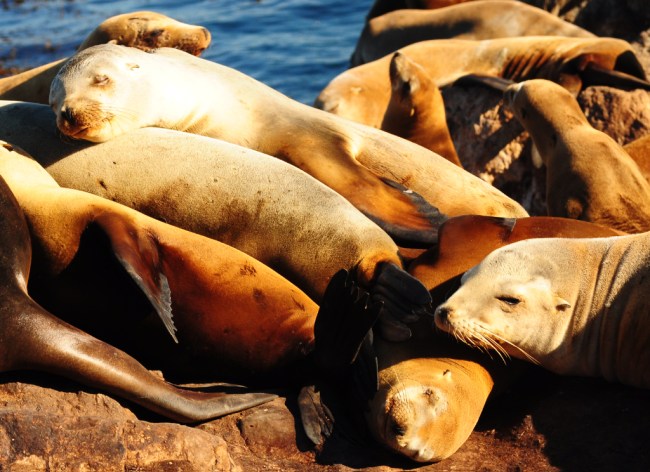
12. Sleeping Sea Lions, Coast Guard Pier, Monterey, CA. If you want to see a lot of sea lions, forget Pier 39 and San Francisco, go to the Coast Guard Pier in Monterey, CA and you’ll find piles and piles of them, just feet away on the other side of a metal fence. Compared to their San Francisco brethren, they’re a bunch of lazy bums though. I wish I could sleep all day long like that…then again I have a bed of my own and don’t have to sleep beneath multiple rear ends so I guess I don’t get to complain.

Be sure to stay tuned for a 2013 version in just a little more than 10 months!

More Than 50 Shades of Gray: a Cloudy Winter in Bellingham

My college English professor once told me that a great way to hook people on a story is to begin with a personal anecdote. Though now that I think about it, he also told me that bacon was bad for me and that my writing was good, so I suppose I should take anything that came out of his mouth with a grain of sodium chloride. But heck, I’m even prefacing the primary anecdote with this secondary anecdote so you should probably just read anyways.

Let me set the scene for you: Bellingham, Washington; nestled along the coast where the Strait of Georgia and the Strait of Juan De Fuca merge together to form a bewildering assortment of coves, islands, bays, and inlets, where half the license plates you see on the highway are from British Columbia, in the only place where the occasionally explosive Cascade Range makes its way allllllll the way down to the beach, and where the nearly 11,000 foot ice sculpted summit of Mt. Baker dominates the view from town on 100% of the 25% of the days out of the year when there is actually a view from town. (Read that again if you need to…) You see, Bellingham is really cloudy. It also happens to be where I currently reside. I’m not trying to knock Bellingham; it’s a great town in a myriad of different ways. Really great. The pictures on this page should prove that. But it’s really, really, REALLY cloudy. Especially in the winter.  When I first got here I had a professor tell me that a sunny day is a perfectly legitimate excuse for turning in an assignment late. Many days I wake up, open the blinds, and think that I must be watching an old episode of Gilligan’s Island…you know, the one’s before they started making it in color?  In fact, the official motto of Bellingham is “The City of Subdued Excitement”.  I am convinced that this is mainly because it’s a little hard to be anything other than subdued when a gray pall can settle over the city for weeks on end. It’s like nature’s Vallium.

Cedar Lake after a rare low-altitude snowfall

Cedar Lake, a short hike from the outskirts of Bellingham, after a rare low-altitude snowfall.

Anyways, the anecdote. Upon the advice of  professors, students, and other acquaintances familiar with the winter…er…”conditions”…here, way back in September (one of only three months out of the year where it is statistically more likely to be partly cloudy or sunny than completely overcast) I made a visit to Rite-Aid with the intent of purchasing some Vitamin D tablets. Now let me assure you that the vitamin section at Rite-Aid is the very epitome of robust; my local store stocks about eight different complete lines of nutritional supplement products. Vitamin A, Vitamin B, Vitamin C, Vitamin Q, calcium, magnesium, iron, glucosamine, corn silk, echinacea, fish oil, cod oil, beet juice, cow bile, pig urine extract…it was all there. Except for the Vitamin D, whose slot on the shelf belonging to each and every brand was completely empty. An omen if I’ve ever seen one.

Now that I have (hopefully) made my point, the question becomes: can we quantify just how cloudy Bellingham is? On the surface, one would think that composing a list of the cloudiest cities in the United States would be a relatively straightforward exercise. You would be wrong. It turns out that a variety of methods exist to generate such a list. One can, for example, calculate the total number of overcast hours per year expressed as a percentage of possible daylight hours (if that made any sense at all). Others prefer instead to count simply the number of days in which the Sun remains hidden behind clouds for the entire day, or the number of days in which the sky is overcast for more than 50% of the daytime hours. And none of this even begins to take into account this potentially thorny issue: what constitutes “cloudy”, exactly?  Should “partly cloudy” count as “cloudy” or “sunny” in a tally? One imagines that the answer to this depends on weather the meteorologist undertaking this task is more of a “glass half empty” or “glass half full” kind of person. And what about night?  Do we care if it is cloudy at night? Or are we only interested to know how much sunshine we are losing? As an astronomy enthusiast, I demand that the percentage of cloudy nighttime hours be taken into account. As you can see, madness is never that far away.

Looking down onto the clouds and fog from Samish Overlook. Oftentimes the best way to get out of the clouds is simply to hike above them!

Looking down onto the clouds and fog from Samish Overlook. Oftentimes the best way to get out of the clouds is simply to hike above them! The summits of two of the San Juan Islands, Orcas and Lummi, also poke up out of the clouds.

The lack of any well-established protocols when it comes to defining “cloudiness” leaves ample opportunity for cities who rank highly on one list to try and come up with a new way of calculating the list that moves them down a few spots. Or, ideally, out of the top 10 entirely. After all, you don’t see too many glossy tourist brochures exclaiming “Come visit the 3rd cloudiest city in Washington and enjoy a vacation without the hassle of having to reapply sunscreen every 3 hours!”  Catchy as it sounds, it just doesn’t sell. (However, if you happen to be a tourism exec from Aberdeen, WA and you are interested in licensing this slogan for use in your promotional materials, please contact me using the oh-so-appropriately named “Contact” link above!) Regardless of which metric you use though, Bellingham, Washington generally ranks near the top of such lists. If it doesn’t, chances are the makers of the list are interpreting the word “city” rather loosely and including every little hamlet and village on the Olympic Peninsula in their calculations, yet another devious method of getting yourself off the list.

Austin Creek Falls

Austin Creek Falls, on a cloudy yet photographically conducive day.

The Twin Sisters in the Cascade Range, just east of Bellingham

The majestic Mt. Baker and Twin Sisters in the Cascade Range, just east of Bellingham. A shame that they’re not visible more often.

To give you some perspective on my rant, I feel obligated to disclose that I grew up in Flagstaff, Arizona, a city that receives, on average, more than 300 days of sunshine per year. Such a concept is about as foreign to Western Washingtonians as a hurricane warning is to Saskatchewanians. The rain here is different too. During a lecture on precipitation last quarter, one of my professors asked the class, composed almost entirely of western Washingtonians, if anyone had ever experienced a “thunderstorm“.  Less than half of the class raised their hands. More often than not, we experience what someone in New Zealand would call “pissing”, a steady, extremely light rain that that lasts for days and yet somehow  manages to thoroughly permeate everything with dampness despite never requiring you to change your windshield wiper setting from “intermittent” to “warp speed”.   However, when the rain finally ceases and the clouds part, the emotions experienced is roughly on par with the feeling that Arizonans get when it rains for the first time in months. Everyone just sort of stops whatever it is that they are doing (including driving apparently…as much as it rains here, you’d think people would be better at driving in it) and goes wandering around outside looking up at the sky, squinting, and trying to figure out what the hell is happening.

And then there’s me. While everyone else stumbles around in disbelief, I grab my camera, put on my hiking boots, and head to the nearest beach, mountain, waterfall, overlook, or trail to enjoy and photograph a majestic landscape that truly deserves to be uncloaked and put on display far more often than it is. But naturally, I do all of this in an extremely subdued manner.

Sunset at low tide in Chuckanut Bay

Sunset at low tide in Chuckanut Bay.

When it's sunny, the Chuckanut Mountains just south of Bellingham provide excellent views of a snow-capped Mt. Baker.

When it’s sunny, the Chuckanut Mountains just south of Bellingham provide excellent views of a snow-capped Mt. Baker.