Rails Vanquished, Rails Reclaimed: Hiking the Iron Goat Trail

Driving west on Highway 2 over Stevens Pass last spring, I kept catching glances of what appeared to be some sort of elongate, dark grey, overgrown, man-made structure paralleling the highway on the opposite site of the Tye River valley. Whatever it was, only isolated chunks of it were visible through the dense vegetation and the deep, late-season snowpack. It appeared to me to be made of concrete, although it was hard to be 100% sure given that my primary goal at the time was to prevent a van full of people from careening off the highway and plummeting into the gorge below. Ironically, little did I know that the very existence of the mysterious object I was seeing was the result of a passenger train carrying hundreds of people doing exactly that 113 years earlier.
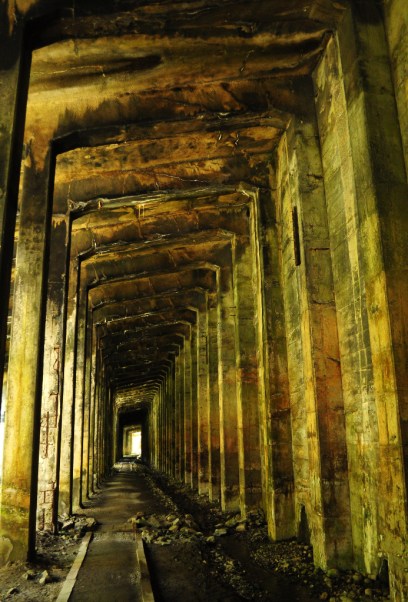 Walking through a large concrete snowshed along the Iron Goat Trail, built at the site of the 1910 Wellington disaster to prevent future avalanches from sweeping trains and passengers off the rails.

It didn’t take long after getting home to my internet connection to figure out that what I was seeing was the old grade of the Great Northern Railway, the northernmost of the transcontinental railway routes in the U.S. The Great Northern reached Seattle in 1893 and the route it took across the Cascades can best be described as “gnarly”. A series of extremely steep switchbacks, and eventually a 2.60 mile long tunnel completed in 1900, funneled trains safely, if not easily, over Stevens Pass to Seattle. In the summer at least. The biggest danger of the route lay in the combination of heavy winter snows and steep rugged topography. The railway built a number of snowsheds, large concrete or timber structures which covered the rails in avalanche prone areas to protect the locomotives. Avalanches don’t always play nicely though, and in March of 1910, during a storm in which 11 feet of snow fell in one day, a 10′ thick slab of snow detached from Windy Mountain several hundred feet above the tracks and swept two trains off the tracks just outside the railroad town of Wellington, Washington. 96 people perished in what remains the deadliest avalanche in U.S. history, and one of the worst railroad disasters in the country’s history to boot.
Despite the somber backstory, the old railroad grade has been turned into what has to be one of the most fascinating hiking trails in Washington: the Iron Goat Trail. Taking its name from the mountain goat on the logo of the Great Northern Railway, the Iron Goat trail follows the portion of the railroad grade that was abandoned in 1929 after the 8-mile long Cascade Tunnel (still in use by the BNSF today) opened, which for the first time allowed trains to bypass the pass and its deadly avalanche chutes entirely.

Looking into the abandoned Windy Point Tunnel along the Iron Goat Trail
While this hike may not provide a wilderness experience (Highway 2 and the associated drone of motor vehicles is just a stone’s throw away across the valley), it does provide a heavy dose of history and just enough eeriness to keep you from ever wanting to spend the night. In between the Wellington disaster and the opening of the Cascade Tunnel, a span of just 19 years, the Great Northern Railway heavily fortified the section of rails near Stevens Pass in an attempt to prevent another disaster. I hiked the four mile section of the trail from Highway 2 to the Wellington Townsite and nearly the entire stretch was engineered in some way: tunnels, timber snowsheds, concrete snowsheds, you name it, the Great Northern Railway spared no expense in attempting to tame the mountains and make this a viable travel route over the Cascades. They even gave the town of Wellington a new name, “Tye”, because of all the bad publicity. Ultimately though, the mountains emerged victorious: the line was abandoned in favor of the tunnel less than 30 years after it was first constructed, leaving the man-made structures built in response to the Wellington disaster to slowly decay and become re-assimilated into the mountain.
This process is already well underway. After decades of enduring heavy winter snows, timber snowsheds are now unrecognizable piles of rotting wood. Concrete snowsheds are crumbling, exposing their innards in a scene that my hiking partners likened to the post-apocalyptic visuals of the Hunger Games.
 Deep snow and avalanches ultimately get the better of anything man builds to lessen their impact
Many of the tunnels have partially collapsed, including the Old Cascade Tunnel, the longest in the world when it opened at the beginning of the 20th Century. In 2007, a portion of the roof collapsed, creating an unstable dam of debris which occasionally likes to rupture and send a deadly torrent of water rushing out the west end of the tunnel without warning. The Windy Point Tunnel, built to keep trains from derailing around a particularly sharp curve, is also slowly crumbling away while the entrances are slowly reclaimed by the forest:
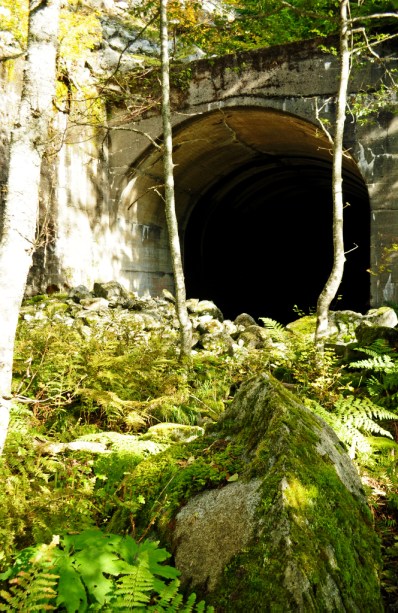
Moss and debris slowly reclaims the old grade of the Great Northern railway at the entrance to the Windy Point Tunnel

Portions of the Windy Point Tunnel have been heavily damaged by rockfall. Thankfully, Gary and the fall foliage escaped unscathed.
After a somewhat strenuous 700 foot climb from the trailhead up to the Windy Point Tunnel, the hike follows the gentle grade of the old rail bed for several miles in either direction. Thanks to impressive work by local volunteer groups, the trail is well-maintained and a series of interpretive signs explain the history of the Great Northern Railroad and the chain of events that led to the Wellington disaster. Several spots on the trail have great views of the Tye River valley and the surrounding peaks in the Cascades making for a beautiful, intriguing, and incredibly diverse hike. But stay away during the winter for obvious reasons, and like I said, not really somewhere you’d want to spend the night…
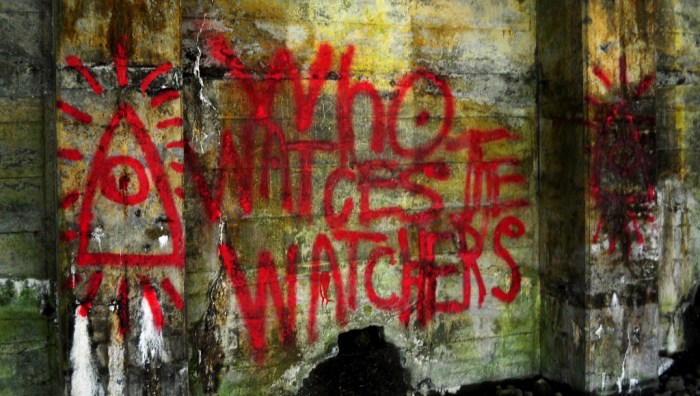
Fun graffiti inside the concrete snowshed
For more info, trail maps, and directions, check out http://www.irongoat.org/
From the San Juans to the San Juans
They are separated by more than 1600 kilometers. One barely rises above sea level while the other boasts six peaks exceeding 14,000 feet in elevation. One is most easily accessed by kayak or porpoise, while in the other it is difficult to escape the incessant drone of Jeeps, dirt bikes, and ATVs that trawl the vast network of old mining roads. One is beset by a deluge of by rain eight months out of the year, whereas the other is inaccessible except by ski, snowshoe, or helicopter for six. To the untrained eye, the San Juan Islands of NW Washington and the San Juan Mountains of SW Colorado couldn’t be more different. My current job situation has me living about an hour away from the mountains for 3 months out of the year, and an hour or less away from the islands for the other 9 months. And viewed through the lens of a camera, I have discovered that there are more similarities that you might expect. The first of which will probably be rather obvious:
They both posses stunning scenery:

View from Deception Pass State Park on Fidalgo Island looking southwest across the water towards the Olympic Peninsula.
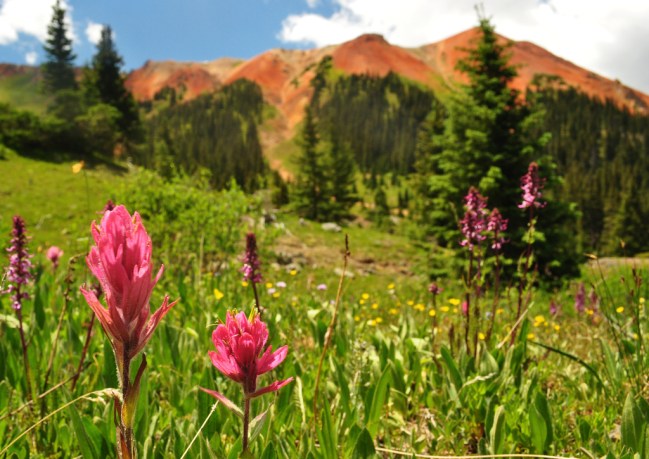
Rosy Paintbrush in an alpine meadow near Red Mountain #1 (yes, nearby can be found Red Mountain’s #2 and #3. The old miners were a creative bunch.) in the San Juan Mountains.
Both offer opportunities for “extreme” sports:
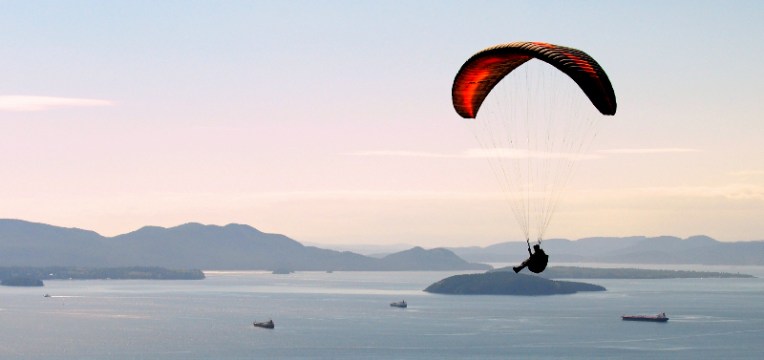
A paraglider enjoys a serene aerial view of the San Juan Islands and several tankers headed for the oil refineries in Anacortes, WA.
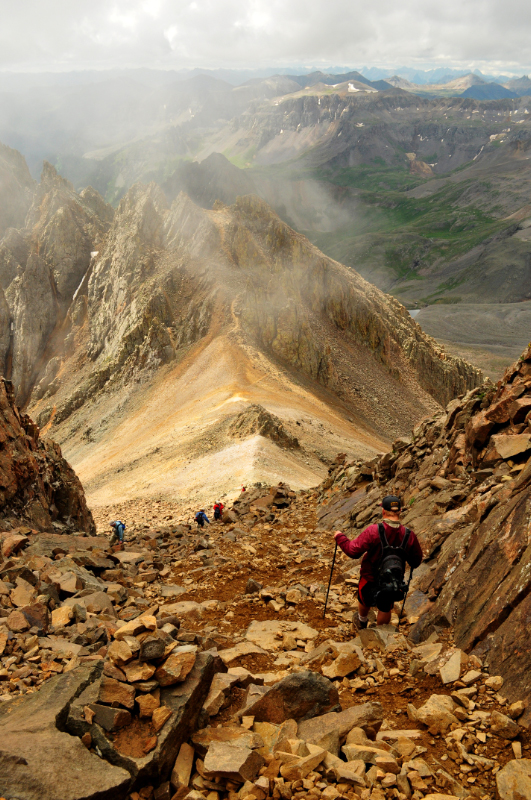
Descending a scree-filled colouir after summiting 14.150′ Mt. Sneffels in the San Juan Mountains. While most of the climb is straightforward and requires only a hefty amount of scrambling, there is one tricky section near the summit during which a fall would likely mean the end of one’s mountain climbing days…or any other days for that matter.
Both were shaped and sculpted by vast quantities of ice:
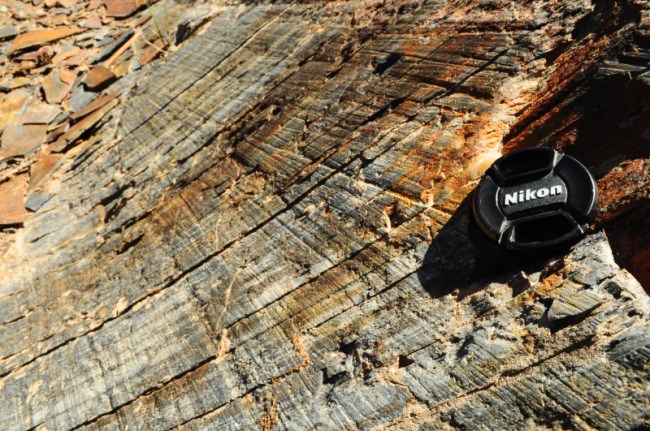
Glacial striations in slate high above the Uncompahgre Gorge in the San Juan Mountains. The parallel grooves in the rock were carved by rocky debris trapped along the base of a long-gone glacier that was partially responsible for scouring out the gorge.
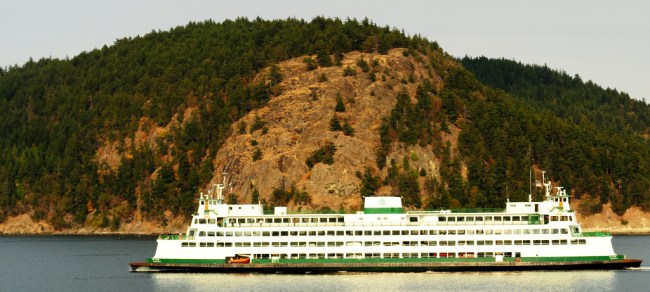
A Washington State Ferry passes a cliff of glacially scoured rock in the San Juan Islands. Glacial striations identical to those in the previous photo are ubiquitous throughout the San Juan Islands, evidence that the area was buried beneath more than a mile of ice during the peak of the last glaciation, about 15,000 years ago.
And finally, both are home to curious wildlife:
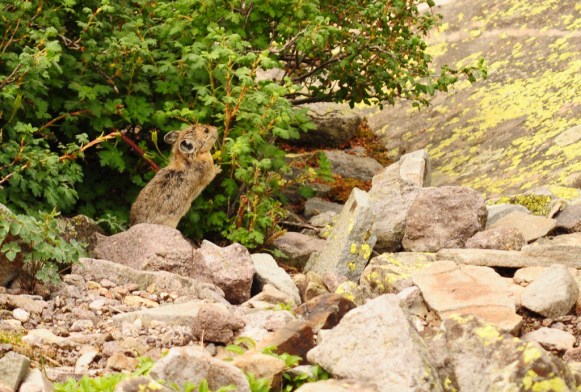
An American Pika investigates a bush at 11,000 feet in the San Juan Mountains.
 A Blood Star investigates a California mussel below sea level in the Strait of Juan de Fuca.
In case you didn’t know, that’s what starfish look like when they are curious.
More Than 50 Shades of Gray: a Cloudy Winter in Bellingham
My college English professor once told me that a great way to hook people on a story is to begin with a personal anecdote. Though now that I think about it, he also told me that bacon was bad for me and that my writing was good, so I suppose I should take anything that came out of his mouth with a grain of sodium chloride. But heck, I’m even prefacing the primary anecdote with this secondary anecdote so you should probably just read anyways.
Let me set the scene for you: Bellingham, Washington; nestled along the coast where the Strait of Georgia and the Strait of Juan De Fuca merge together to form a bewildering assortment of coves, islands, bays, and inlets, where half the license plates you see on the highway are from British Columbia, in the only place where the occasionally explosive Cascade Range makes its way allllllll the way down to the beach, and where the nearly 11,000 foot ice sculpted summit of Mt. Baker dominates the view from town on 100% of the 25% of the days out of the year when there is actually a view from town. (Read that again if you need to…) You see, Bellingham is really cloudy. It also happens to be where I currently reside. I’m not trying to knock Bellingham; it’s a great town in a myriad of different ways. Really great. The pictures on this page should prove that. But it’s really, really, REALLY cloudy. Especially in the winter. When I first got here I had a professor tell me that a sunny day is a perfectly legitimate excuse for turning in an assignment late. Many days I wake up, open the blinds, and think that I must be watching an old episode of Gilligan’s Island…you know, the one’s before they started making it in color? In fact, the official motto of Bellingham is “The City of Subdued Excitement”. I am convinced that this is mainly because it’s a little hard to be anything other than subdued when a gray pall can settle over the city for weeks on end. It’s like nature’s Vallium.

Cedar Lake, a short hike from the outskirts of Bellingham, after a rare low-altitude snowfall.
Anyways, the anecdote. Upon the advice of professors, students, and other acquaintances familiar with the winter…er…”conditions”…here, way back in September (one of only three months out of the year where it is statistically more likely to be partly cloudy or sunny than completely overcast) I made a visit to Rite-Aid with the intent of purchasing some Vitamin D tablets. Now let me assure you that the vitamin section at Rite-Aid is the very epitome of robust; my local store stocks about eight different complete lines of nutritional supplement products. Vitamin A, Vitamin B, Vitamin C, Vitamin Q, calcium, magnesium, iron, glucosamine, corn silk, echinacea, fish oil, cod oil, beet juice, cow bile, pig urine extract…it was all there. Except for the Vitamin D, whose slot on the shelf belonging to each and every brand was completely empty. An omen if I’ve ever seen one.
Now that I have (hopefully) made my point, the question becomes: can we quantify just how cloudy Bellingham is? On the surface, one would think that composing a list of the cloudiest cities in the United States would be a relatively straightforward exercise. You would be wrong. It turns out that a variety of methods exist to generate such a list. One can, for example, calculate the total number of overcast hours per year expressed as a percentage of possible daylight hours (if that made any sense at all). Others prefer instead to count simply the number of days in which the Sun remains hidden behind clouds for the entire day, or the number of days in which the sky is overcast for more than 50% of the daytime hours. And none of this even begins to take into account this potentially thorny issue: what constitutes “cloudy”, exactly? Should “partly cloudy” count as “cloudy” or “sunny” in a tally? One imagines that the answer to this depends on weather the meteorologist undertaking this task is more of a “glass half empty” or “glass half full” kind of person. And what about night? Do we care if it is cloudy at night? Or are we only interested to know how much sunshine we are losing? As an astronomy enthusiast, I demand that the percentage of cloudy nighttime hours be taken into account. As you can see, madness is never that far away.

Looking down onto the clouds and fog from Samish Overlook. Oftentimes the best way to get out of the clouds is simply to hike above them! The summits of two of the San Juan Islands, Orcas and Lummi, also poke up out of the clouds.
The lack of any well-established protocols when it comes to defining “cloudiness” leaves ample opportunity for cities who rank highly on one list to try and come up with a new way of calculating the list that moves them down a few spots. Or, ideally, out of the top 10 entirely. After all, you don’t see too many glossy tourist brochures exclaiming “Come visit the 3rd cloudiest city in Washington and enjoy a vacation without the hassle of having to reapply sunscreen every 3 hours!” Catchy as it sounds, it just doesn’t sell. (However, if you happen to be a tourism exec from Aberdeen, WA and you are interested in licensing this slogan for use in your promotional materials, please contact me using the oh-so-appropriately named “Contact” link above!) Regardless of which metric you use though, Bellingham, Washington generally ranks near the top of such lists. If it doesn’t, chances are the makers of the list are interpreting the word “city” rather loosely and including every little hamlet and village on the Olympic Peninsula in their calculations, yet another devious method of getting yourself off the list.

Austin Creek Falls, on a cloudy yet photographically conducive day.

The majestic Mt. Baker and Twin Sisters in the Cascade Range, just east of Bellingham. A shame that they’re not visible more often.
To give you some perspective on my rant, I feel obligated to disclose that I grew up in Flagstaff, Arizona, a city that receives, on average, more than 300 days of sunshine per year. Such a concept is about as foreign to Western Washingtonians as a hurricane warning is to Saskatchewanians. The rain here is different too. During a lecture on precipitation last quarter, one of my professors asked the class, composed almost entirely of western Washingtonians, if anyone had ever experienced a “thunderstorm“. Less than half of the class raised their hands. More often than not, we experience what someone in New Zealand would call “pissing”, a steady, extremely light rain that that lasts for days and yet somehow manages to thoroughly permeate everything with dampness despite never requiring you to change your windshield wiper setting from “intermittent” to “warp speed”. However, when the rain finally ceases and the clouds part, the emotions experienced is roughly on par with the feeling that Arizonans get when it rains for the first time in months. Everyone just sort of stops whatever it is that they are doing (including driving apparently…as much as it rains here, you’d think people would be better at driving in it) and goes wandering around outside looking up at the sky, squinting, and trying to figure out what the hell is happening.
And then there’s me. While everyone else stumbles around in disbelief, I grab my camera, put on my hiking boots, and head to the nearest beach, mountain, waterfall, overlook, or trail to enjoy and photograph a majestic landscape that truly deserves to be uncloaked and put on display far more often than it is. But naturally, I do all of this in an extremely subdued manner.

Sunset at low tide in Chuckanut Bay.

When it’s sunny, the Chuckanut Mountains just south of Bellingham provide excellent views of a snow-capped Mt. Baker.
 Zach Schierl Photography