Exploring the Mt. Adams Wilderness

Mt. Adams is the largest (by volume) and second highest volcano in the Cascade Range of Washington. Often overshadowed by its neighbors, Mt. Rainier, Mt. St. Helens, and Mt. Hood, we’ve taken a liking to Adams in part because its trails tend to be relatively deserted and in part because we have a fantastic view of the mountain’s east face from our neighborhood in the Yakima Valley. Recently we had the chance to complete a short backpacking trip on the north flank of the mountain which allowed us vantage points that far surpass anything we’ve seen on previous day hikes.
Our hike began and ended at a trailhead (Killen Creek) that is, as the crow flies, just 57 miles from our front door, but takes more than three hours to reach by car, giving some sense as to the relative remoteness of this area. Most of our ~20 mile loop was within the Mt. Adams Wilderness, a 48,000 acre wilderness area designated in 1964 with the original passage of the Wilderness Act.

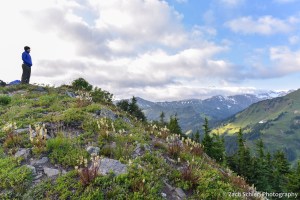
On our first night, we camped at just under 7,000 feet on the north flank of the mountain in one of the most spectacular alpine meadows I’ve seen. No matter which way I turned, the views were extraordinary. To our south, the crumbling volcanic edifice of Mt. Adams loomed large, with the Adams Glacier descending in a stunning icefall from the summit plateau. To the north, broad expanses of dense evergreen forest stretched off into the distance, leading the eye to the massive Mt. Rainier and the rugged skyline of the Goat Rocks on the horizon. To the west, the truncated cone of Mt. St. Helens was backlit by the setting sun. Several lingering snowfields surrounded our campsite, providing a nice source of clear, cold water. A variety of diminutive alpine wildflowers were in full bloom, and the low rumble of rock and ice fall high on the mountain occasionally punctuated the silence, with clouds of dust the only clue as to their location. While this location is reachable by a long day hike, spending the night and being able to explore and photograph in the late afternoon and evening light is one of my favorite things about backpacking!


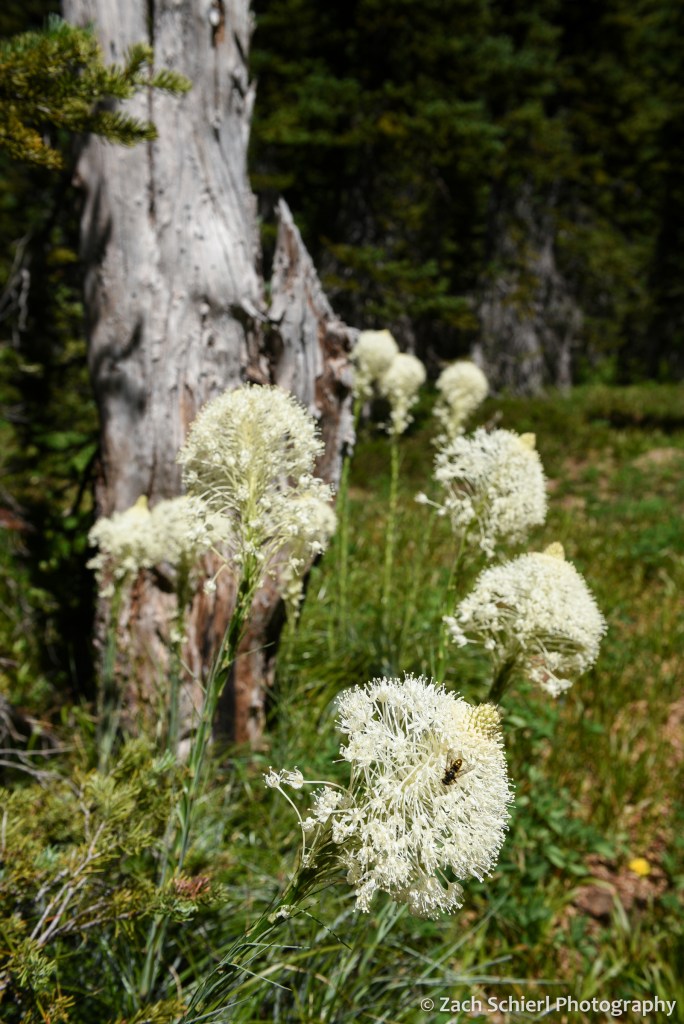
On Day 2, we descended to the Pacific Crest Trail before working our way around to the northeast side of Mt. Adams, passing through a series of wildflower-filled meadows and crossing several inviting streams cascading down from melting snowfields and glaciers higher on the mountain. These meadows also hosted a robust population of mosquitos and other biting insects….not unexpected for the Cascades in July, but an annoyance nonetheless, especially for an Arizona-born desert rat like me!
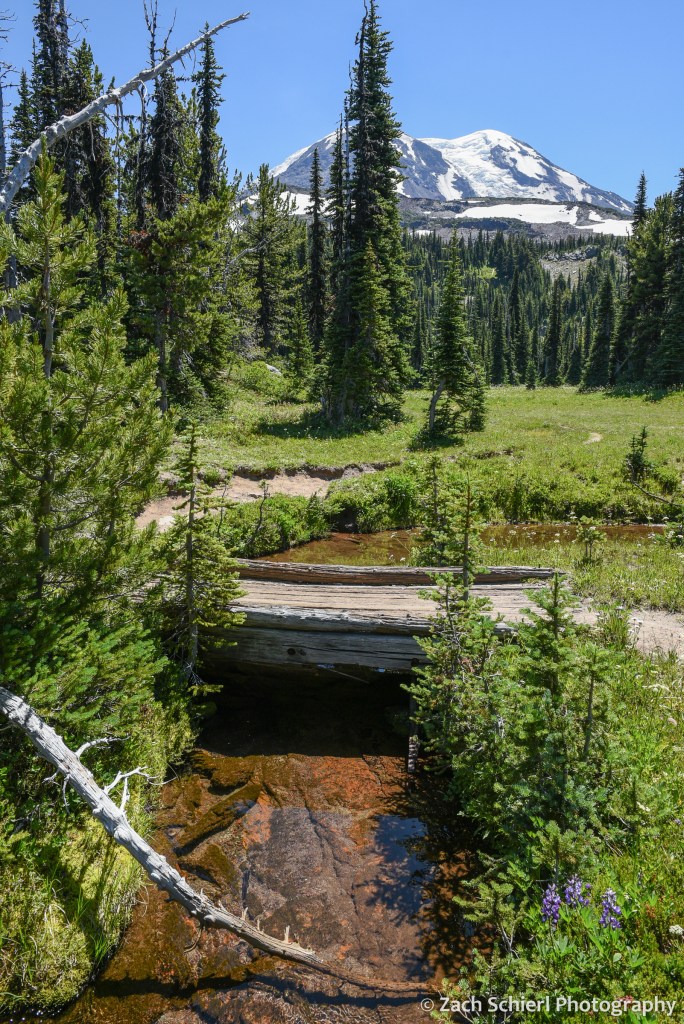

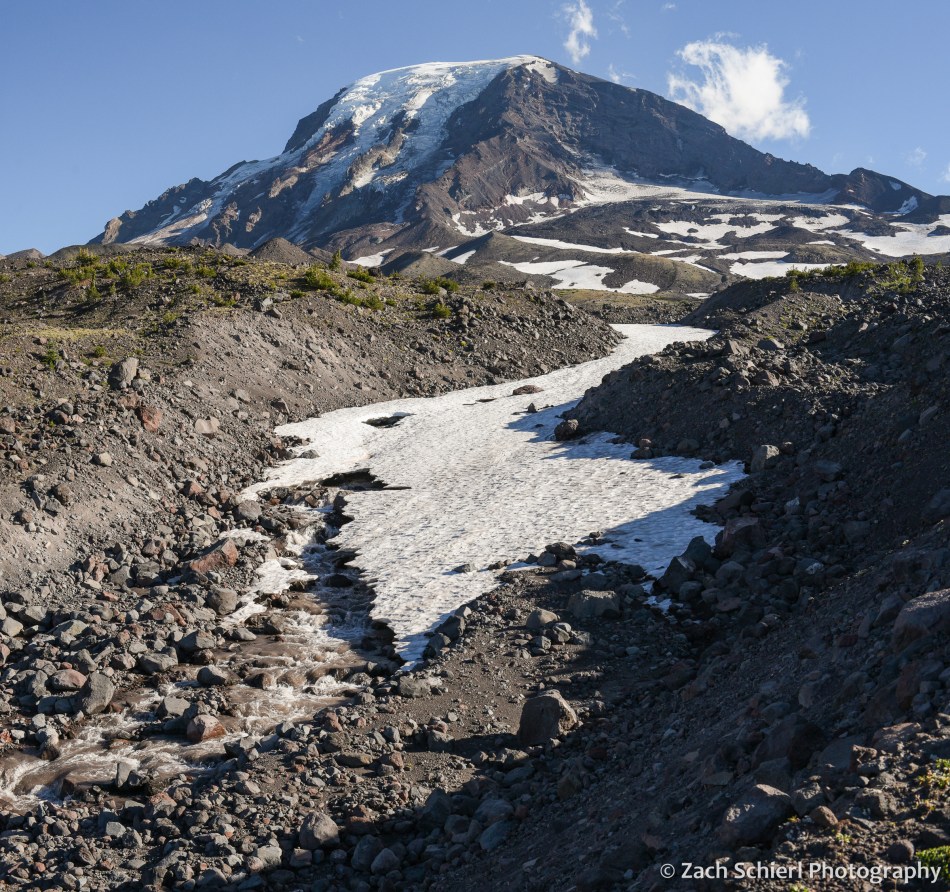
We had shared the trail with quite a few other hikers and backpackers on Day 1, but saw only a few other people from this point forward. Camp on night two was in a small clump of trees on the edge of a relatively recent lava flow. In contrast to the verdant alpine meadows of night one, this landscape was much more rugged, barren, and stark. After setting up our tent, we proceeded up the trail (with much lighter packs!) to find a spot for dinner. We quickly arrived at a stream crossing that we didn’t feel comfortable fording, so we left the trail behind and proceeded to pick our way up the rubbly bank until we arrived at a small knob with a spectacular view of the glaciers on Mt. Adams’ northeast face (Lava, Lyman, and Wilson). Here we enjoyed a delicious meal of instant mashed potatoes mixed with green chiles and an entire bag of bacon bits while listening to the roar of the creek.
Our best wildlife sighting of the trip actually occurred on the drive to the trailhead, when we happened upon a young barred owl sitting in the road. As we approached it flew into a nearby tree where it watched us warily for a few minutes before fleeing deeper into the forest:

Aside from this, we saw surprisingly little wildlife on this trip (unless you count mosquitos): only a few birds, chipmunks, squirrels, and a single marmot and mountain goat in the far distance from our first camp.
From our second camp, we were in a great position to catch sunrise on the final morning of our trip. There aren’t many things I’ll get up at 5:15 am for, but a Mt. Adams sunrise is definitely one of them!

After packing up, we hiked the eight downhill miles back to our car and drove back into the 100 degree blast furnace that is the Yakima Valley in late-July. We are thankful to have beautiful places like Mt. Adams so close to escape the heat this time of year!
Throwback Thursday: Glacier Peak
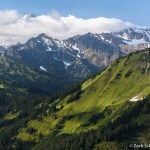

Glacier Peak…the top of it at least. This was about the most we saw of it on our three-day trip.
While we wait for the snows to melt once again, time for another flashback to 2020. I realize that phrase likely strikes fear in the hearts of most, so feel free to pretend these photos are from some other year. While it was a rough year in many ways, the wilderness was just as spectacular as ever!
For a while last summer, our goal was to camp in the shadow of every active Cascade Range stratovolcano in Washington and Oregon. We ended up getting to 8/10, but late season plans for Mt. Baker and Mt. Jefferson ended up being derailed by fires, weather, or both. In total we camped 28 nights and hiked/backpacked over 250 miles in our COVID-safe exploration of the Cascades last summer. To minimize contact with others (and to save money), we eschewed developed campgrounds in favor of dispersed camping. Aside from backpacking permits, we paid for accommodations just once the entire summer, at a five-site Forest Service “campground” on the north side of Mt. Hood that we ended up having all to ourselves for the night.
One of our most memorable excursions was a quick two-night backpacking trip to the Glacier Peak and Henry Jackson Wilderness areas in north-central Washington.
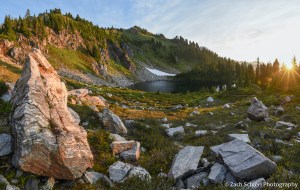
Early morning light at a campsite along the Pacific Crest Trail in the Henry Jackson Wilderness Area of central Washington
Of all the active volcanoes in the Cascade Range, Glacier Peak is by far the most difficult to glimpse up close. Tucked away in the north Cascades, reaching the vicinity of the Glacier Peak edifice requires a hike of at least 10-12 miles, making a backpacking trip really the only way to truly experience the mountain. For us, it was a ~35 mile, 3-day, 2-night trip beginning from the valley of the Little Wenatchee River. While were able to get quite close to the mountain, this was (amazingly) the only trip of the summer where the weather didn’t really cooperate with our desire to see the mountain in whose shadow we were camping. We got a handful of summit glimpses through breaks in the clouds, but Glacier Peak was obscured for the majority of our trip.

Tantalizing glimpses of Glacier Peak through the low clouds.
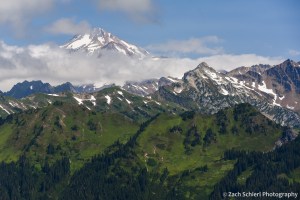
A fleeting view of the glacier-clad (not surprisingly) summit of Glacier Peak.
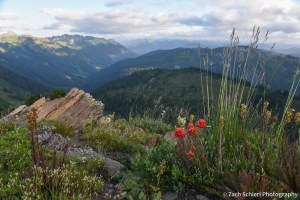
Looking down the Little Wenatchee River valley with some late season paintbrush providing a splash of color.
The view from Kodak Peak in the Glacier Peak Wilderness. Glacier peak is behind those clouds somewhere!

A marmot enjoys the view from Kodak Peak.
Despite the lack of peak views, the rugged, high altitude terrain was stunning and while we were a little too late for peak wildflower season, there were still lots of blooms covering the slopes:

Tiger lilies (Lilium columbianum) in the Glacier Peak Wilderness, Washington
The most memorable elements of the trip came on Day 3. After a COLD morning and a close brush with hypothermia, we decided (based largely on consulting with other hikers) to take a slightly longer, but less steep, route back to the car. Our ascent two days earlier had been short, steep, and rocky, and we weren’t thrilled about the idea of descending the same trail with heavy packs. Plus an alternate trail back to the car would result in a loop and who doesn’t love a good loop? According to maps and other hikers, our descent would be about 8-9 miles, instead of the six miles we had come up. Despite the modest mileage, it ended up being quite the slog. I’ve done enough hiking and backpacking that I normally feel pretty confident estimating mileage, and that descent sure felt like a LOT more than 9 miles. The trail was in decent shape, save for crossing a series of avalanche chutes choked with head high brush. Someone had kindly taken a machete to some, but not others. By the time we got back to the car, I was spent to put it mildly. I honestly can’t ever remember being so totally wiped out after a hike in my life.
Thankfully there was a bag of Chex mix waiting for me at the car. A few moments after diving in, I realized that the container it had been in was filled with mice droppings…and we soon noticed that the rest of the car was as well. Yum!
 Zach Schierl Photography