Monterey, California: Famous for the Coast, Famous for the Cheese
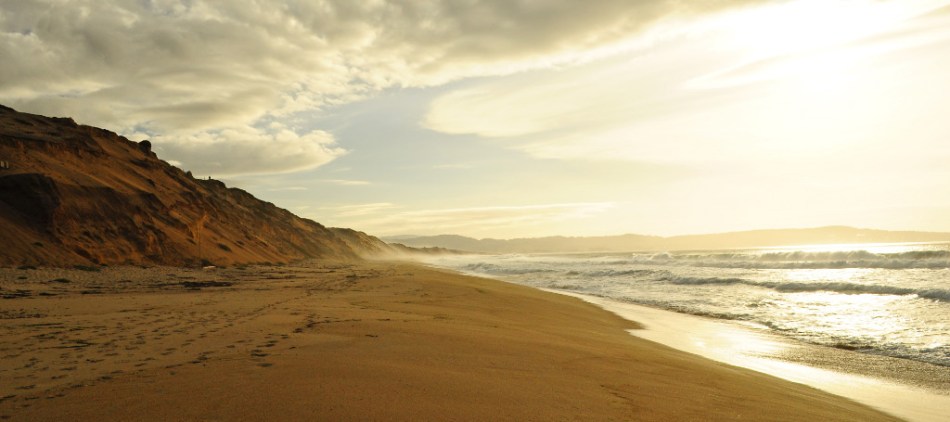
Sunset at Fort Ord Dunes State Park
Did you know that Monterey Jack cheese takes it’s name from the city where it was first made by Spanish settlers and then later first commercially marketed by a Scottish immigrant? Neither did I. That is, until I came across a lovely, if somewhat small and water-logged (and apparently created on a home inkjet printer…) interpretive sign informing me of that fact on a recent hike to the top of the peak that now bear’s Jacks’ name:

The Sign
Located just outside of Monterey, CA, Jacks Peak is the highest point in Monterey County topping out at a whopping 1,068 feet above sea level. The sign left me curious, and wanting to learn more about this mysterious Jacks fellow and his delicious cheese. After much additional research, I am now able to present you with the following information:
1. There is actually a fair bit of ongoing, spirited debate over who exactly should be credited with first making “Monterey jack” cheese. And Julius Caesar is involved…somehow.
2. According to the Monterey County Historical Society, Monterey jack is one of just four varieties of cheese to have been invented (created? first made? can one really “invent” cheese?) in the United States. In other words, while the U.S. may be top dawg at spitting out fancy new electronic devices that start with a lower case “i”, we are seriously lacking when it comes to new innovation in the field of dairy products.
3. Due to it’s creamy texture, Monterey Jack is excellent for making grilled cheese sandwiches.
I probably could have kept this list going for a while but reading page after page about cheese made me hungry. Lacking any authentic Monterey jack, I instead “settled” for a large hunk of Tillamook aged medium white cheddar, a piece of cheese that was so tasty I seriously considering including a picture of it right after this period. In fact, I still am considering it.
Monterey is also famous for a number of other attractions, nearly all of which, sadly, have little or nothing to do with the cheese that so admirably and bears the city’s name. Most of them do, however, involve the ocean in some way or another which is a pretty good consolation prize if you ask me.
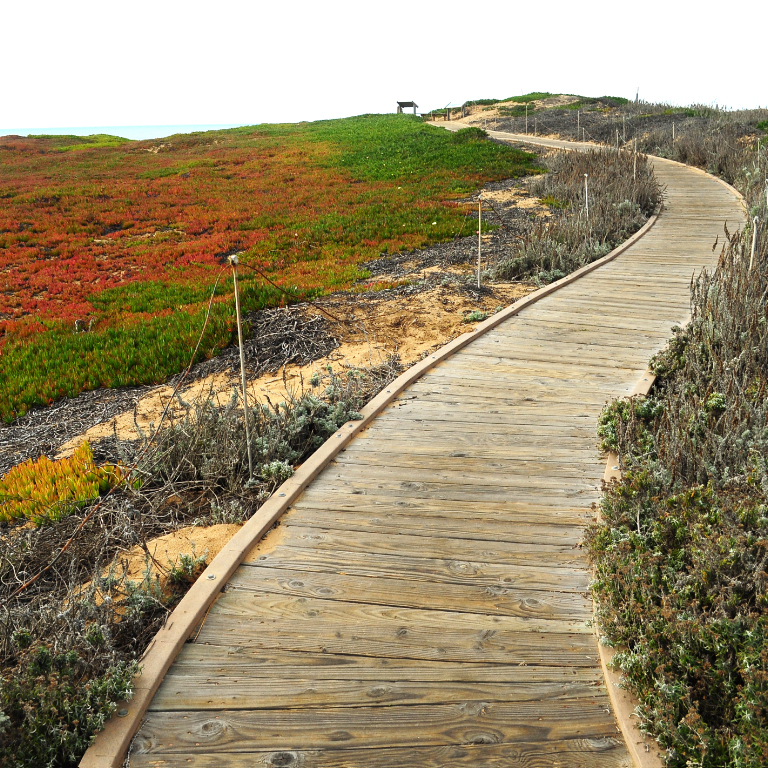
A boardwalk snakes through a field of invasive ice plant at Fort Ord Dunes State Park
Fort Ord Dunes State Park is one of the newer such attractions. Not new in the sense that the beach or the dunes itself are new (they’re quite old actually) but new in the sense that the land it occupies was for many years part of the Fort Ord U.S. Army post. In 1994, the Fort was closed and since then much of the land has been reclaimed and opened to recreational use. Over 10,000 acres were set aside by President Obama as Fort Ord National Monument 2012. A small strip of the beach and adjacent dunes just north of Monterey became Fort Ord Dunes State Park (pictured above) in 2009.
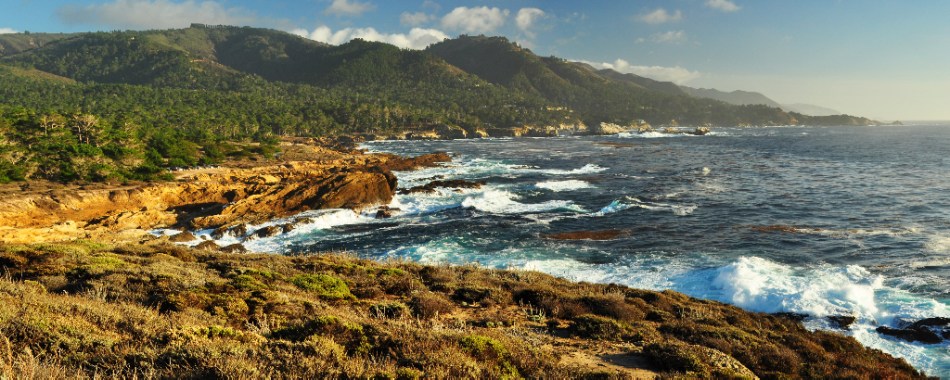
Looking south along the California coast from Point Lobos State Reserve
Clear on the other side of town is Point Lobos State Reserve, also part of the California State Park System. The scenery at Point Lobos is breathtaking to put it mildly. In slightly more concrete terms, it was WELL worth the drive back into town to withdraw some cash so we could pay pay the cash-only $10 entry fee to the park. Now, you can also park on the highway and walk in for free but in my humble opinion, $10 is a small price to pay to keep one of the most spectacular stretches of coastline in the world preserved for all to see. Like the nearby, and arguably more famous, 17-mile-drive and Pebble Beach area, the Point Lobos reserve protects rugged and rocky stretches of coastline, sheltered coves home to seals, sea lions, and sea otters, and one of the last remaining stands of Monterey cypress. What you won’t find here though is multi-million dollar mansions and immaculately manicured golf courses dotting the coast which in my view improves the scenery to a level that is beyond my ability to communicate via words.
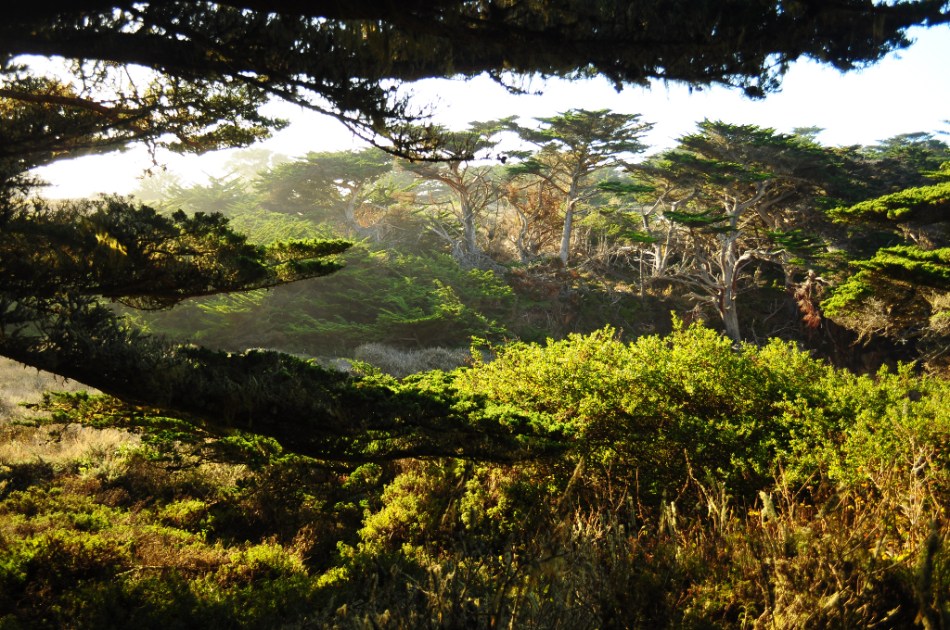
One of only two remaining groves of Monterey cypress (Cupressus macrocarpa) trees on Earth, Point Lobos State Reserve
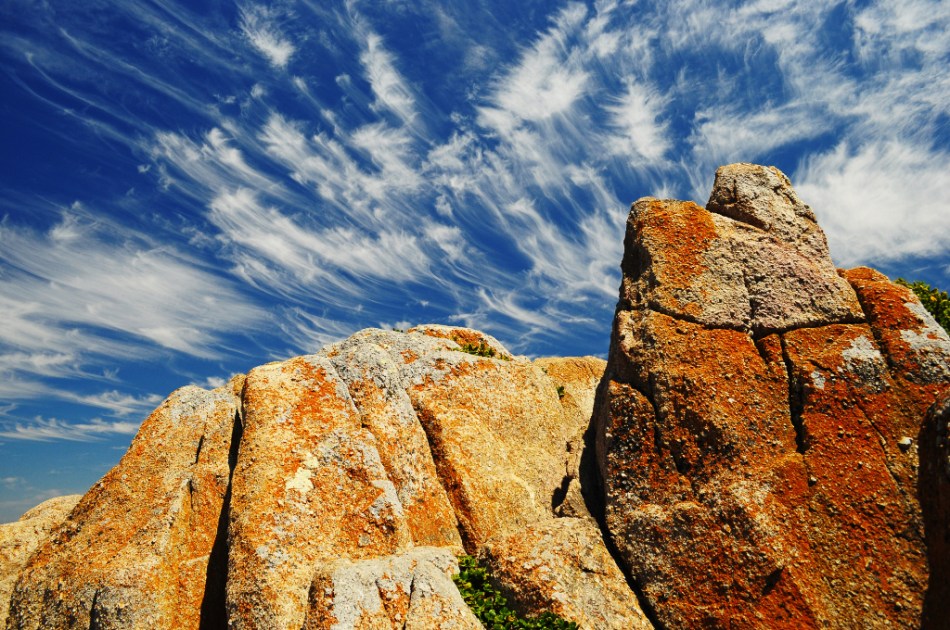
Wispy cirrus clouds hover above Lover’s Point in Monterey, CA

The hoards enjoy a beautiful winter sunset from Carmel Beach
Last but not least is Carmel Beach, located in the small hamlet of Carmel, which is distinctive in that it eschews street lamps and prohibits the wearing of shoes with heels higher than two inches. It is also one of the few towns in the U.S. to forgo street numbers. While you mull on that for a bit, take note that Carmel Beach is oriented almost directly towards the late afternoon sun, making it an ideal location to spend the end of your day watching our local nuclear fusion reactor dip below the apparent horizon of the Earth (that’s a more astronomically correct way of saying “sunset”). Note also that you won’t be alone. No matter though, just bring a blanket, a box of crackers, and some cheese and enjoy the show!
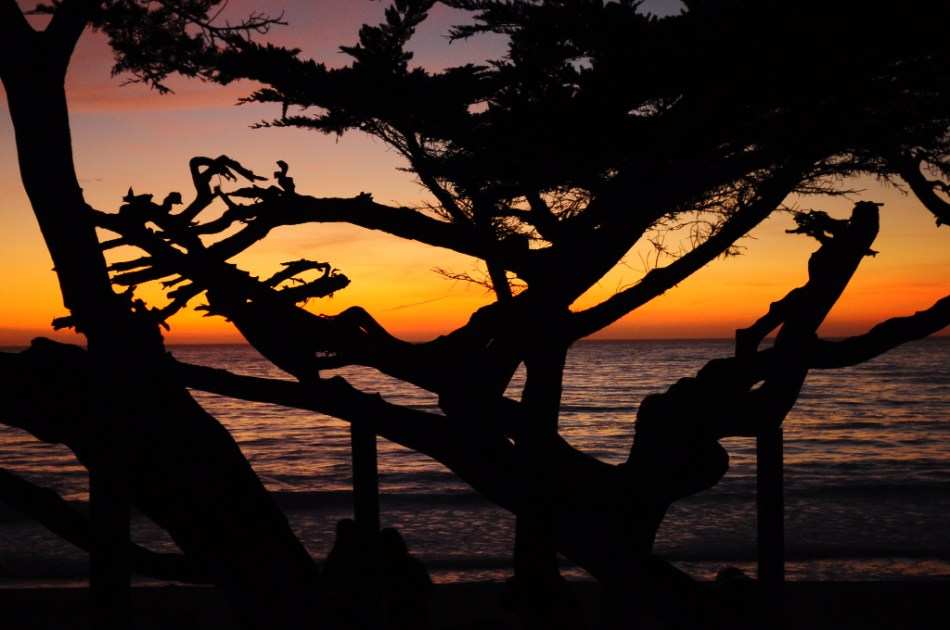
Sunset at Carmel Beach
Honeycomb Weathering from the Desert to the Sea
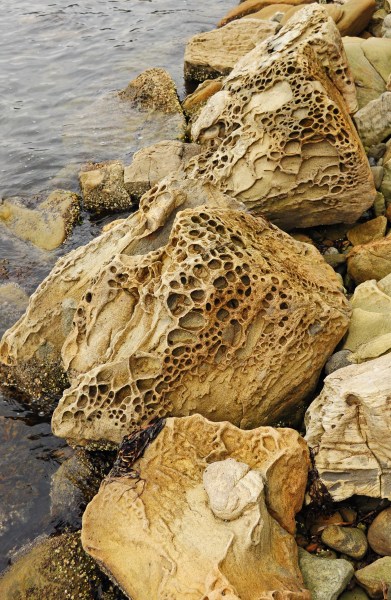
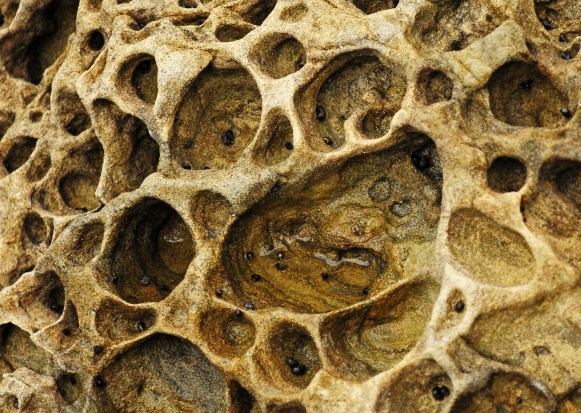
Continuing on with our recent geological theme here at Pyroclastic Pixels (you’d almost think I was a geology grad student or something…), today we are going to take a look at one of the most picturesque geological curiosities you’ll ever find: honeycomb weathering, also frequently referred to as “tafoni”. Those two terms aren’t really exactly quite completely equivalent but we’re not going to journey down the nit-picky fork in the road today. Honeycomb weathering is pretty cool. About the only thing that would make it better is if the holes were actually filled with honey. That joke sounded way better in my head than it looks on the screen.

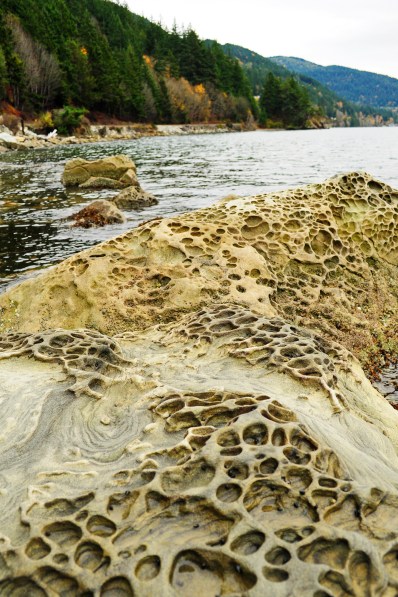
Honeycomb weathering in sandstone at Teddy Bear Cove, Chuckanut Bay, WA (all pictures are from this locality unless otherwise noted)
Specific geographic and geologic conditions are needed for honeycomb weathering to develop, yet these conditions can be satisfied in a variety of places, from the arid deserts of the American Southwest, to the storm-battered shores of the Pacific Ocean. Here in northwestern Washington State, honeycomb weathering occurs along the coast, along and just above the high tide mark, in areas where a rock unit known as the Chuckanut Formation is present. The pictures on this page were taken at Teddy Bear Cove, just south of Bellingham, WA, which has some of the most spectacular examples I’ve ever seen. The Chuckanut Formation, or “the Nut” as I like to call it when I’m feeling lazy, is a thick series of sandstones, conglomerates, and occasional coal seams that were deposited about 60 million years ago when NW Washington occupied a large basin at the foot of an ancient mountain range that occupied more or less the same space that the Modern Cascades now occupy.
There is a good reason that sandstone is one of the rock types most susceptible to this type of weathering. Sandstone is essentially composed of countless tiny, sand-sized particles of various minerals (mostly quartz and feldspar in the case of “the Nut”) which are held together by some sort of substance, known as cement, that “glues” them all together into a solid mass. In most sandstones, this substance is either calcium carbonate (CaCO3) or silica dioxide (SiO2), also known as quartz. Honeycomb weathering forms when salt-laden sea spray lands on the sandstone. As the salty sea water evaporates, tiny salt crystals form on the surface of the rock. The growth of these salt crystals on the surface of the rock physically separates the sand particles from the cement. Over time (a long time…), this creates a small depression in the rock. Once a small indentation forms, a positive feedback effect is created; the hole has a greater surface area than a flat surface and thus more rock is exposed to incoming sea spray. Sand grains are thus separated from the cement at a faster rate, thereby enlarging the hole. In some locations, you can actually see little piles of sand grains in the cavities, grains that were once part of the rock but have now been forcibly removed by the salt. I’ve found that this is most prevalent in areas just above the high tide line where wave action can’t wash the sand grains back out to sea.

But Zach, you say…how then does honeycomb weathering form in places like the desert Southwest where the closest thing to sea spray you’re going to find is mule deer pee? Ah…well I’m glad you asked. We often observe honeycomb weathering in sandstone in places such as Southern Utah that are far away from the sea. I had some difficulty finding a halfway decent picture of desert honeycomb weathering from my archives, but I was able to find one that I took in 2008 in Capitol Reef National Park (see below). If you want to see a lot better examples, just do a Google image search for “Utah tafoni”. While the exact cause may vary, and the individual pits tend to be larger, the process involved is essentially the same. We still need to find some way to separate our sand grains from the cement. Many washes in the southwest are dry for most of the year but are very rich in dissolved salts when they do flood. In desert environments, it’s no surprise then that we tend to find honeycomb weathering predominantly along dry stream beds and canyons. When a flood comes through, even though the water may not be as saline as the ocean, it is still salty enough to form small salt crystals when it evaporates, which it invariably does. In other locations, slightly acidic groundwater percolating through rocks can actually chemically dissolve calcium carbonate cement, leaving the sand grains with nothing to cling to.
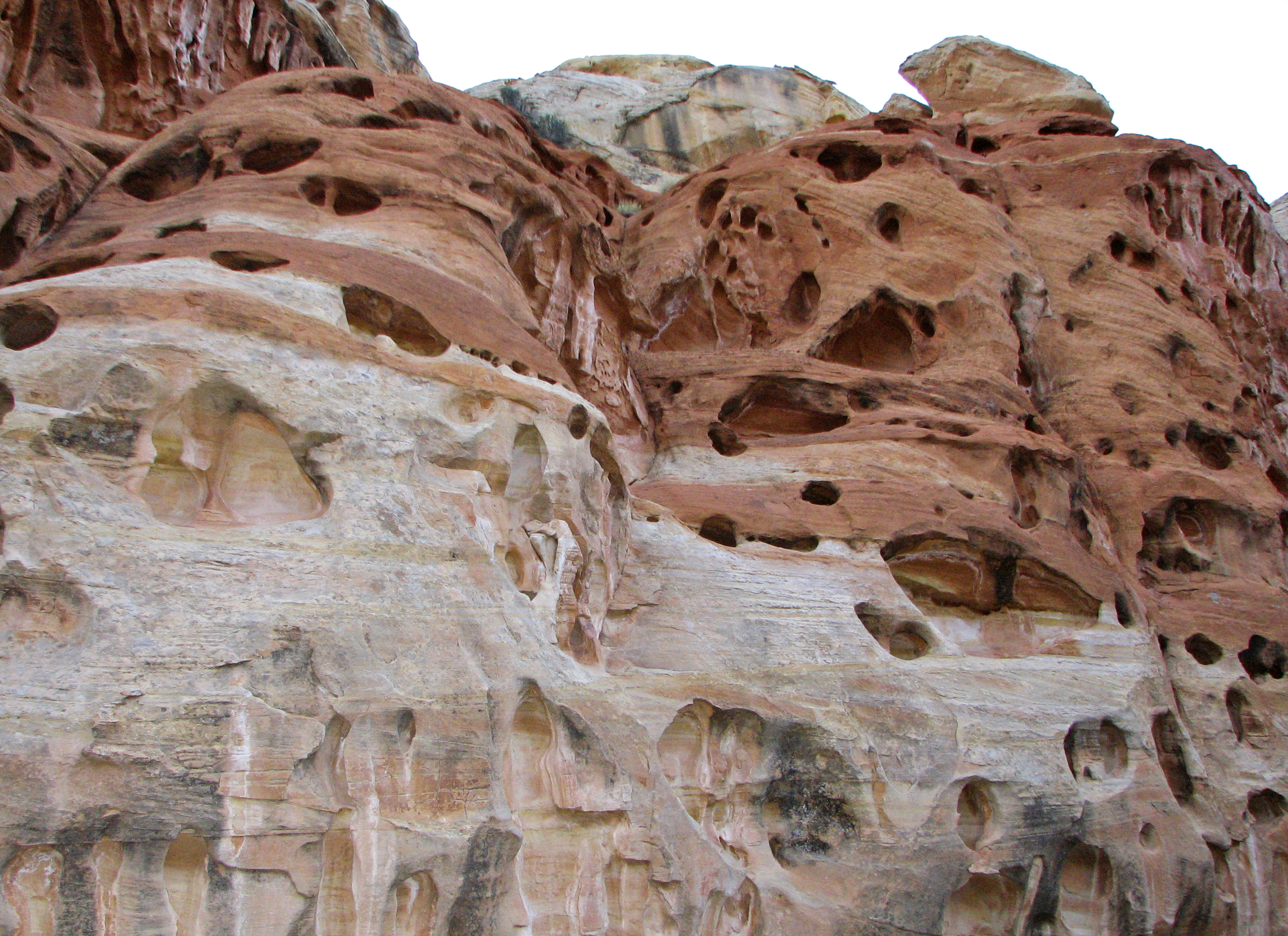
Larger scale cavernous weathering features in Capitol Reef National Park, Utah
Hard as it might be for you to believe, this has been only a cursory explanation of the honeycomb weathering formation process. If your brain hasn’t begun to resemble honeycomb weathering by now and you are interested in the gritty details (perhaps you arrived here in the process of researching a paper or maybe you’re a geology nerd like me and just like knowing about such things), an excellent academic paper on the formation of honeycomb weathering can be found here. Regardless, your next step should be to pull out a geologic map, find the closest beach with some sandstone, pull your boots on and go find yourself some honeycomb weathering! Or you could always just look at the rest of these pictures I suppose…

Sleepy Seals and Sea Lions
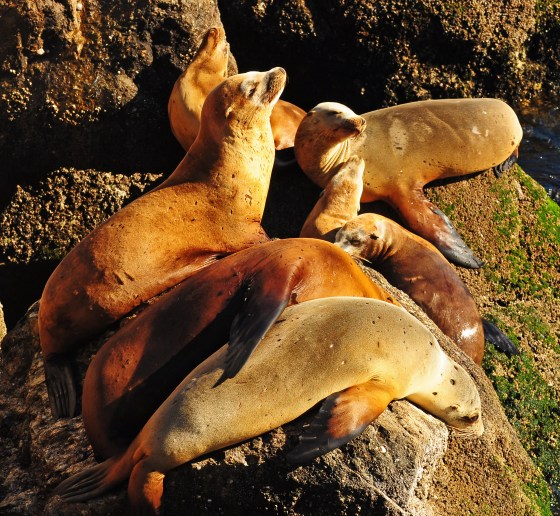
I’ve tried napping on rocks before. Apart from a nice long snooze on a flat, polished slab of gneiss along the Gunnison River this summer, I haven’t had a whole hell of a lot of success, but that’s a story for another day. After much thought, I can see only two possible ways in which one could enjoy a nice long nap on a rock: #1: you have an air mattress and pump with you (or a really thick ThermaRest), or #2: your internal organs are cushioned by a several inch thick layer of blubber. This collection of photos of seals and sea lions getting their beauty sleep in some seemingly uncomfortable positions deals predominantly with option #2. These creatures all call Monterey, CA their home and are content to take a siesta on just about any exposed knob of rock they can find. Either that or somebody accidentally dumped a semi-truck load of Ambien into the bay. Anyways, in summary, my quest to use the word “blubber” in a blog post is now complete and I’ll be going to bed now. In a nice, warm, soft, mostly level but with a slight sag in the middle, Queen-sized bed mind you.
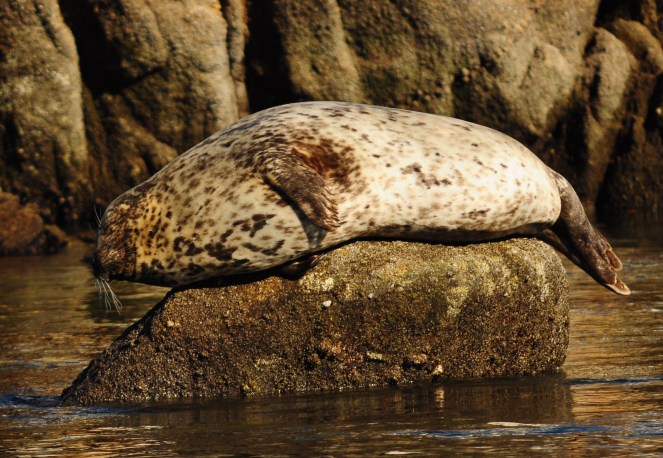
Spotted Seal? Or moldy sausage?

Don’t let the passive appearance of this adorable sea lion fool you! Just moments later this enormous pile of blubber was actively trying to bite off a rivals head!

It’s really funny when the one on the bottom wakes up first
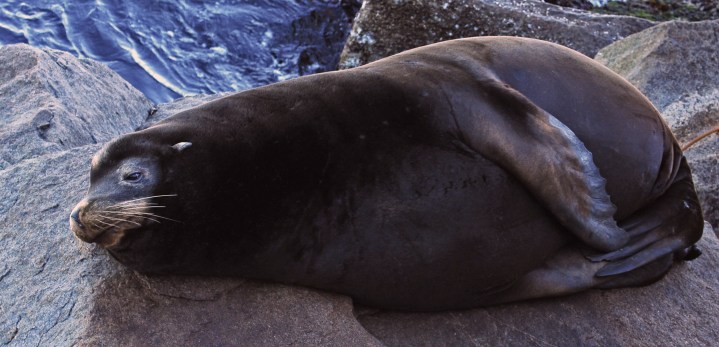
Can’t….keep….eyes….open…

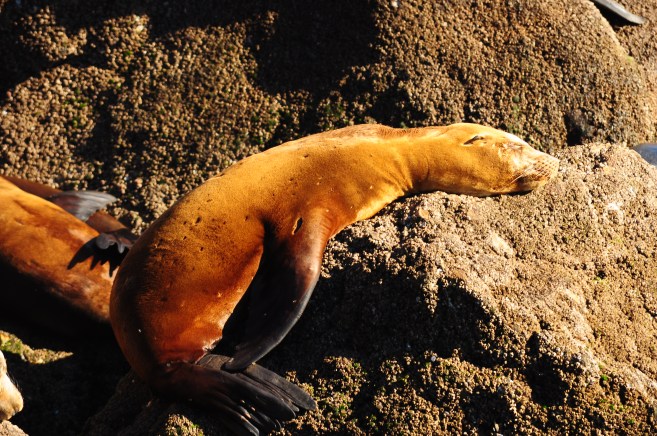
Sea lions behave much like a viscous fluid; they take the shape of their surroundings.
 Zach Schierl Photography