el Cañón del Colorado
According to my calculations, it has been 865 days since I last visited the Grand Canyon. Having grown up about an hour away from the Big Ditch, this seems sort of, well, unnatural. It’s been even longer since I’ve visited in the winter, which is sad because winter tends to be the only that that a visit to the Grand Canyon doesn’t make you feel like you’re fighting your way through your friendly local neighborhood Super Wal-Mart.
One of the things that has always amazed me about the Grand Canyon is the fact that you can literally be standing 20 feet from the edge and have no idea that it even exists. Unlike many of our other semi-urbanized natural wonders, you can’t really see it that well, if at all, from the parking lot. The Canyon was “discovered” by European settlers with horrendous depth perception in 1540 . A soldier named Cárdenas was searching for the Seven Cities of Cibola under the command of his boss, Francisco Vásquez de Coronado when he and his small regiment stumbled upon the canyon. Cárdenas were either inherently godawful at judging distance and depth or they were really really drunk at the time because they thought that the river at the bottom was only 6 feet wide. Dangerously low on water, Cárdenas sent several soldiers down into the canyon, thinking that they could reach the river, obtain water, and return to the rim within a few hours. The erroneous nature of that estimate soon became clear and whatever horror stories Cárdenas’ men told the rest of their party were apparently bad enough to keep any other Europeans from visiting the canyon for more than 200 years.

The hordes gather at Mather Point

A raven surveys the canyon from Hermit's Rest

Looking west from Desert View, the last rays of sunlight stream into the canyon
People watching at the Grand Canyon is always a fun little activity this time of year. On one side of the spectrum you’ve got people in shorts who are flabbergasted at the fact that the canyon rim is covered in a foot of snow and are then forced to purchase very overpriced souvenir sweaters from the gift shop. On the other side we find the individuals (read: Phoenecians) who are dressed down like Randy from A Christmas Story (I can’t put my arms down!) even though it’s actually like 40 degrees outside.
Due to the snow, trails down into the canyon are notoriously treacherous this time of year so we stuck to the rim for the day. One of my favorite places on the South Rim is a little-known overlook called Shoshone Point. It’s unsigned and doesn’t appear on any park service maps yet can be rented out for weddings and other special events during the summer. It’s about a one-mile walk from the main park highway on a dirt road. Since the park service pretty much refuses to acknowledge that it exists this time of year, not only is it one of the most spectacular viewpoints, but you basically get it all to yourself as well. Unless other people see you parked on the side of the road in an entirely non-descript patch of forest and decide to check things out for themselves. Then you might have a bit of company. But hey, still better than dealing with 8 billion tour buses!

Mid-afternoon panorama from Shoshone Point

Watchtower at Desert View
Down the Staircase
Some photos from a week exploring southern Utah, Bryce Canyon, and the Grand Staircase:

Horseshoe Bend of the Colorado River. 4-shot panorama. Given that it was about 110 when I took this, I can't even describe how appealing that water looked...
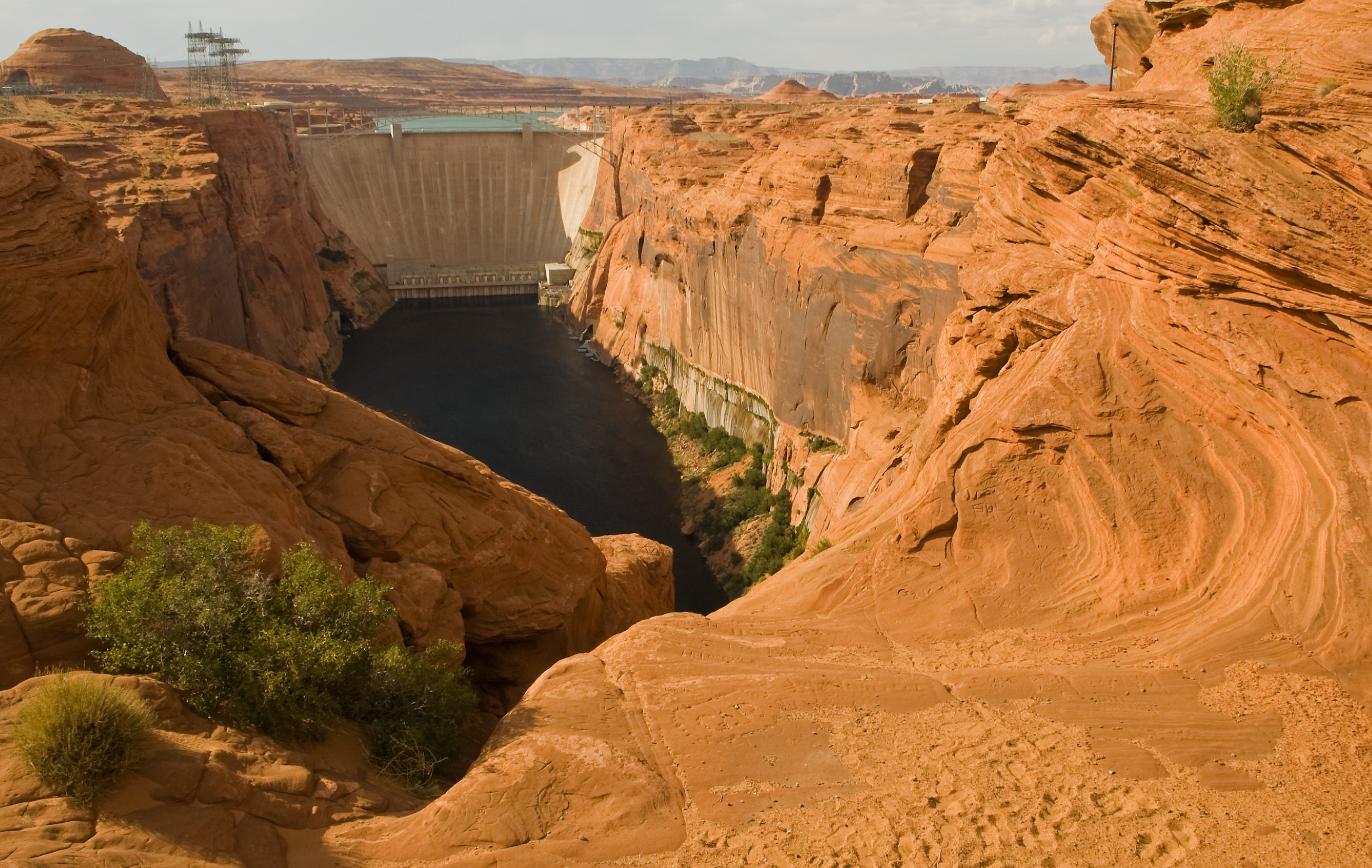
The infamous murderer of Glen Canyon, a.k.a: Glen Canyon Dam, Colorado River
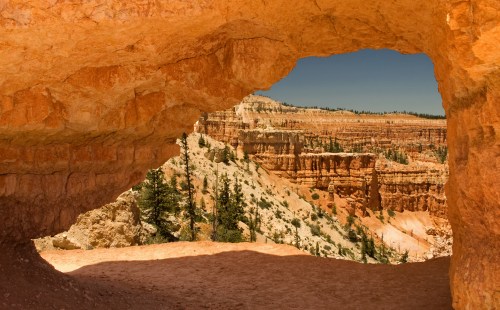
Peakaboo Trail, Bryce Canyon National Park
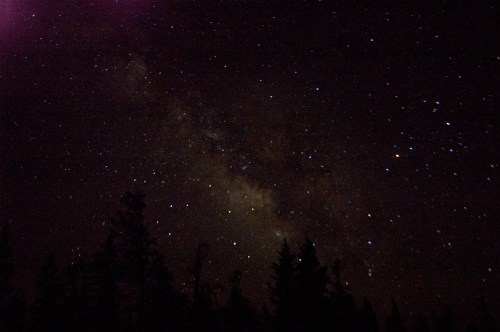
Summer Milky Way from Rainbow Point, Bryce Canyon National Park
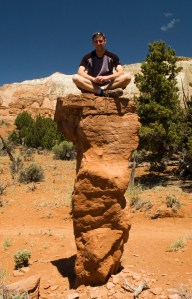
Kodachrome Basin, near Cannonville, UT
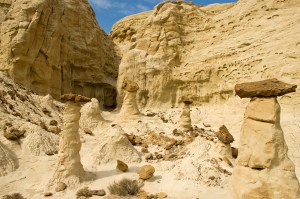
The Toadstools, Grand Staircase-Escalante National Monument

Toadstool. Yours truly for scale.
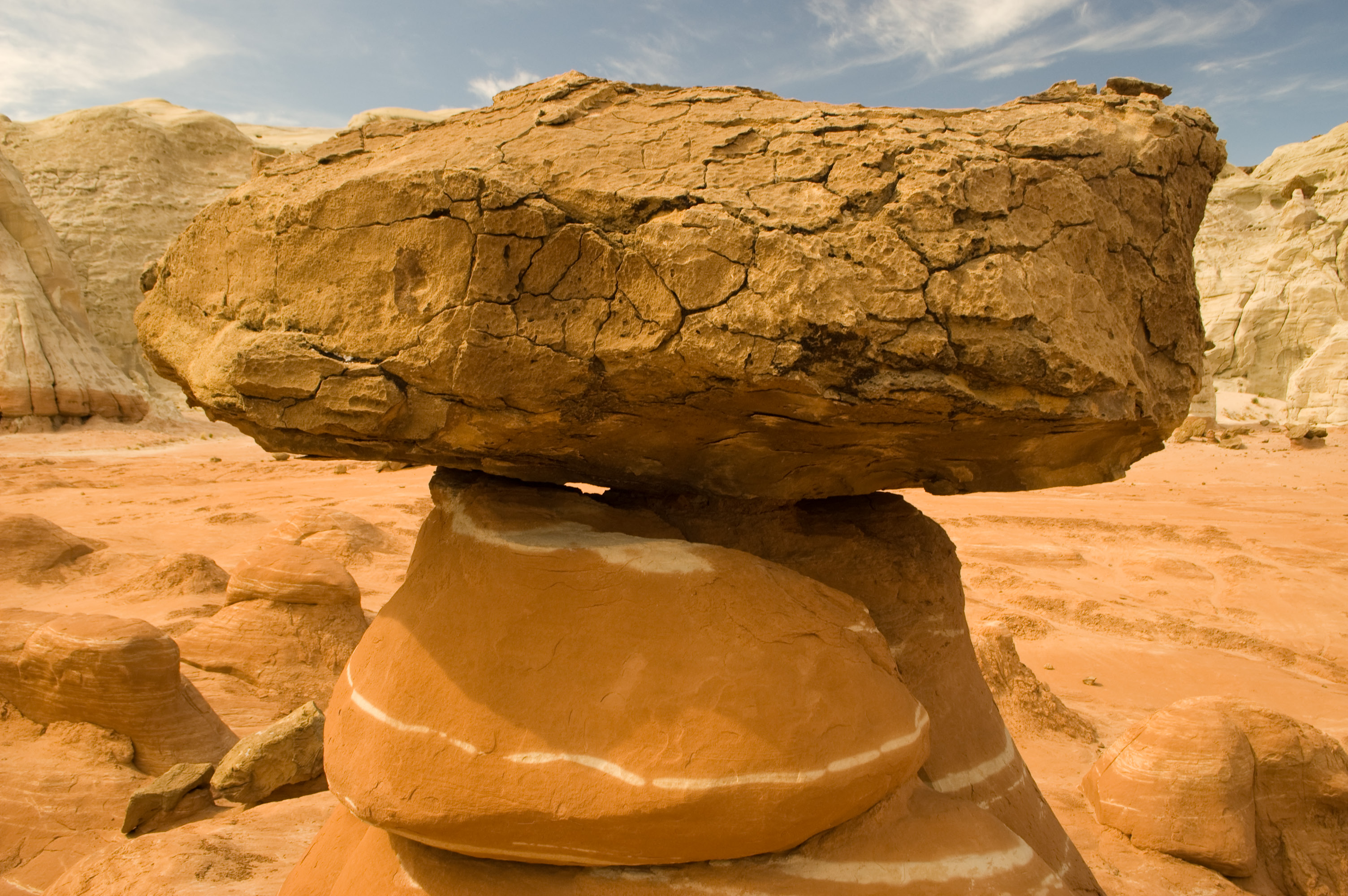
Toadstool close-up. Basically the orange sandstone of the Entrada Formation (same stuff that forms the famous spans of Arches National Park) is easily erodible but portions get protected by boulders of the harder and more resistant Dakota Sandstone that originate in the cliffs above.
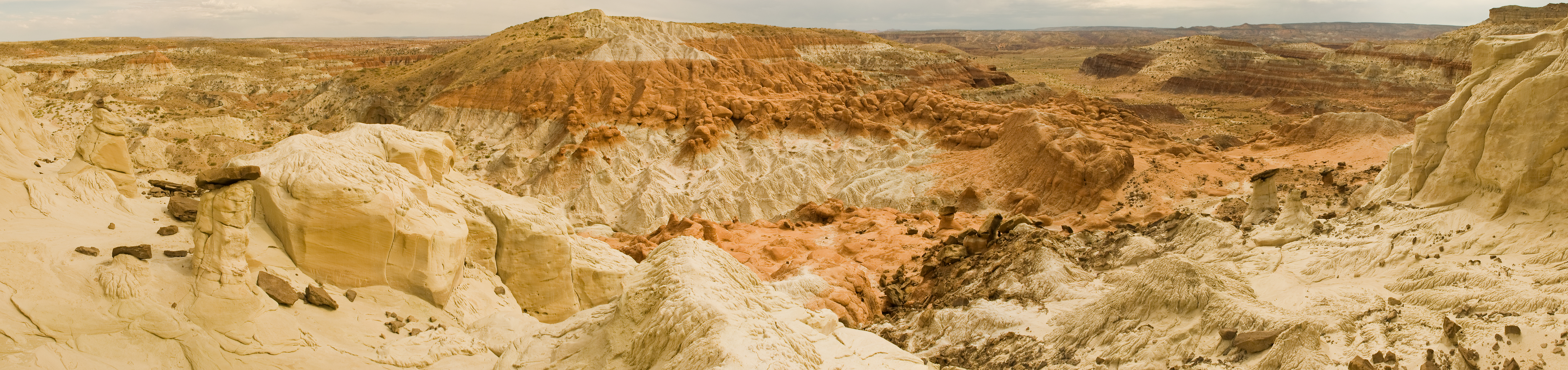
The Toadstools, Grand Staircase-Escalante National Monument
The Best Day Hike in the World
At least that how the Kiwi’s promote the Tongariro Alpine Crossing in Tongariro National Park. Given that I haven’t expereinced the vast majority of the day hikes in the world, I am not in a position to judge the accuracy of such a statement, however after last week I can say with certainity that you would have a very difficult time arguing against them.
The Tongariro Crossing is located in the central portion of Tongariro National Park, New Zealand’s oldest. The 19.4 km (12.0 mile) track climbs up and over a saddle between Mt. Ngauruhoe and Mt. Tongariro, two active stratovolcanoes that along with Mt. Ruapehu form the backbone of the national park and are the highest points on the North Island of New Zealand. If there is one thing that the trail is known for, it’s bad weather. The trail had been closed for most of the week that we were on the North Island due to snow and 120+ km/hr winds but on the last day of the trip, the clouds parted, the winds moved on, and we had 100% perfect weather for the entire day.
Undertaking the Crossing involves taking a shuttle bus to a trailhead on the west side of the mountains. 19.4 km later, the bus picks you up on the north side and drives you back to the carpark. From the very beginning, the landscape is incredibly stark, with almost no vegetation. Mt. Ngauruhoe (which played the role of Mt. Doom/Mordor in the Lord of the Rings Trilogy) looms above you for the entire first half of the hike. In many ways, the landscape is similar to what you would experience hiking across the flanks of Kilauea or Mauna Loa in Hawaii only much more mountainous. All three of the volcanoes in the part have expereinced significant eruptions in the last few decades and the trail crosses a number of fresh lava flows, pyroclastic deposits, craters, and steaming ground.
The trail begins by slowly climbing up a broad glacial valley on the western flank of the mountains. After about 8 kilometers and a 750m (2500 ft) climb up Devil’s Staircase (brief side rant: “Devil’s” is an prefix used FAR too often when it comes to naming moderately challenging sections of trail. Go hiking anywhere in the world and I promise you you will encounter a difficult section of trail named Devil’s Staircase, Devils’s Highway, Devil’s Ladder, or Camino del Diablo or something like that. I really want to know how these conversations go. “Ooh, this here trail is pretty steep…what should we call it?” “I dunno, whatever we call it though we should probably slap “Devil’s” on the front of it to make it sound nice and foreboding.” I mean, I get that its steep and you might be a little winded when you reach the summit, but in all honesty, unless you are trying to climb Everest in 120 degree heat with no oxygen, I have a feeling the Devil could assign you far more hellish tasks.) , we arrived at Red Crater, the highest point on the main trail. Side trails split off the main route and head to the summits of Mt. Ngauruhoe and Mt. Tongariro. Since we had gotten a late start, we chose Mt. Tongariro since it was shorter and didn’t involve scrambling up a 45 degree scree slope. The views from the top were breathtaking, one could see almost from one coast of the island to the other. After Red Crater, the trail descends sharply down to Emerald Lakes past a number of hydrothermal vents and pools and lots of steaming ground. The second half of the trail basically just heads straight down the mountain and is relatively unremarkable. We ended up running the last few km’s in order to catch the 3:30 bus back to our car and not have to wait for a hour to catch the next one.
All in all, an amazing hike, especially for the geologically inclined. My only complaint were the hundreds of other people we shared the trail with. This was to be expected I suppose given that this was the first day in a week that the trail had actually been passable but it was still far from what you would call a wilderness experience. Despite the length and elevation gain, the crossing is not a particularly difficult trail. With the exception of one stretch just after Red Crater, the trail is incredibly well maintained and the footing is superb. We manged to complete the trail in exactly 7 hours including our side trip to Tongariro Summit.
-
- Yours truly at the trailhead
-
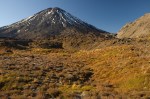
- Looking up towards Mt. Ngauruhoe from the beginning of the Tongariro Alpine Crossing
-
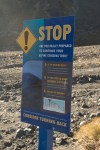
- The DOC makes a BIG effort to make sure that people attempting this trail are prepared and have the right equipment. In fact, a few years back, they actually changed the official name of the trail from “Tongariro Crossing” to “Tongariro Alpine Crossing” in an attempt to make the trail sound more inhospitable to novice hikers.
-
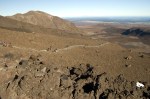
- Trekking across Mordor…
-
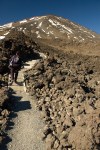
- Devil’s Staircase, Tongariro Alpine Crossing
-

- Needle ice on Mt. Tongariro
-

- Layered, hydrothermally altered volcanic deposits dot the foreground, Mt. Ngarahoe visible in the background from Mt. Tongariro
-

- Early season snow on Ngauruhoe, as seen from Red Crater
-
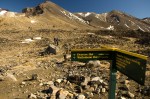
- Trail Junction on the Tongariro Alpine Crossing
-
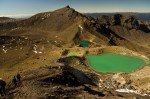
- Emerald Lakes on the Tongariro Alpine Crossing
-

- A distant, hazy view of Mt. Taranaki (all the way on the west coast of the North Island) from the summit of Mt. Tongariro
-
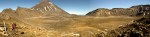
- Panorama of South Crater between Mt. Ngauruhoe and Mt. Tongariro
-
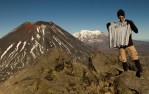
- Represent!!!
 Zach Schierl Photography