From the San Juans to the San Juans
They are separated by more than 1600 kilometers. One barely rises above sea level while the other boasts six peaks exceeding 14,000 feet in elevation. One is most easily accessed by kayak or porpoise, while in the other it is difficult to escape the incessant drone of Jeeps, dirt bikes, and ATVs that trawl the vast network of old mining roads. One is beset by a deluge of by rain eight months out of the year, whereas the other is inaccessible except by ski, snowshoe, or helicopter for six. To the untrained eye, the San Juan Islands of NW Washington and the San Juan Mountains of SW Colorado couldn’t be more different. My current job situation has me living about an hour away from the mountains for 3 months out of the year, and an hour or less away from the islands for the other 9 months. And viewed through the lens of a camera, I have discovered that there are more similarities that you might expect. The first of which will probably be rather obvious:
They both posses stunning scenery:

View from Deception Pass State Park on Fidalgo Island looking southwest across the water towards the Olympic Peninsula.
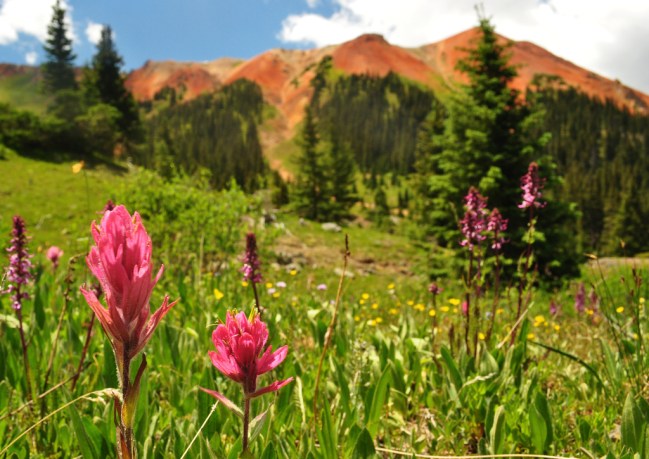
Rosy Paintbrush in an alpine meadow near Red Mountain #1 (yes, nearby can be found Red Mountain’s #2 and #3. The old miners were a creative bunch.) in the San Juan Mountains.
Both offer opportunities for “extreme” sports:
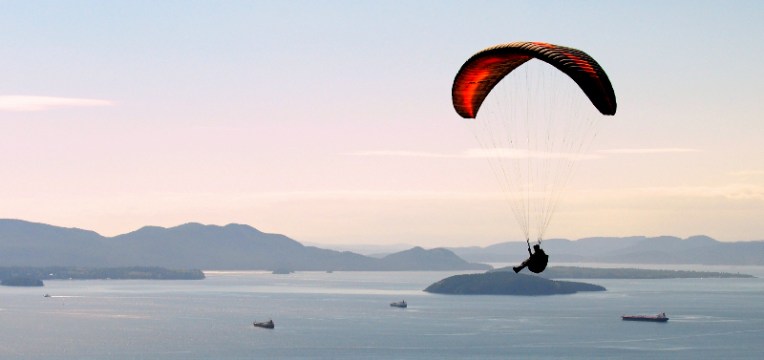
A paraglider enjoys a serene aerial view of the San Juan Islands and several tankers headed for the oil refineries in Anacortes, WA.
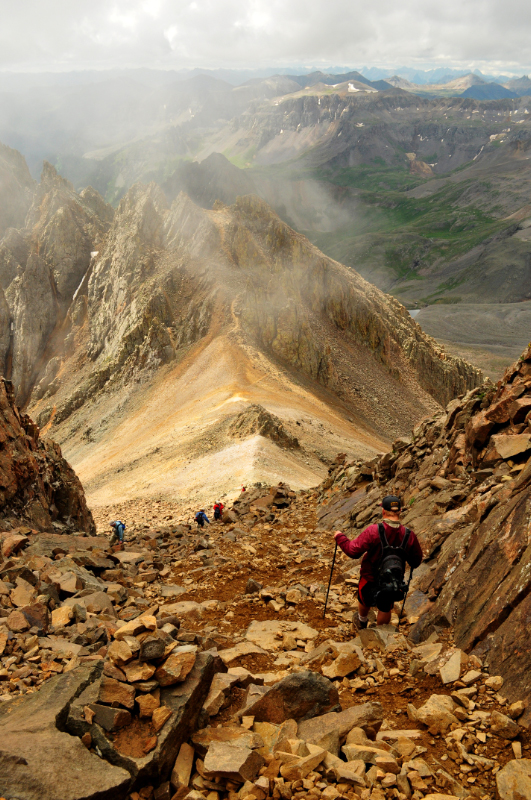
Descending a scree-filled colouir after summiting 14.150′ Mt. Sneffels in the San Juan Mountains. While most of the climb is straightforward and requires only a hefty amount of scrambling, there is one tricky section near the summit during which a fall would likely mean the end of one’s mountain climbing days…or any other days for that matter.
Both were shaped and sculpted by vast quantities of ice:
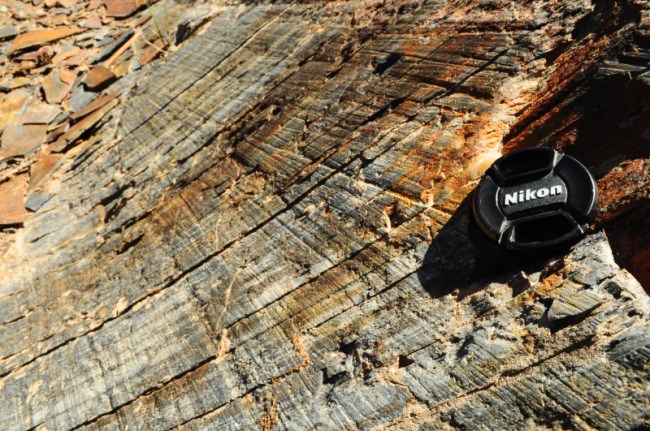
Glacial striations in slate high above the Uncompahgre Gorge in the San Juan Mountains. The parallel grooves in the rock were carved by rocky debris trapped along the base of a long-gone glacier that was partially responsible for scouring out the gorge.
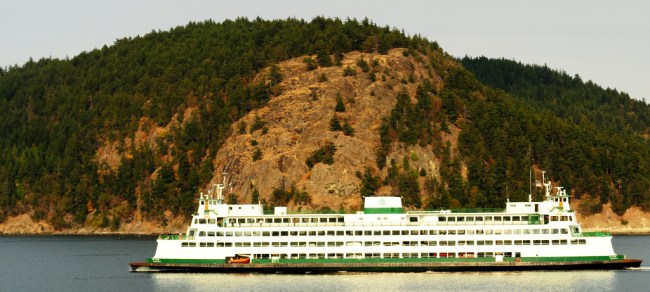
A Washington State Ferry passes a cliff of glacially scoured rock in the San Juan Islands. Glacial striations identical to those in the previous photo are ubiquitous throughout the San Juan Islands, evidence that the area was buried beneath more than a mile of ice during the peak of the last glaciation, about 15,000 years ago.
And finally, both are home to curious wildlife:
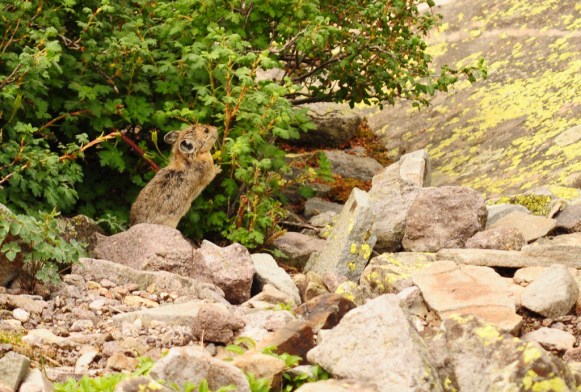
An American Pika investigates a bush at 11,000 feet in the San Juan Mountains.
 A Blood Star investigates a California mussel below sea level in the Strait of Juan de Fuca.
In case you didn’t know, that’s what starfish look like when they are curious.
And the Thunder Rolls: the Southwestern Monsoon
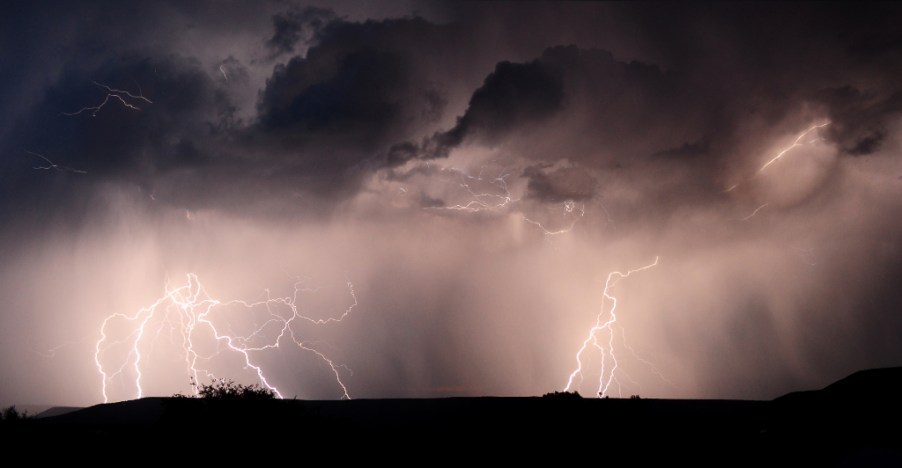
Two complex lightning bolts strike a mesa in Western Colorado in this 1-minute exposure.
One of my favorite things about the southwest is the sheer ferocity of the thunderstorms that arrive like clockwork every summer. It has always seemed to me a particularly violent way of delivering water to the desert. Anyone who has visited Arizona, Utah, New Mexico, or Colorado in the summer knows how an apparently benign, cloud-free, blazing summer afternoon can spawn a multitude of life-threatening thunderstorms in a matter of hours. Known as the monsoon season, late summer in the American southwest is a time during which many areas can receive as much as half their annual rainfall in the span of just a few short weeks. Generated by the arrival of tropical moisture from the south, these are thunderstorms that force one to begin any summer hike involving peaks or ridges in the wee hours of the morning to avoid being caught in an unpleasant situation. These are thunderstorms that claim the lives of dozens of people every summer, sometimes via lightning strikes, but more often via sudden deluges of water known as flash floods that result when rain falls so fast and so hard that it doesn’t have time to soak into the soil, and instead collects in raging torrents of water, mud, trees, and rocks that can travel vast distances, sweeping unsuspecting hikers dozens of miles away from the nearest raindrop off their feet. These are also storms that produce truly unforgettable memories (the fondness of which is directly proportional to how close shelter is at the time…) and great photographs, again assuming adequate shelter is close at hand.
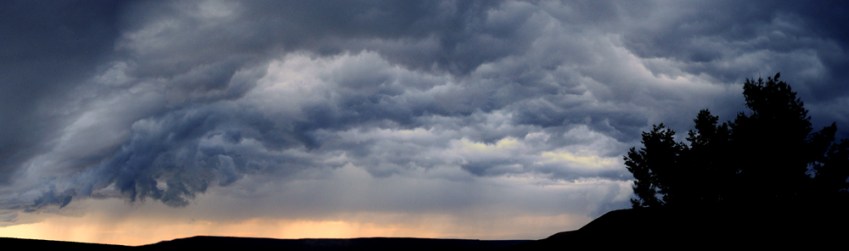
Storm clouds begin to swirl during a late evening monsoon thunderstorm.
Perhaps most mercifully though, these are the storms that ultimately temper the stifling heat that dominates the southwest early in the summer. Ironically, this oppressive heat actually brings about its own demise; the intense heating of the land surface in the early summer (May and June) is responsible for causing the monsoon rains that eventually bring temperatures back down to somewhat more humane values by late July and August.

A pair of lightning bolts; one cloud-to-ground and one cloud-to-cloud.
Two words are all one really needs to fully describe conditions in the American southwest in the early summer: “hot” and “dry”. Temperatures soar well into the 100s in many locations and relative humidity values in the low single digits are commonplace. As anyone who has ever lived on the 2nd floor of a poorly ventilated apartment building in the southwest in the summer knows: hot air rises. This basic thermodynamic fact can be used to explain just about every aspect of what is formally known as the North American Monsoon, or any monsoon, or just about any form of weather for that matter. As the Sun heats the land surface, warm dry air begins to rise high into the atmosphere due to its lower density. This rising air column leaves a void, a sort of a partial vacuum if you will, behind it, creating an area of low atmospheric pressure over the sizzling southwestern states. This partial vacuum creates a welcoming pathway for warm, moist air from the tropics to slowly begin seeping its way north from Mexico and the Gulf of California. As the month of June comes to a close, this tropical moisture has begun to saturate the air around the Four Corners region. Gone are the days of single digit humidity values, and by early July, the Sun, instead of heating bone-dry air, is heating air that is rich with moisture.
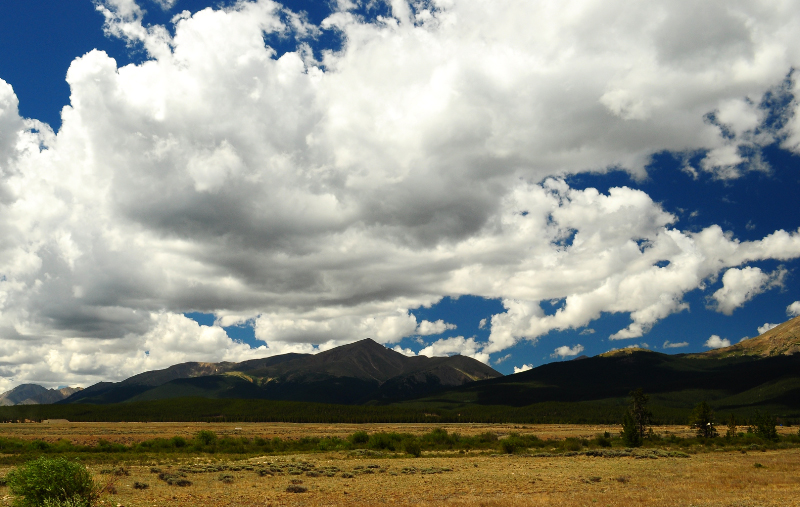
Large cumulus clouds, the infant stages of a monsoon thunderstorm, hover over Colorado’s highest point, Mt. Elbert. Clouds like these are a sign to hikers to get off the mountain and start heading for shelter; a scene like this can develop into a full-blown severe thunderstorm in as little as an hour.
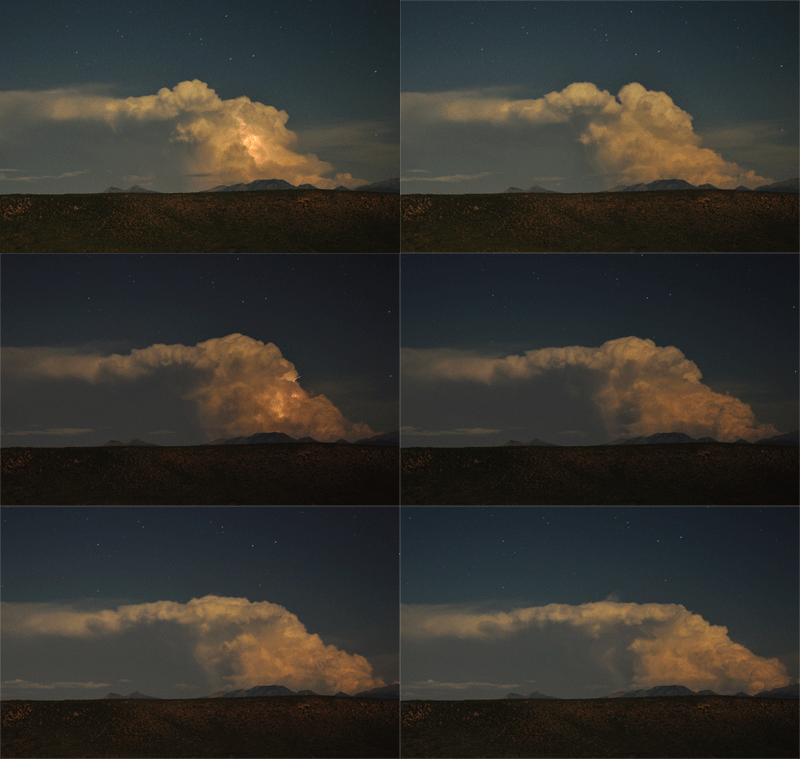
Now when moist air rises, the water within it condenses into water droplets, first creating puffy cumulus clouds, and eventually enormous cumulonimbus thunderheads that can reach heights of more than 50,000 feet above the Earth’s surface. These storms normally develop in the afternoon, after the Sun has had several hours to warm the surface and generate a robust rising column of air. To give you an idea of just how fast these storms can expand, and since WordPress won’t let me post videos, here’s a fun little animated GIF showing about 15 minutes of growth in a late evening thunderstorm over the West Elk Mountains of Colorado. Notice the stars in the background:
While the annual arrival of the monsoon may be predictable, the individual storms that it produces are not in the slightest. The isolated nature of the storms can be incredibly surreal; I’ve been in locations where 2″ of rain and nearly a foot of hail fell in a matter of 30 minutes, while the ground half a mile away remained completely dry. And while the North American Monsoon may not pack quite the same punch as its southeastern Asia cousin, it nevertheless is a significant event, in both negative and positive ways, for all who live in the area. Good in that it provides the southwest with badly needed moisture in the late summer, and bad in that its unpredictable nature never fails to catch those unfamiliar with the weather pattern off guard. In addition, storms during the first few weeks of the monsoon will often generate copious amounts of lightning, but very little rain, sparking numerous wildfires in tinder-box dry forests that haven’t seen rain in months, fires that are nearly impossible to extinguish until heavier rains arrive to douse the flames.
Photographing these storms is most easily accomplished at night, when you can simply point the camera at the storm (provided you and your metal tripod are somewhere reasonably safe), leave the shutter open for a few minutes at a time, cross your fingers, and hope for a few well placed strikes. While the best bolts inevitably occur in the two seconds your camera is processing your most recent exposure, or are located juuuuuuuuuust outside the camera’s field of view, rest assured that the light show that nature puts on will still be exponentially better than anything you could possible see on your computer monitor or TV screen.
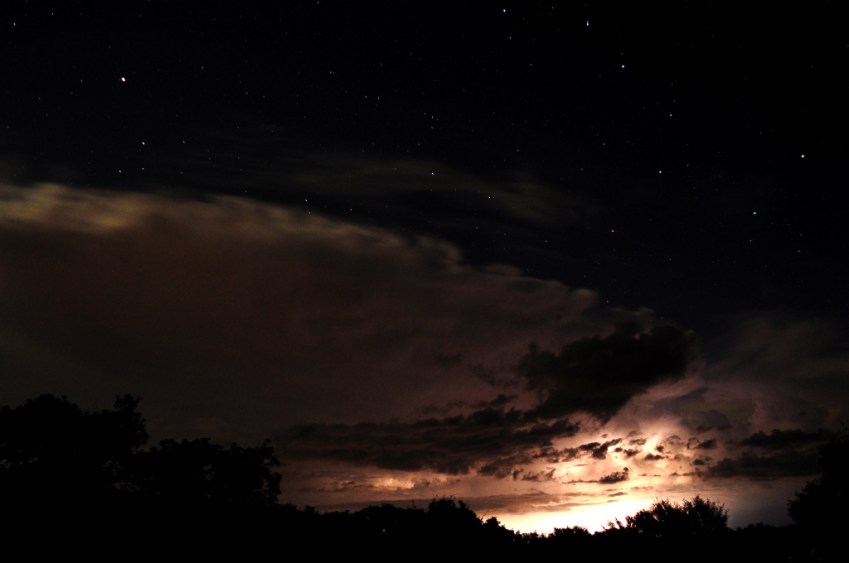
The crest of a large thunderhead stops just shy of obscuring the Big Dipper.
The Spectacular San Juans: A Trip to Yankee Boy Basin

Taking in the scenery
Note: I’m reaching back into the archives here. I have about 10 posts in my drafts folder, all in various stages of completion and many from this past summer, that I’ve decided it’s finally time to post. This is one of them. And yes I know this is my 2nd consecutive post with glacial and geological undertones. I’m not sorry, glaciers are totally radical man!
On my lifetime list of most spectacular landscapes, Yankee Boy Basin in the San Juan Mountains ranks quite high. I’ve seen expansive fields of wildflowers with different species spanning every color of the rainbow plus some. I’ve seen 100 foot high waterfalls that have undoubtedly been the setting for numerous Coors commercials. I’ve seen craggy, majestic mountain peaks and pinnacles sculpted over millions of years by the work of a posse of many abrasive glaciers. I’ve seen aqua blue lakes appear seemingly out of nowhere as they fill from the meltwater of a lobate rock glacier. I’ve seen ribbons of crystal clear snow melt water plunging in an endless stream of cascades straight down the side of a mile wide glacier cirque. Never though have I seen all these things in one place. Yankee Boy Basin truly has it all. It rivals anything I ever saw in the mountains of New Zealand. Throw in the fact that I saw up-close and in person just about every glacial and periglacial feature I learned about in geomorphology class and it doesn’t get much better. Miraculously, you can actually get here with minimal effort, especially if you have a 4WD vehicle (or, in our case, the ability to rent one), and don’t mind driving on roads that look like this:
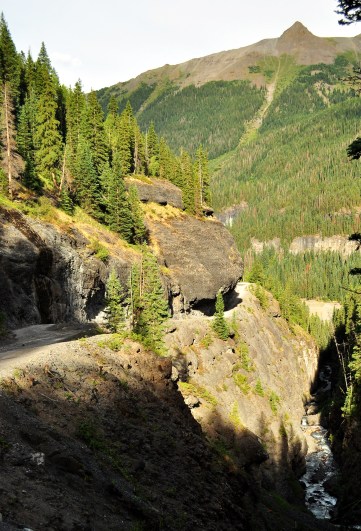
Section of shelf road cut into cliff heading back down towards Ouray from Yankee Boy Basin
Mind you, merely walking around on a level surface at nearly 13,000 feet involves a fair bit of effort and energy expenditure. Altitude acclimatization definitely makes things easier but even then, running around in excitement is definitely not recommended since I imagine the scenery would not be as greatly appreciated if you are passed out on the floor of the basin. Amazingly, over 1500 individuals each year blatantly ignore this advice during an annual 17 mile footrace up and over nearby 13,114′ Imogene Pass. In an additional twist that can only be explained as a classic example of male one-up-manship, in the early 1990’s, some folks decided that running 17 miles at extremely high altitude was not torturous enough and thus the Hardrock 100 was born. Participants in this masochistic race traverse 100 miles of rough terrain at an AVERAGE elevation of over 11,000 feet, climbing up the passes and peaks in the vicinity of Yankee Boy Basin. The total elevation gained and lost during the race is a mind-boggling 67,984 feet. Yeah, altitude does crazy things to people.
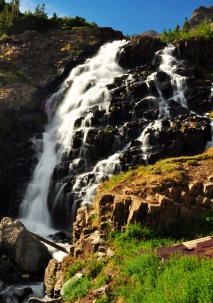

Trail headed up to Wright’s Lake
One of the neatest features of Yankee Boy Basin is a 50 yard wide body of water called Wright’s Lake. Wright’s Lake is bounded on the east by a terminal glacial moraine which forms a small ridge meaning that the lake does not come into view until you are practically wading into it. I had not seen any pictures of the lake prior to the hike so I was unsure what to expect. After smoking my little brother up the short trail from the road, I came around the edge of the moraine to see an enormous rock glacier flowing down from Gilpin Peak 1000 feet above me and terminating at the edge of an aquamarine blue lake, a sight which exceeded even my most hopeful expectations. The sight of a lake sourcing a not-insignificantly sized stream with no immediately obvious source of replenishment is an odd one indeed until you realize that the wall of talus on the far side of the lake is cored with ice.
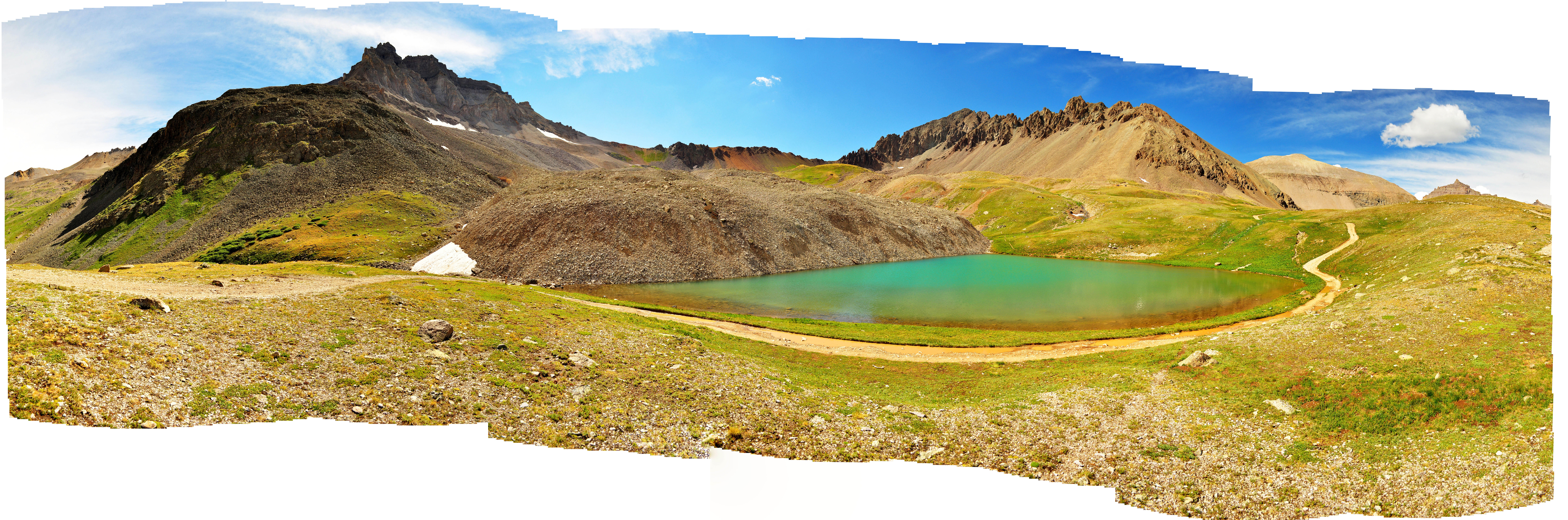
Panoramic View of Wright’s Lake. Gilpin Peak and rock glacier at left, Mt. Sneffels at right.
Rock glaciers are interesting beasts. They are essentially glaciers covered with a layer of rock that serves to insulates the ice which continues to flow downslope under the influence of gravity. To completely cover a glacier in rock, one naturally needs a lot of rock. The peaks in the San Juans generally consist of extremely crumbly, scuzzy volcanic tuff and ash deposits. Gilpin Peak, the summit from which the rock glacier descends, is no exception as it looks like the whole mountain could slough off into the valley during the next stiff breeze. Debris from the peak above the glacier falls from the sheer cliffs ringing the basin and accumulates on the surface of the ice. The insulating effect of the rock has allows these small remnants of ice (the San Juans were home to much more extensive glaciers during the most recent glacial period) to survive here even though the current climate in the San Juan’s is too warm and dry for traditional glaciers to survive.
From Wright’s Lake, it is about 1.5 miles and another 1500 feet up to the summit of Mt. Sneffels, one of Colorado’s famous 14ers (peaks over 14,000 feet high) and one that is not on anyone’s list of “easiest to climb”. On this day, the notoriously nasty conditions on the summit of Sneffels was apparently even from a quarter mile below. From the lake you could easily hear the wind whipping around on the summit ridge and thunderstorms were approaching from the west.
As I finally get around to finishing this post in early January, I am struck by the thought of how this amazing landscape is now buried under many, many feet of snow. While I am sure that the San Juan’s are equally inspiring in the winter, perhaps even more so to many people, thinking about this gives me an even greater appreciation for such places, given just how short of a window we have each year to experience alpine landscapes such as this one. The winter of 2011-2012 was an incredibly dry one in Colorado, and many places such as Yankee Boy Basin were mostly snow-free and accessible by May or June. In a normal snowfall year, vehicle access to these high altitude basins is often impossible well into July or even August, leaving potentially as little as 6 weeks before next winter’s snows begin to reclaim the land once again.

Yankee Boy Basin
 Zach Schierl Photography