Exploring the Earth and Sky of the West

Latest

Earth, Wind & Snow

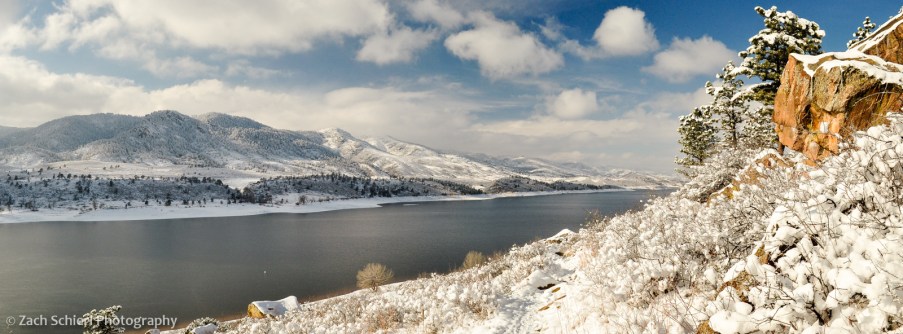
Horsetooth Reservoir in the snow

Horsetooth Reservoir after the first significant snowfall of 2015

After the first two winter storms of the year did nothing but lower Northern Colorado’s collective faith in local weather forecasters, we finally got our real snowfall of the year over the past few days. After a predominantly grey and shivery Thanksgiving weekend, the clouds finally revealed some blue sky today so I headed out to Horsetooth Reservoir for a few hours to grab some photos before the afternoon slate of NFL games kicked-off.

Horsetooth Reservoir is a local landmark and apart from the obvious water-based recreational opportunities, there are several world-class bouldering spots located along the east shore of the reservoir that make for some interesting winter scenes. I half expected to see some bold (feel free to pick a stronger word if you prefer…) boulderers throwing caution to the sheets of ice coating most surfaces, but despite this location’s proximity to Fort Collins (~10 minutes), I was pleasantly surprised to have the place all to myself. With no boats on the reservoir and two ridgelines separating me from the ongoing holiday shopping hustle and bustle down below, Horsetooth was unusually serene.

Boulders in the snow at Horsetooth Reservoir

A popular bouldering spot at Horsetooth Reservoir; a bit slick today!

Snowy trail at trees at Horsetooth Reservoir

Snowy trails and trees along Horsetooth Reservoir

After wandering around for nearly an hour, I began to notice that nearly every branch and blade of grass was encrusted in about a half inch of crystal-clear ice. Not only that, but the ice had invariably accumulated on the east side of the vegetation, suggesting some fairly persistent west winds over the past few days. A far cry from the sunny serenity of Sunday afternoon!

Ice accumulation on dry grass blades

Ice accumulation on dry grass blades

Ice on branches

Ice accumulation on shrubs after a recent winter storm

Summer Fades, Winter Enters

While the snow may be falling and the vegetation dying, I am still alive and well here in Northern Colorado. This past spring, I somewhat rapidly went from working zero hours per week to working 50-70 hours per week which, as they say, “crimped my style” when it comes to photography.

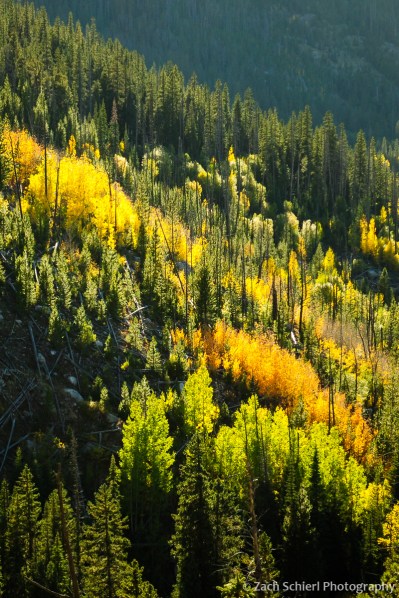
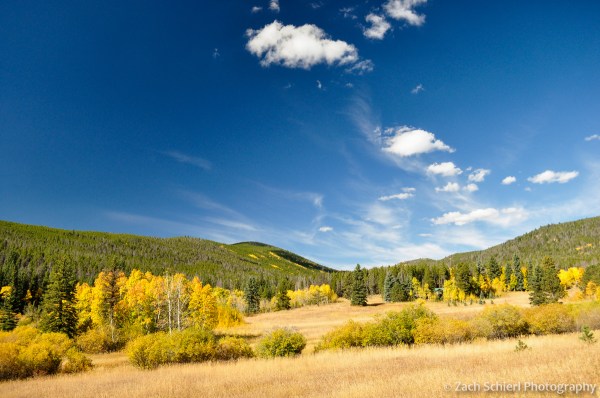
We’ve had a glorious month of unseasonably warm fall weather here in Colorado and I was fortunate to get the chance to take several trips into the high country over the past few weeks to photograph fall colors. The presence of a leaf blight on many aspens in Northern Colorado (due to a fungus that took hole during our spring & early summer deluge) led to dire speculation that this season’s leaf show would be a letdown. Indeed, I did come across occasional unsightly stands of aspen with leaves that looked as though they been crisped by a torch. But many other locations appeared completely unaffected and lived up to the annual hype. Enjoy the photos!

Note: 2016 photography calendars will be available soon! Details to come…

Golden aspens and creek in Rocky Mountain National Park

Aspens along the lower Roaring River, Rocky Mountain National Park, Colorado

Red, yellow, and green aspens

A bright palette of red, yellow, and green aspens in Wild Basin, Rocky Mountain National Park. Nature’s stoplight! Just not quite in the correct order…

Golden aspens near Pennock Pass, Colorado

Pennock Pass, Colorado

Golden Aspens near Pennock Pass, Colorado

Pennock Pass, Colorado

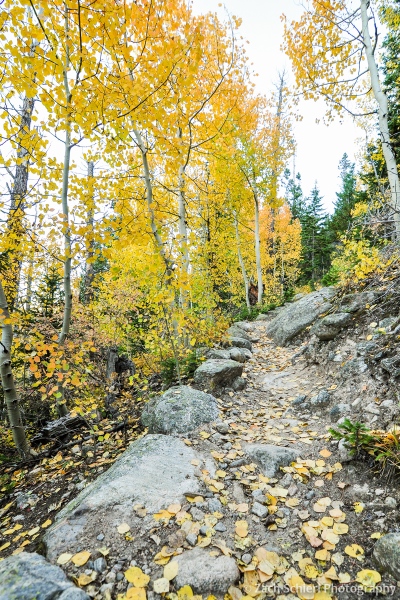
Fallen aspen leaves on a trail in Rocky Mountain National Park

Fallen leaves litter a trail in Wild Basin, Rocky Mountain National Park, Colorado

Poison ivy changes colors in the fall

Aspens aren’t the only plant that change color in the fall! Poison ivy (Toxicodendron rydbergii) can often have colors to match.

Greyrock Trail Loop, Poudre Canyon, Colorado

view of greyrock mountain and meadow

Greyrock Mountain and Greyrock Meadow

And now for a few more photos from before winter roared back into Colorado this past week:

Earlier this winter we took a day trip up Poudre Canyon, about a half hour northwest of Fort Collins. One of the more popular trails here is a ~5.5 mile loop combining the Greyrock Trail and the Greyrock Meadows Trail. A short spur trail heads up to the summit of Greyrock Mountain (pictured above) near the apex of the loop but we opted to pass on this route due to icy conditions and dwindling daylight. Despite ranging in elevation from 5,500-7,000 feet, the trail was surprisingly snow free, save for the lower sections that were well-shaded by the canyon walls.

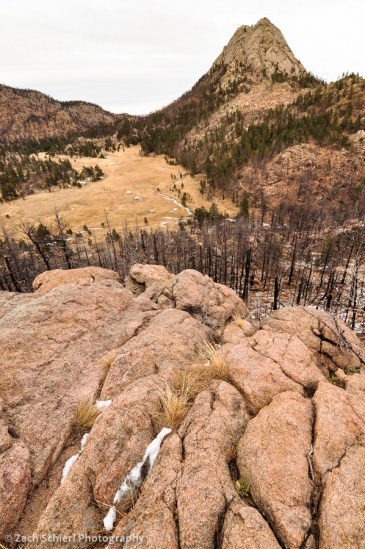
The highlight of the hike is most certainly the spectacular granitic rock formations surrounding Greyrock Mountain. I say granitic because the rock here is actually not granite but what geologists call quartz monzonite; essentially granite with slightly less quartz and slightly more feldspar (hence the pinkish color). A seemingly trivial difference perhaps but an important one to geologists trying to unravel the history of the rocks. The steep, smooth faces of Greyrock Mountain wouldn’t look out of place amongst the granite domes of Yosemite National Park. There’s also some good sized pegmatite dikes that criss-cross the area. We found some very large and attractive quartz and feldspar crystals poking around the meadows that surround Greyrock Mountain.

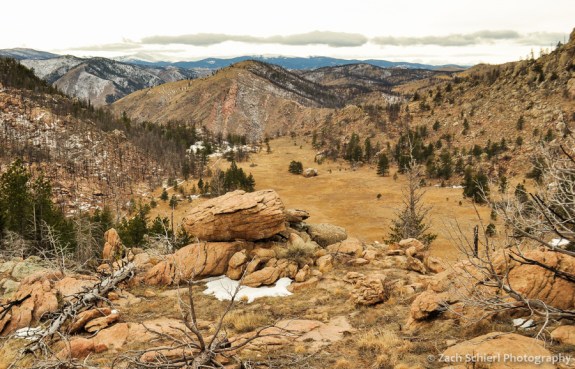
A view of Greyrock Meadow

Standing on a large pegmatite dike looking down into Greyrock Meadow. The continuation of the dike can be seen as the prominent vertical pink stripe on the hillside just beyond the meadow.

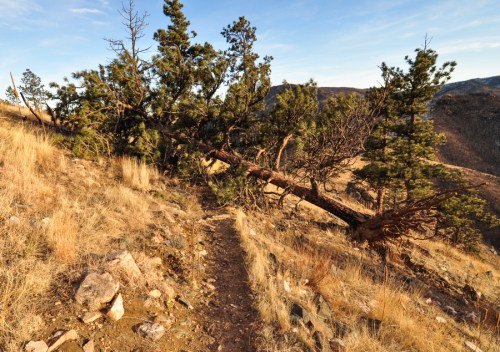
On a non-geology note, the trails winds through several different burn scars, apparently of different ages based on the amount of regrowth in different areas. Many of these burned areas are likely due to the High Park Fire of 2012, one of the largest wildfires in Colorado’s history which ravaged the lower sections of Poudre Canyon. There had apparently been a large windstorm here recently, as there were numerous downed trees, some dead snags but some still very much green and alive, strewn across the trail:

downed Ponderosa Pine on the trail

One of many large, recently downed Ponderosa Pines on the Greyrock Meadow Trail.

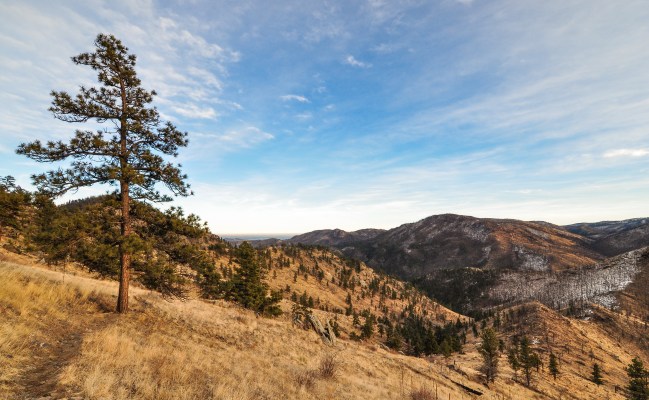
On the hike back down to the trailhead (on the Greyrock Meadows Trail), we were treated to a spectacular sunset over Poudre Canyon as well as views of the distant Mummy Range in Rocky Mountain National Park.

Poudre Canyon before sunset

Golden hour light looking east down Poudre Canyon

Sunset above Poudre Canyon

Sunset over Poudre Canyon