A Break from Winter in the Sonoran Desert


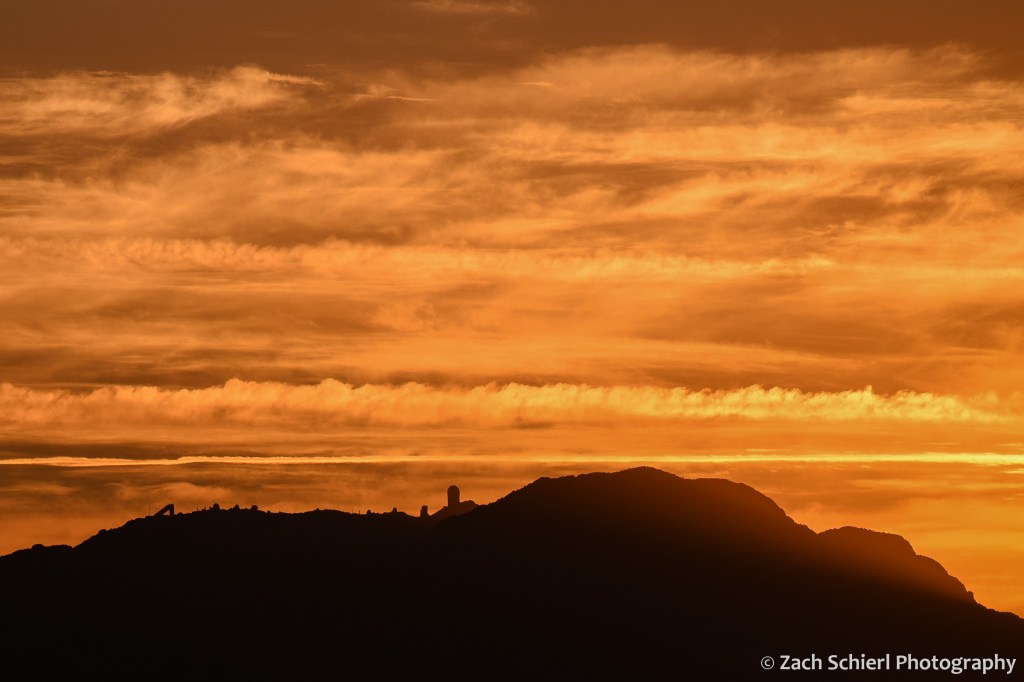
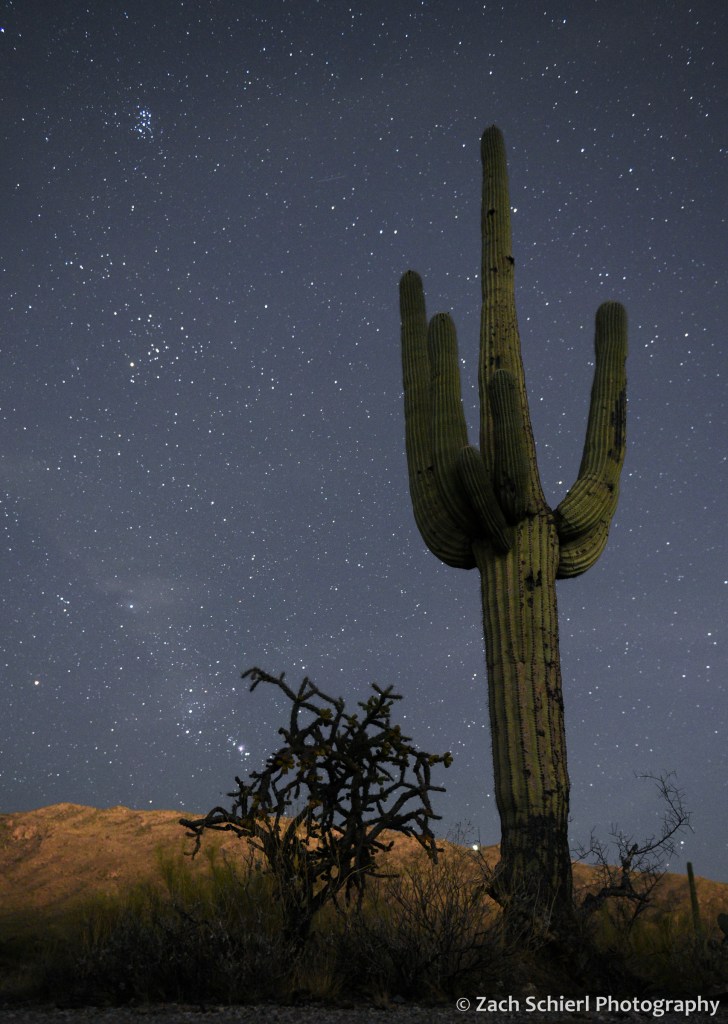
Happy New Year! For the first time since 2019, we were able to visit family in Arizona for the holidays this year. (We had tickets last year, but Southwest Airlines had other plans…) The cheapest flights were into Tucson, so I got to spend a few days hiking and shooting photos in the sunny and 75° Sonoran Desert for a few days at the beginning of the trip. It was a lovely break from the cold, gray central Washington winter, and it is hard to come away from an Arizona sunset without at least a few good photos! Here are a few of my favorites:






From Washington to Zion

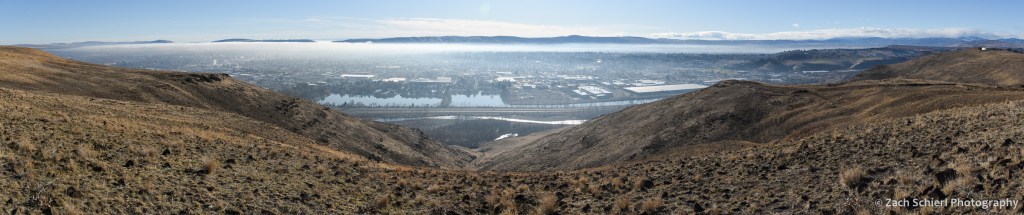
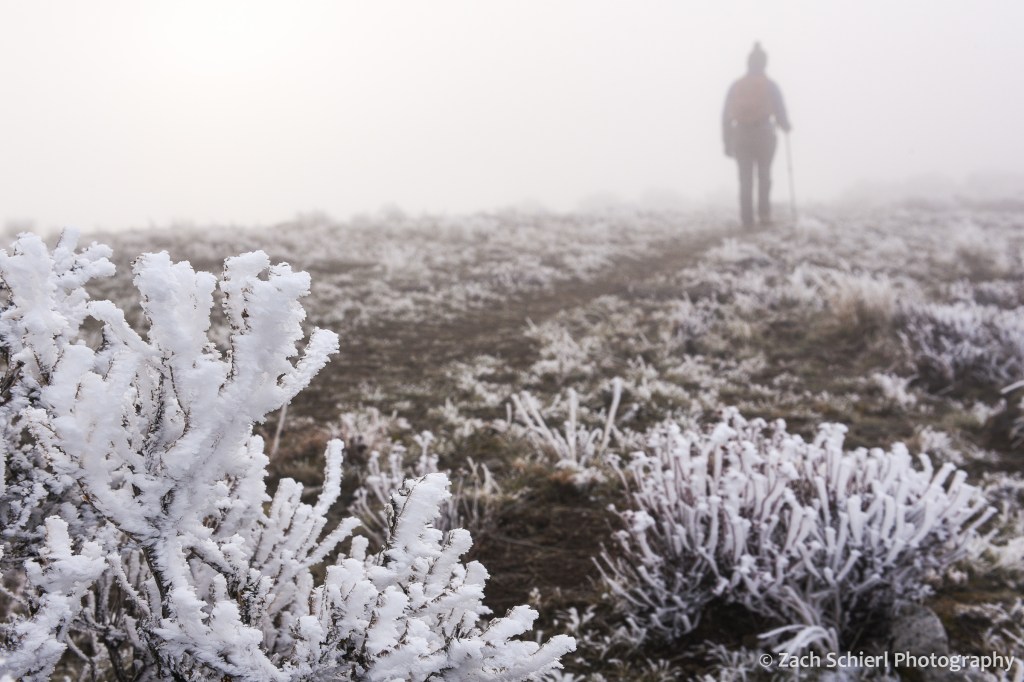
Between work, weather, and the ongoing pandemic, my camera has seen relatively little use the last few months. Here in central Washington, it is inversion season. Atmospheric inversions occur when relatively warm air passing over the Cascade Range traps colder air below in the valleys of the Columbia River Basin. These pools of cold air can persist for weeks, bringing cold temperatures, freezing fog, and poor air quality. Fun, fun, fun! Here’s what things have looked like in recent days:
Stuck inside, I’ve been working on a project to organize and categorize over a decade’s worth of photos. It’s been fun to come across long forgotten gems and months and months of photos that I never even got around to editing in the first place. I plan to post some of the highlights as I come across them.
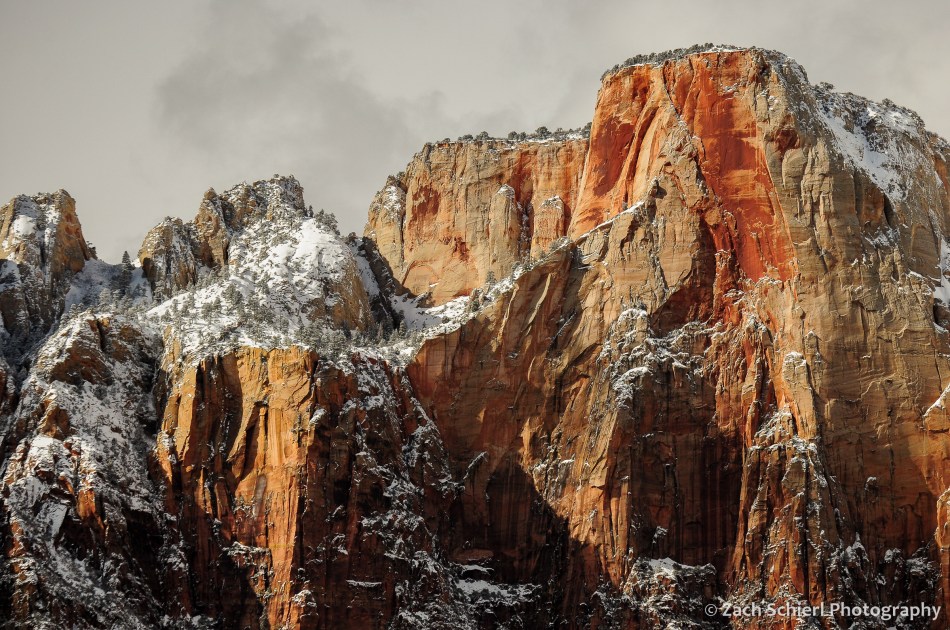
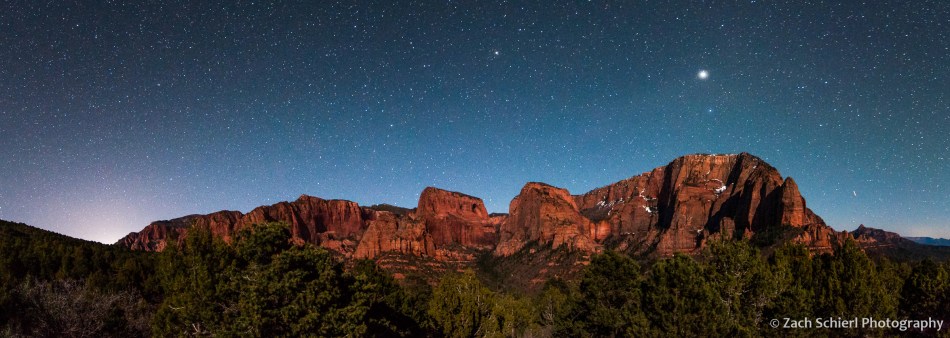
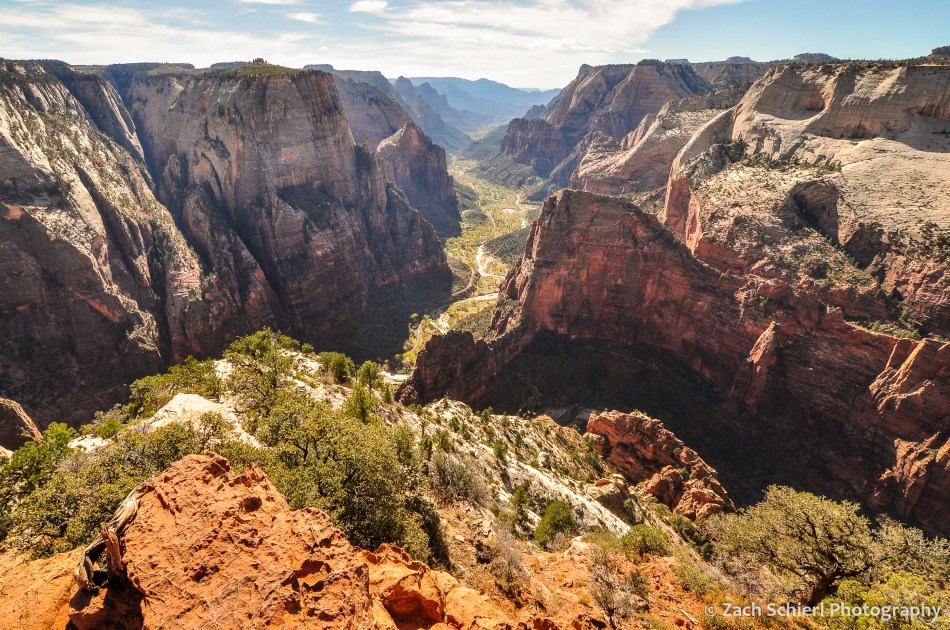
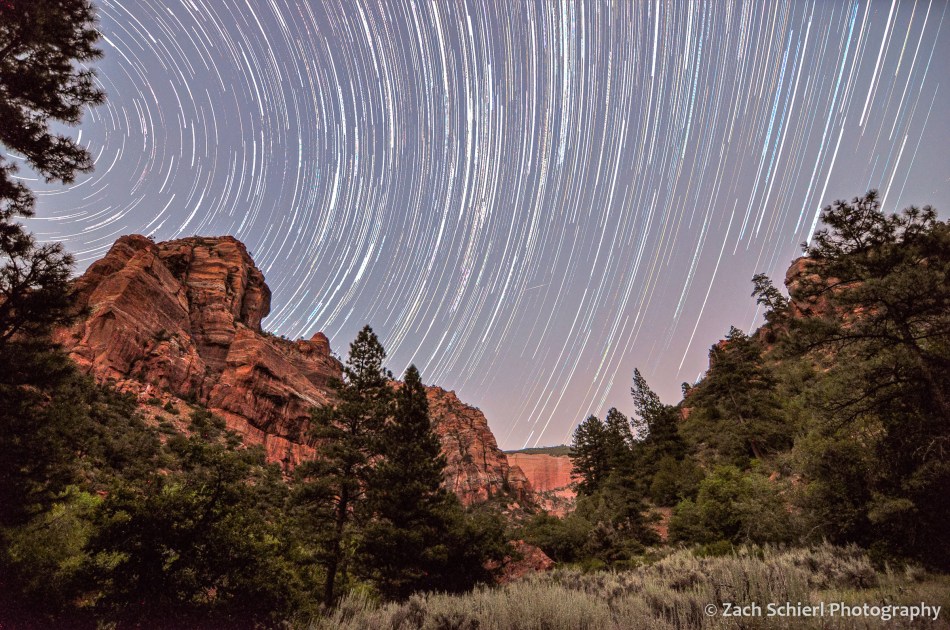
While I post only a tiny fraction of the photos that I take here, looking back through the archives, I’ve noticed one especially glaring omission over the past few years: Zion National Park. Zion is one of my favorite landscapes on Earth, and for a little over three years we lived just 20 minutes from the north end of the park. I was surprised to discover that I haven’t shared any images from Zion since I started this website and blog almost a decade ago. In order to rectify that, here’s a look back at some of my favorite photos from Zion National Park:









Does the Milky Way Really Look Like That?
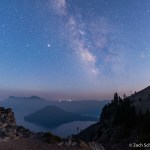

The summer Milky Way from Cedar Breaks National Monument in southern Utah.
Capturing stunning images of the night sky has become much easier in recent years. The low-light performance of modern cameras (and even my six-year old Nikon D750) far outpaces the capabilities of cameras made even a decade ago. Recently, I was flipping through some old astronomy magazines from the early 2000s and was shocked not only by the (low) quality of the wide-field astrophotography of the day, but also by the incredibly expensive gear used to produce those images at the time. 20 years ago, it was extremely difficult to capture a detailed image of the Milky Way without a high-end camera and an expensive tracking mount.
Today, even some phone cameras can capture passable images of the Milky Way. Stunning panoramas of our galaxy stretching from horizon to horizon are now a dime a dozen on social media. Given the advanced abilities of today’s cameras, it is natural to wonder: “Does the Milky Way really look like that?” Do the spectacular Milky Way images we see plastered across the internet accurately represent what the human eye can see? Or is this incredibly rich detail only visible to a high-tech camera sensor? Or, more nefariously, could these images simply be the result of some Photoshop trickery? The answer, perhaps not surprisingly, is a combination of all three!
Let’s begin by discussing one way in which most Milky Way images are not representative of what the human eye would see: color. The Milky Way will always look monochromatic to the naked eye. However, the reason why has to do more with the physiology of the human eye than any deception on the part of the photographer. Let me explain.
Some photographers do like to crank up the saturation of their Milky Way images beyond belief. Night sky photos with vibrant blues, purples, oranges, and pinks are the tell tale signs of digital embellishment. Rather than point fingers, I’ve created my own version below to illustrate:
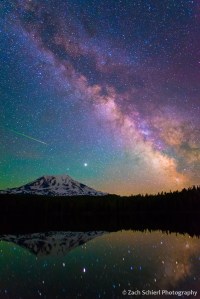
An image of the Milky Way (and a meteor) over Mt. Adams in Washington state…with the saturation slider cranked up to 100 in Adobe Lightroom.
To be clear, these colors aren’t real. This is Photoshop trickery, pure and simple. Here’s what the same image looks like without the saturation increase:

The same image, with natural color.
Much more subdued, certainly, but look closely and you’ll see that there is still some color there! Here’s the good news: those colors ARE real! Notice the pale green sky behind Mt. Adams. That’s airglow, a phenomenon caused by gas molecules in our atmosphere re-emitting energy they absorbed during the day in the form of ultraviolet radiation from the Sun. If you open the photo full screen and look really closely, you can also see some small pink-ish blotches along the plane of the Milky Way. These are hydrogen gas clouds—stellar nurseries if you will—glowing with the characteristic ruddy hue of ionized hydrogen.
Now for the bad news: while these subtle colors are “real”, you’ll never actually see them with the naked eye. Why not? To sum it up, our eyes suck at seeing colors at night. We see using two different sets of cells in our retinas: rods and cones. The cones are what allow us to see color. Unfortunately, the cones only work when there is lots of light entering our eyes, like during the day. Our rods are mostly responsible for our night vision and they are, sadly, colorblind. This is why the night sky (and low light scenes in general), always appear in shades of gray. Only a few of the brightest stars and planets emit enough light to trigger our color-seeing cones. The diffuse glow of the Milky Way does not.
Cameras on the other hand don’t have rods and cones. They are much better at picking up color in low light, so they naturally produce images that are more vibrant than what we actually experience…no editing necessary!
With this in mind, let’s remove the color entirely from our Milky Way image:
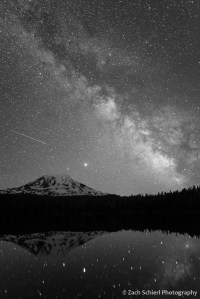
Our Milky Way image converted to black and white, a more accurate approximation of what the human eye sees at night.
With the color out of the picture, is this now what the Milky Way actually looks like to the naked eye? Yes…under certain circumstances.
Look closely at the Milky Way in the image above. Notice the detail. It’s complex. It’s interesting. Some parts are brighter, others fuzzier, with dark blotches and voids winding sinuously from upper left to lower right. The Milky Way is a complex place, and this manifests itself in our view of it from Earth. In this regard, this photo actually does a pretty good job of depicting what the Milky Way actually looks like. You CAN see this detail and complexity with your own eyes…provided that a few things are true:
#1: You have a dark sky. For most people, light pollution prevents the Milky Way from being seen in its full glory. If you want to see the kind of detail shown in a photo like this one, you need to be somewhere dark. Not “turn off the porch light” dark. Not “drive out to the edge of town” dark. Not even “drive an hour up into the mountains” dark. Light pollution is incredibly pervasive and the view of the Milky Way can be degraded for literally hundreds of miles from a major city. Even some of the most remote wilderness areas in the United States are still awash in the glow of artificial light. Places like eastern Oregon, central Idaho, northern Nevada, and southern Utah are among the few locales where you can still experience a pristine night sky. A view of the Milky Way from anywhere else simply doesn’t compare.
#2: Your eyes are dark adapted. Remember the rods from earlier? While our rods allow us to see fairly well in low light, they need at least 20-30 minutes of darkness in order to reach peak sensitivity. This period is known as “dark adaptation” and it is a key ingredient of a successful stargazing session. Gazing at the Milky Way before your rods have had time to fully dark adapt is like looking at a Van Gogh or Monet with dark sunglasses on; you miss many of the finest details. If you walk out of a brightly lit RV or tent and look skyward expecting to see the Milky Way like it appears in a photo, you’ll be quite disappointed. Even using a headlamp or checking the time on your phone while waiting for your eyes to dark adapt can inhibit the process. For this reason, astronomers typically use red lights at night because our rods are less sensitive to that color, making it easier to preserve night vision.
#3: You are in the right place at the right time. We live in the suburbs of the Milky Way galaxy. When we look toward the center of the Milky Way (downtown), it looks brighter, because we are looking at a greater concentration of stars, gas, and dust. When we look away from the center, it looks dimmer. Images like the one I’ve been using in this post are taken looking downtown…toward the galactic center. This portion of the Milky Way is only visible during certain times of year. In late fall, it’s behind the Sun, making it rather difficult to photograph or see. Late evening in the summer and early fall, or early morning in the Spring is the ideal time to catch it. At other times of year, when the galactic outskirts grace our sky, the Milky Way is much more ho-hum. You’ll also want to avoid the Moon, whose glow will mostly overwhelm the diffuse and relatively faint Milky Way.
If all three of these things are true, then yes, the black and white image above is a good representation of what the Milky Way looks like to the naked eye. Sadly, only about 20% of North Americans can even see the Milky Way from their homes, much less see it under ideal circumstances. Light pollution has masked the view of our home galaxy to the point that most of us no longer know what it should look like. Ecologists call this “shifting baseline syndrome”, a phenomenon in which each successive generation comes to regard the state of the environment around them as “normal”. In other words, as we degrade our environment, we gradually forget what things used to be like, or, in this case, look like.
While increasingly rare, such a view of the Milky Way is one of the most spectacular sights in the natural world. I vividly remember a backpacking trip I took over a decade in Aoraki/Mt. Cook National Park in New Zealand. The Milky Way appeared so bright that it cast shadows on the ground, and I was able to read a book (albeit barely…) by its light. Oddly enough, sometimes the “darkest” skies are actually the brightest because so many stars are visible.
Fortunately, light pollution is an easy problem to fix. Many outdoor light fixtures are poorly designed and allow light to escape upward into the night sky. While our modern lives certainly require light at night, that light is almost always needed on the ground, not up in the sky. Illuminating the sky or the crown of a tree makes no one safer or more secure from hazards real or imagined. Light fixtures that direct light downwards (known as “fully shielded” fixtures) eliminate much of the problem. Cities that use such lights, like Flagstaff, Arizona (where I grew up), produce substantially less light pollution than other cities of comparable population. You can see the summer Milky Way from downtown Flagstaff…a city of nearly 100,000 people. Simple actions can go a long ways toward preserving the view of the Milky Way for future generations. (For more on what you can do to combat light pollution, check out the great work being done by the fine folks over at the International Dark Sky Association.)
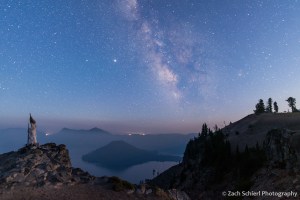
A view of the Milky Way over Crater Lake in southern Oregon. A layer of smoke from the 2020 Oregon & California wildfires is seen near the horizon.
 Zach Schierl Photography