So long to the Pacific Northwest


Hard to hike far in the Northwest without coming across spectacular unnamed cascades such as this one near Glacier, WA.
After spending the first 18 years of my life in Arizona, moving to the Pacific Northwest for college was a bit of a change for me climatically. Even living on the “dry” eastern side of Washington, I couldn’t believe how the clouds could so easily stick around for weeks on end. Relocating to one of the cloudiest cities in the country two years ago was even more of an adjustment. Somehow I had gone from 300 days of sun to 300 days of clouds in just four short years (but also from 0.85 to 3.60 breweries per 100,000 people so there’s that…). Now, after six years in the Pacific Northwest (punctuated by a few summers on the Colorado Plateau), I’m trading the Cascades for the Rockies and moving to sunnier climes in Colorado!
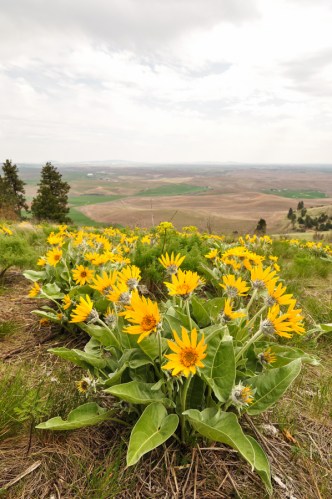
Mule’s Ears on Kamiak Butte in Eastern Washington.
The Northwest is home to some fantastically diverse and photogenic landscapes, perhaps more so than any other part of the country I’ve spent time in. In Washington alone you can find sand dunes, waterfalls, and prairies amongst the rolling hills of Eastern Washington, jagged sea cliffs and pastoral farmlands along the coast in the San Juan Islands, and glacier capped peaks and rainforests so lush you swear you’ve been transported to the Amazon in the Cascades and on the Olympic Peninsula. I figured now was a good time to share some photos that represent this amazing diversity and reflect a bit on my time in the Northwest.
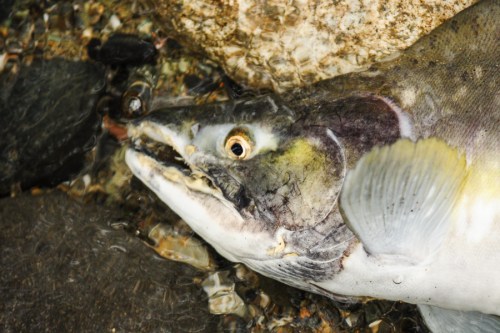
A spawning pink salmon on the South Fork of the Nooksack River takes its final breaths.
What really epitomizes the Northwest for me is the abundance of one of the most common substances in the Universe: water. Whereas in the Southwest water is hard to find, in the Northwest it is difficult to escape. Whether on the coast, in the foothills, or in the mountains, water is never far away, be it saltwater, freshwater, glacier water, or rain water. While backpacking in the Northwest, you can almost always count on coming across a stream every few miles to replenish your supplies (unless you’re hiking around and active volcano, as I unpleasantly learned a few years back), a welcome change from carrying 8 pound gallon jugs on your back. Prolonged droughts and water restrictions, a way of life for decades in the Southwest, are near unheard of in the Northwest. Large dams in the Northwest are being removed and reservoirs drained, something that would be a cardinal sin to even think about in the arid Colorado River Basin, lest we lose even a few drops of precious water. Major rivers in the Northwest actually reach the sea, rather than being sucked dry in the desert, a la the Colorado.

At the Skagit Valley Tulip Festival
It is this abundance of water in its many forms that makes the landscapes of the Pacific Northwest what they are. Case in point: here in the mountains of Colorado, we have peaks higher than any in the Cascades and temperatures just as cold (if not colder), yet the glacier score is Washington: 3101, Colorado: 141. As I write this from my computer in Western Colorado, a few small drops of rain are beginning to fall from a storm cloud overhead and my neighbors are gathering to comment on the spectacle. This phenomenon sums up the difference between the Southwest and Northwest perhaps more succinctly than any prose I could ever write.
More photos from my Northwest adventures will be forthcoming since I have a huge backlog of images waiting for me to think of something moderately interesting to write about. Aside from that, plan on becoming much more familiar with the landscapes of the Rocky Mountains in the coming years as I explore my new (and drier) home!

Sunset across the Palouse Hills outside of Pullman, WA
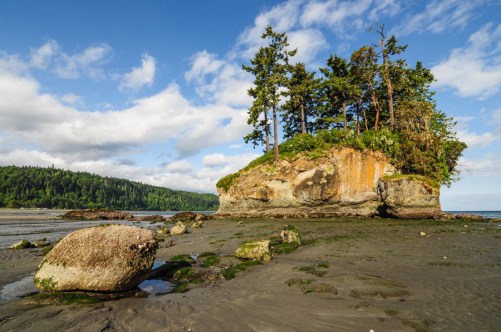
Low tide at Salt Creek Recreation Area on the Olympic Peninsula.
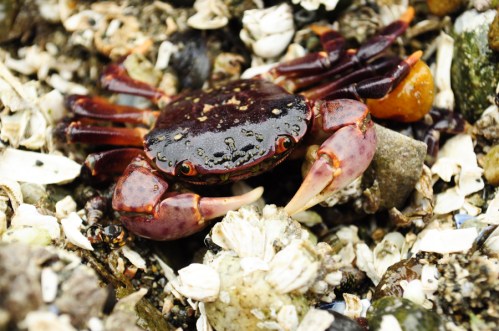
A common coastline critter in the PNW: the red rock crab.

I call this piece “Slug Climbing Stairs”

Curious goats at Hovander Park in Ferndale, WA
Top 10 Images from 2013

So this is a taaaaad late, again, but since my shameless self-promotion retrospective was somewhat popular last year, I figured it was worth making another post highlighting my favorite images from the past year, even if it is now nearly a month into the new one. In honor of 2012, I chose my 12 favorite photos. This year I’ve chosen just ten, so as not to head down a road where this post gets ever so slightly longer and more agonizing to read each year.
As was the case last year, some of these photos you may have seen already if you follow me. Including some new images wasn’t difficult though, considering that I took an average of 1478 photos per month this past year, yet averaged just 1.5 posts per month. That adds up to 17,736 photos in the past year (a 221% increase over last year!). With the end of grad school in sight, hopefully I’ll be able to share photos more frequently this coming year, but for now I now humbly present my favorite (not necessarily for technical quality) 0.05% of the photos I took in 2013:
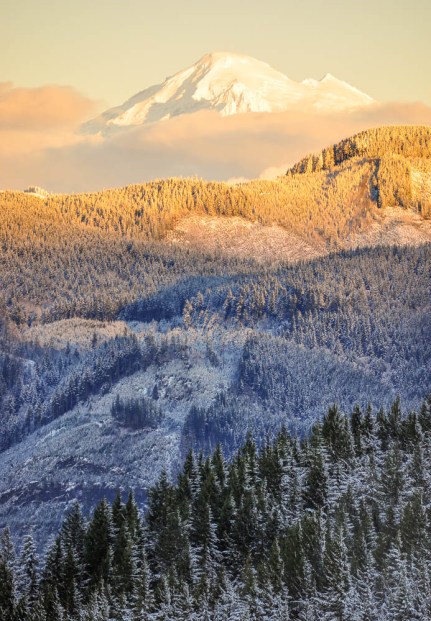
1. Mt. Baker, Washington.
One of the things I dislike about the Pacific Northwest is that there are so many damn trees everywhere that even hiking to the crest of ridges and mountains in search of an expansive view is often a futile endeavor, especially in the lowlands. Unless that is, your summit has had the pleasure of being clear-cut in the past decade or so, in which case you can see halfway to Alaska (if it’s clear…). I was surprised to find myself in one of these clearings on a January hike outside Bellingham following one of our biggest snowfalls of the year and took advantage by taking in a nice view (and some photos) of Mt. Baker and the foothills, alas one complete with more of the aforementioned clear cuts in the foreground.
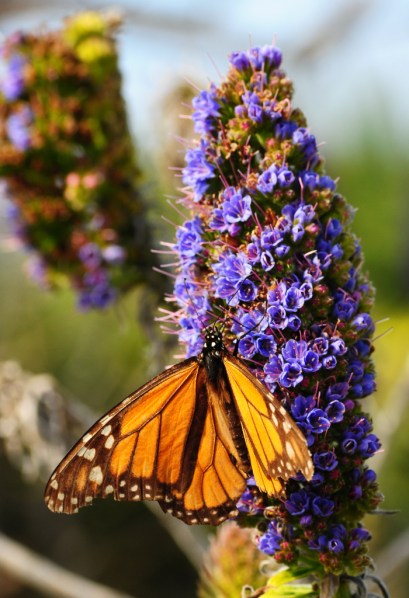
2. Monarch Butterfly, Pacific Grove, California.
The town of Pacific Grove, California loves their butterflies. Monarch butterflies specifically. So much so that an image of one can be found on every street sign. In March I visited the official Monarch Grove Sanctuary where thousands of monarchs flock to reproduce each year. While I don’t doubt this claim, on my visit I saw about a dozen butterflies, none of which where in range of my camera. I found this one downtown, along the beach, in a much more accessible location. I’m not sure what this guy is eating but it looks delicious.

3. Golden Gate Bridge Fog and Sunset, San Francisco, CA.
This was one of the few shots on this list that actually had some degree of planning behind it. I had recollections of a good vantage point of the bridge from trips to San Francisco made pre-camera toting days. Fog had been rolling in and out of San Francisco all day but it seemed to be a thin layer and I surmised that if I could get above the clouds, I might be treated to a dramatic view of the bridge’s towers poking up above the fog where they could intercept the last rays of sunlight. As you can see, that’s pretty much exactly what happened. It’s incredibly satisfying when hunches work out that perfectly. I only wish I had possessed one of these suckers so that I could have increased my exposure time and smoothed out the rapidly moving fog. If anyone is looking for a belated Christmas present or a donation, hint hint…
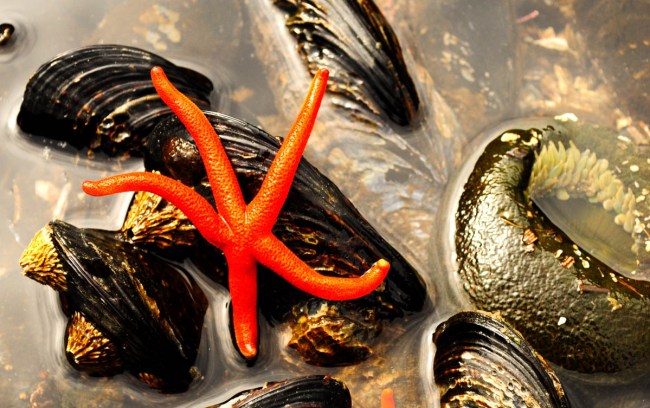
4. Blood Star, somewhere on the Olympic Peninsula, Washington.
While I like this picture enough to have a 5×7 framed on my bookshelf, it was the experience associated with it that makes it worthy of inclusion on this list. Back on Memorial Day weekend, I headed out to the Olympic Peninsula (oddly enough, not to look at sea stars but rather the Elwah River restoration project) and happened to stumble across some epic tide pools one misty morning. We’re talking sea stars comparable in size to small children, anemones and urchins the size of bowling balls, and masses of gargantuan mussels sufficient in size to keep the aforementioned sea stars fat and happy. Despite it being a holiday weekend and one of the lowest tides of the year, there were only a smattering of people wandering around the tidal zone. I spent several hours taking photos in a steady rain while balancing the need to keep my camera dry AND myself from slipping on kelp and splitting my skull open on jagged basalt. Several groups approached me during this time and asked me if I was local and how I had found about this place. After responding “Uhh, not really…” and “the Internet”, I proceeded to have a few nice conversations about the incredibly diversity of marine life in front of us. What was interesting was that each and every group urged me to keep this location a secret before continuing on their way. And given that other spectacular tide pools in Washington have suffered from over-popularity, I’m going to honor that request.
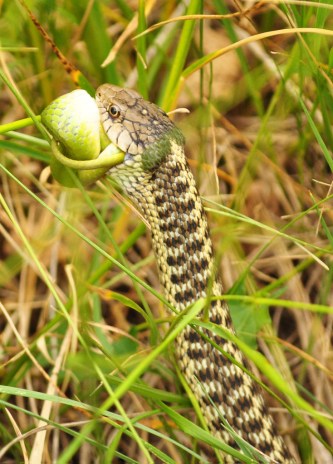
5. Snake eat Snake.
Any year in which you get to photograph wildlife eating other wildlife is a darn good year in my book, even if it is only two snakes rather than say, a mountain lion taking down a deer in full stride.
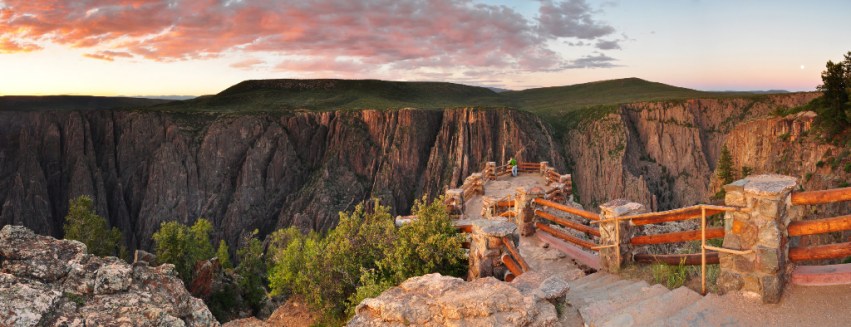
6. Sunset at Gunnison Point, Black Canyon National Park, Colorado.
If you ever want to visit a National Park in the summer and don’t want to feel like you’re at Disneyland, you’d be hard pressed to find anywhere more spectacular than Black Canyon. Think you could go to the Grand Canyon or Yosemite and have a major overlook all to yourself at sunset in mid-summer? Think again. In case you didn’t notice, lurking just above the far right horizon in this photo is the 2013 Supermoon for an added bonus.
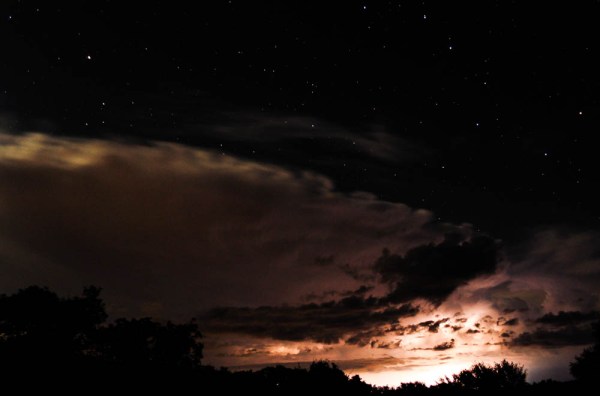
7. Lightning and the Big Dipper.
I had to include at least one night sky shot in this list (its part of my contract). Neither subject here (lightning and the Big Dipper) is particularly interesting on it’s own, but I think together they make a nice pair. I really would have loved a wider-angle lens on this one; I had to wait about an hour longer than I would have liked for the Big Dipper to rotate into the field of view of the cloud tops, and by then the best of the lightning storm was past. I also wish there was something more interesting in the foreground but achieving that would have meant leaving my front porch, something that I was very loath to do on this particular evening for obvious reasons. As nice as a intriguing foreground would have been, being alive to share this photo is even sweeter.
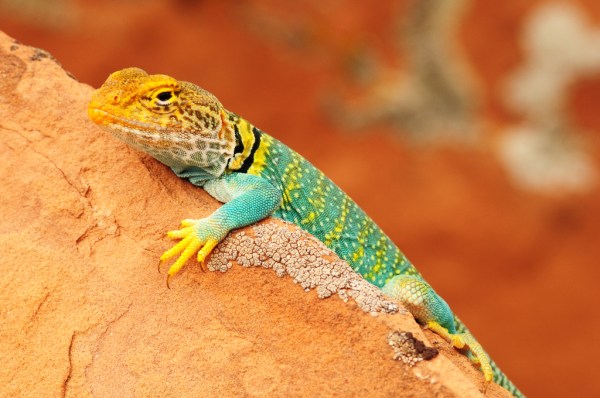
8. Collared Lizard, Dominguez Canyon, Colorado.
I’ve come across these flamboyant lizards more than a few times in the southwest. Normally they peace out as soon as you get within 10 yards or attempt to intimidate you from coming closer by launching into their patented push-up routine. This one seemed to want his picture taken though. Almost motionless for several minutes, I reeled off a couple dozen shots trying to get the focus just right.
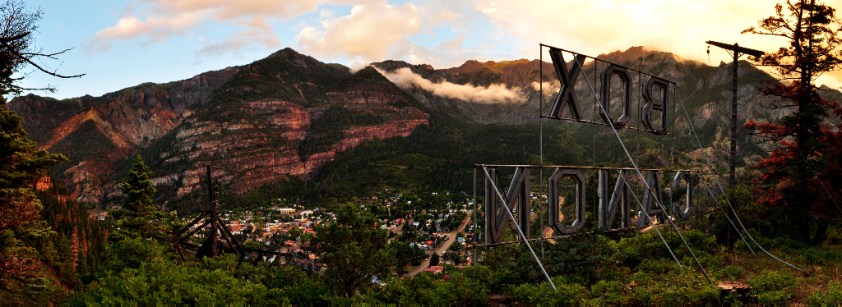
9. Sunset from the Sign, Ouray, Colorado.
Another shot that involved a fair bit of planning. Ouray, CO might be about the most picturesque town this side of the Alps. Back at the beginning of the 20th century, some yahoos thought that a big metal, light-up marquee advertising one of Colorado’s most famous natural wonders (Box Canon) would somehow be a good idea. Thankfully, the lights on this metal monstrosity have since gone dark and nowadays the sign is barely visible from town unless you know where to look. But the sign’s location on a precipice above town makes for a great sunset vantage point, especially following an intense summer thunderstorm which left some wispy clouds hanging around the amphitheater to catch the last rays of sunlight.

10. (Golden) Western Larches, North Cascades, Washington.
Since I just wrote about this trip a few months ago, I won’t say much here…other than that I hope you enjoyed these photographs, and I would love to hear your comments or criticism in the comments below! Happy (belated) New Year!
Airglow: Denizen of the Dark Sky

I’ve been an astronomy nut ever since my parents gave me a small reflecting telescope for my 10th birthday. I located Saturn, complete with its too-good-to-be-true rings, within 10 minutes of setting it up for the first time, although my parents refused to believe me until they had a look for themselves. I majored in astronomy, own a telescope that barely fits in my car, and come to think of it, every “real” job I’ve ever had has involved astronomy. NASA’s Astronomy Picture of the Day has been my homepage for longer than I can remember.
Given my disposition towards both astronomy and photography, it seems superfluous to say that I’ve always enjoyed astrophotography. Taking photographs of celestial objects presents a set of challenges not encountered by photographers who go home after the sun dips below the horizon, the majority of which revolve around the fact that most astronomical objects are rather dim, requiring long exposure times and extra equipment to capture.
Quite frequently I’ll get asked if I’ve ever seen any UFOs while gazing up at the sky. My standard response is that, while I’ve certainly seen a lot of weird *#&@ in the sky, I’ve yet to see anything that didn’t ultimately have a logical explanation, even if it took a little head-scratching to figure it out (high altitude weather balloons are the worst!).
A prime example of this occurred this past summer during a nighttime observing and photography session. I was attempting to get a 180 degree panorama of our home galaxy, the Milky Way, stretching across the summer night sky. I had my camera mounted on a tripod head that compensates for the rotation of the Earth, allowing me to take exposures several minutes in length while avoiding star trails in my images. It was dark and clear enough that I was able to get some good shots of the summer Milky Way and its complex and sinuous inky-black interstellar dust lanes, as well as some decent shots of some galaxies and nebulae through a telescope:
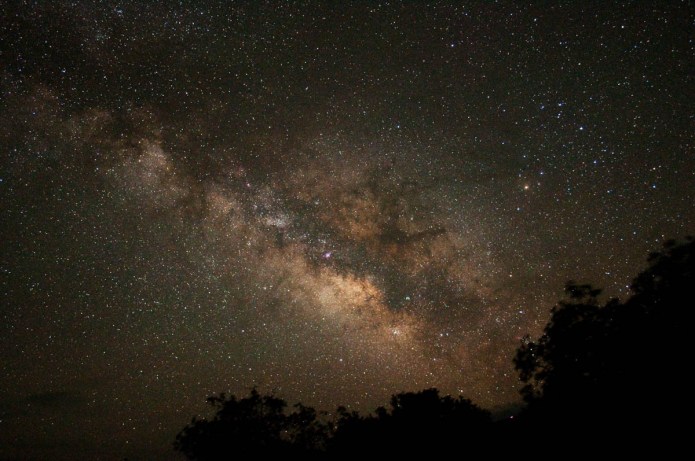 The Milky Way in the constellations of Scorpius and Sagittarius. This portion of the Milky Way is home to the nucleus of our galaxy, making the Milky Way appear brighter here than anywhere else in the sky.
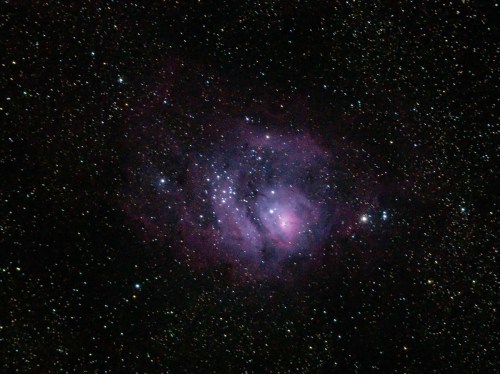 The Lagoon Nebula, also known as M8, a vast cloud of hydrogen gas giving birth to new stars. A “stellar nursery” as astronomers like to say.
While my shots of the galactic center in the southern sky were turning out well, as I began to pan my camera around to the east and then finally north, I noticed that faint but noticeable bands of diffuse red and green light were creeping into my image.
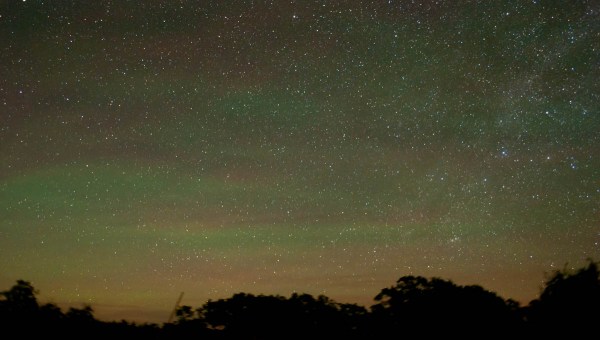
My immediate thought was sensor noise. The CCD chip on my old DSLR (a Nikon D70) had a habit of heating up during repeated long-exposures. This thermal radiation from the sensor manifested itself as a bright purple/pink haze occupying one corner of the photo, making any attempt at serious astrophotography futile. Perhaps something similar was happening here. I quickly ruled this out for a number of reasons. Most importantly, the apparition was showing itself only in photos taken towards the north, meaning that the source couldn’t be the camera, but rather something in the sky itself. The colors ruled out high clouds, and it wasn’t in the proper direction to be the result of artificial light pollution. The closest city of any significant size to the northeast was several hundred miles away.
Whatever it was, neither myself or any of my observing companions could see it with the naked eye. A bit eerie perhaps, but not at all uncommon. Many astronomical phenomenon are too faint to see without long-exposure photographs. In fact, the first time I saw the aurora borealis, I captured it with my camera several hours before it became bright enough to see with the naked eye.
A auroral display was actually my second thought. What I was seeing in my photos definitely resembled one. Red and green are the colors produced by nitrogen and oxygen, the two primary components of our atmosphere, after being excited by collisions with magnetic particles brought to Earth by the solar wind. Most auroral displays consist of some combination of these two colors and what I was photographing appeared only in the northern sky which fit the theory to a tee. Furthermore, the Sun had been especially active in the week or so prior. It was perfect except for one slight problem: I was in Colorado.
Auroras in Colorado are definitely not unheard of….but not exactly common either. One thing was certain: if an aurora HAD crept this far south, then the northern portions of the country would simultaneously be getting the show of a lifetime. A quick check of spaceweather.com, the one stop shop for up-to-the minute aurora information, showed this was not the case. Strike two.
I actually didn’t figure this one out until many days later, when I inadvertently ran across an article about some Pacific Northwest photographers who had captured something called “airglow” in some photos of the Milky Way taken at Mt. Rainier around the same time. A momentary glance at their photos and I knew I had my answer.
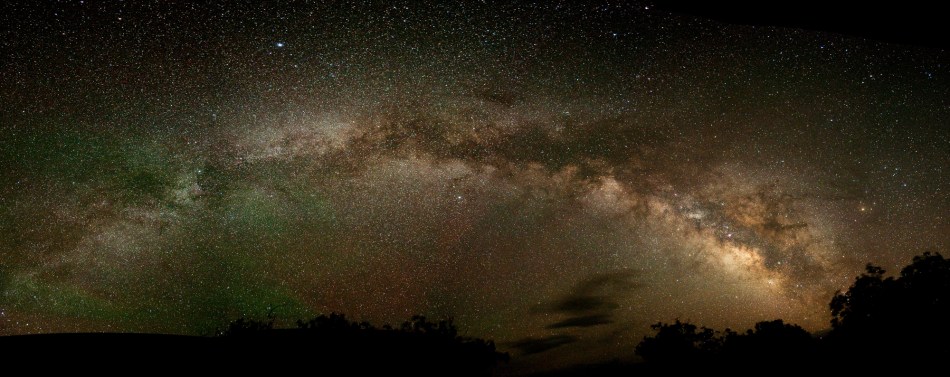
Here’s the final panorama I produced. The airglow (red and green splotches at left) was changing rapidly enough that it caused major headaches trying to stitch the images together. Consequently I didn’t quite get my 180 degree panorama, there’s a bit missing on the northern end (lower left).
Airglow is exactly what it sounds like (a rare thing in science, I know…): glowing air. Incoming solar radiation and cosmic rays ionize oxygen and nitrogen atoms in our atmosphere during the day and then then these atoms regain their electrons at night, emitting light in the process. This is similar to what happens during an aurora, except that it’s happening ALL THE TIME. Airglow is always there, it’s just really, really faint; you need to be somewhere extremely dark to have a chance of seeing it, even with a camera. Even a miniscule amount of light pollution will render it invisible. It does tend to be brighter when solar activity is high, although it is not nearly as dependent on the solar cycle as its brighter cousin, the aurora.
So what began as an unidentified and undesirable annoyance in my photos (and when trying to stitch together my panorama, boy it sure was!) turned out to be a rarely captured celestial phenomenon I had never even heard of, much less one that I had intended on photographing that evening. Next time someone asks me about UFOs, I’ll just refer them to this page.
 Zach Schierl Photography