Recently returned from a 4-day unofficial geology field trip (read: glorified sightseeing trip on which we occasionally talked about rocks) in which we managed to pretty much circumnavigate the entire South Island of New Zealand. Most of our time was spent along the west coast (the “wet side” of the island so to speak) and in Abel Tasman and Kahurangi National Parks. It rained pretty much the whole time and the humidity was so high for so long that some of the inner lens elements on my camera fogged up on day 2 and still haven’t completely dried out yet. I had a second little point and shoot camera with me but more often than not it decided that it wanted to tell me that the batteries were dead even when I had just put fresh ones in which was incensing to say the least. Ultimately, not the most productive trip photography wise but we got to see some amazing, off the beaten path places that I never would have even known existed were it not for the leadership of one of the Otago geology professors. Among the highlights were:
Oparara Basin, Kahurangi National Park:
Caves, arches, sinkholes, and tunnels were definitely the theme of the trip. We slept in them, hiked to them, hiked through them, attempted to avoid falling into them, and much much more. The Oparara Basin is home to a number of caves, many of which are infested with two lovely creatures: the Nelson cave spider (think tarantula only larger and skinnier) and the cave weta (think giant mutant cricket). Both of these fall into the category of “things you want to pretend don’t exist in the cave where you are trying to fall asleep”. However, given that the spiders hunt the weta, and that the weta emit a rather bizarre shrieking cricket-like noise when caught by the spiders, this is easier said than done. On the bright side, the cave was dry whereas there was a pretty legit thunderstorm going on outside that even ended up spawning a bunch of little tornadoes a couple hours away from us so in hindsight the cave was probably a good call.
In the morning we hiked through a torrential downpour to reach to very photogenic caves/tunnels along the Oparara River, both of which are surrounded by magnificent, dense rainforests. The larger of the two, Oparara Arch is a tunnel over 200 meters long and 50 meters high:

Oparara Arch
A few km downstream is the smaller Moria Gate Arch:

The Oparara River flowing through Moria Gate Arch
Kahurangi National Park is the second largest national park in New Zealand but one of the lest developed and most remote. There are no paved roads within the park and we didn’t see another soul during our entire time here.
Harwood’s Hole:
Another limestone sinkhole, Harwood’s Hole is no run-of-the-mill sinkhole; it’s nearly 1200 feet deep but only 150 feet wide. Standing on the edge, you can’t even begin to comprehend how large it is because even from a ledge halfway down, you can’t even see the bottom. Sadly we did not possess the equipment necessary to descend into New Zealand’s deepest cave (no one did until the late 1950’s…) so we were forced to settle for this view from the rim:
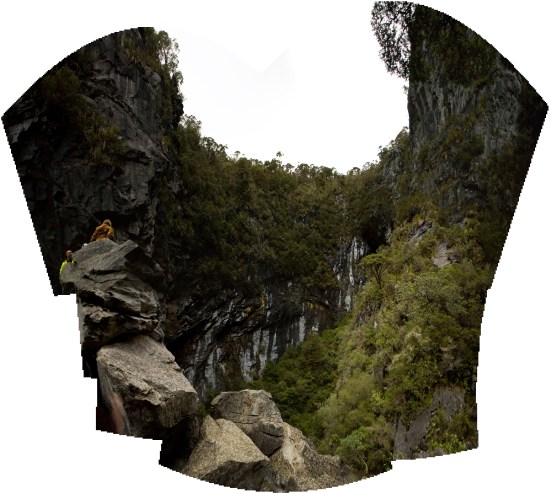
10 frame composite image of Harwood's Hole
Wharariki Beach:
Wharariki Beach is the most northern beach on the South Island that is open to the public and not closed off as a bird sanctuary. It’s definitely one of the coolest beaches I’ve seen, with tons of caves, arches, and sea stacks along the coast and an impressive sea of sand dunes just inland.

Wharariki Beach and Dunes

Saltation in action!
On the day we visited it happened to be rather windy and when I say rather I mean you could lean your body back at a 45 degree angle into the wind and be completely supported. There were times when the wind was so strong that you literally could not move forward if you were walking into the wind. The seals didn’t seem to mind though: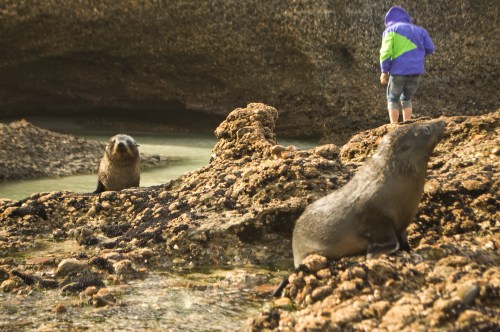




 Zach Schierl Photography