Europe Part 2: The Julian Alps

From the beginning, Slovenia was one of the destinations that drew us to eastern Europe, specifically the Julian Alps in the western corner of the tiny country. Just south of the Austrian border, the Julian Alps are an eastern extension of the famous European mountain range that, while still well-visited, are more off-the-beaten path than the Swiss or Italian Alps.
After our stopover in London, we hopped a British Airways flight to the capital of Slovenia, Ljubljana (pronounced “lube-lee-ah-nah“). After sitting on the tarmac in London for awhile, we arrived just in time to pick up our only rental car of the trip, which we had reserved to facilitate a driving loop through the mountains in areas where public transportation was lacking. We were pretty tired and jet-lagged after several full days of travel, so it was probably good that: 1, Slovenians drive on the right and 2, that our first destination was only a 30 minute drive from the airport. As is par for the course with us, the “low tire pressure” indicator on our rental car illuminated less than 10 minutes into our late-night drive through the Slovenian countryside to Lake Bled, where we would be staying for the next three nights. A visual inspection revealed a tire that looked perfectly normal, so we pushed onward. (The light stayed illuminated for all five days that we had the car, but none of the tires were visibly flat so we rolled with it, literally and figuratively.)
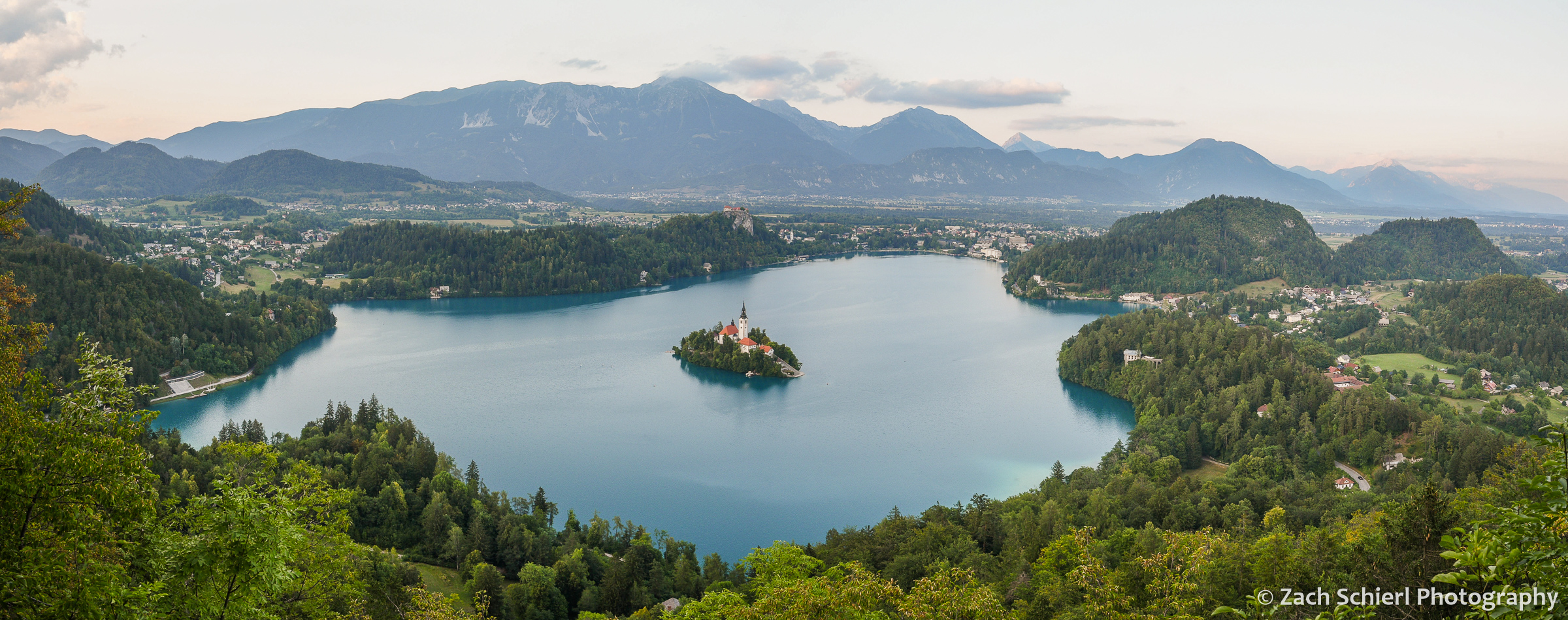
With nearly all of the Balkans to choose from, Josip Broz Tito, the president/dictator of the former Yugoslavia (which Slovenia was part of until 1991) chose Lake Bled as the location for his summer villa. It wasn’t hard to see why. Lake Bled was extremely beautiful and scenic, with deep blue water, a tiny island complete with picturesque church right in the middle, and a fairy tale castle perched on a cliff above the lake. The town of Bled, on the east shore of the lake, was quite busy, and overall the vibe reminded us of mountain towns like Aspen or Leavenworth (minus the castle). In what would be a theme of the entire trip, we encountered very few American tourists, but lots of English spoken, given that it serves as the default tongue for Europeans unfamiliar with each others’ languages.
Temperatures were toasty, in the high 80s to mid 90s, and the air was humid (by western US standards at least), so we spent as much time near or in the water as possible. We spent some time on the local swimming beach, and took a boat ride out to the island in the middle of the lake on a traditional wooden pletna rowboat:


Lake Bled sits at the foot of the Julian Alps and, despite the muggy conditions, we were determined to experience some of the fantastic hiking trails in the area. Our first hike took us on a short loop through the Pokljuka Gorge, a dry slot canyon carved into the ubiquitous limestone of the Julian Alps at the end of the last ice age. Exiting the slot canyon involved traversing a rickety little pathway bolted to the side of a cliff that I could have done without. The scenery was gorgeous though, and we encountered only a few others groups despite the proximity of the trailhead to bustling Bled.

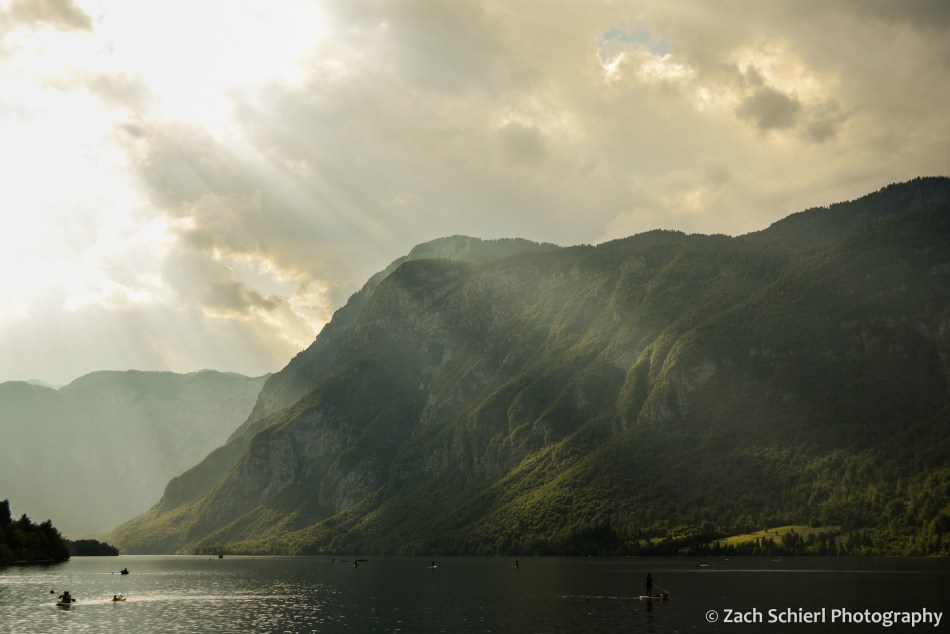
About 30 minutes up into the mountains from Lake Bled is the larger Lake Bohinj. We were under the impression that Bohinj was a quieter, less visited lake (one guidebook described it as “sleepy”), but the scene was just as nuts, if not more so, than Lake Bled. Despite some trouble finding parking, we ended up having a lovely swim in Lake Bohinj in the late afternoon. Neither Bled nor Bohinj allow motorized boats, which, despite the crowds, made both of them seem very tranquil and peaceful, in contrast to many similarly-sized lakes here in the US.
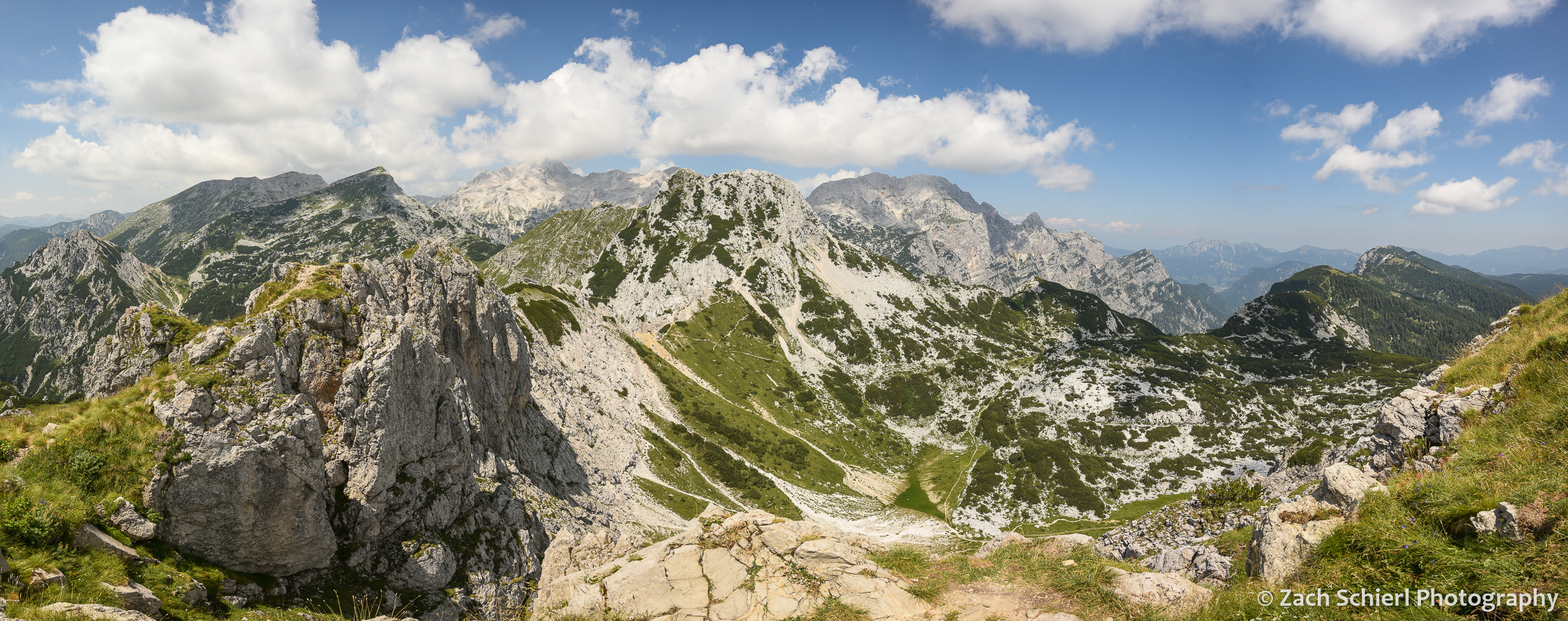
Later that evening, we rushed (literally) up to a spectacular overlook of Lake Bled from Mala Osojnica just in time for sunset (see photo at top of page). On our final morning in Bled, we drove about 30 minutes up into the mountains to hike Viševnik, a 2000 meter peak with amazing views of Triglav, the highest point in Slovenia. While only a few miles long, the trail shot straight up the side of the mountain, first along the margins of some ski slopes, then up a rocky chute, and then finally across broad grassy slopes with commanding views back toward Bled. We lost a few buckets of sweat, but the views of the sharp peaks hewn from bright white limestone were sublime. Thanks to a good map and well-signed trails, we were able to improvise a loop that took us on a more gradual descent back to the trailhead.
After a few days in Bled, we made the drive across the Julian Alps to the Soča River Valley via Vršič Pass. The gnarly road over the pass was built by Russian POWs during World War I to supply Austro–Hungarian troops on the front lines just over the pass. The road is narrow and steep, with 50 hairpin curves. We made a number of stops en route to admire the jagged peaks of the Alps and to let the engine (on the way up) and the brakes (on the way down) cool down a bit! On the downhill side of the pass, the road follows the beautiful Soča River Valley. As serene as the turquoise green river is today, this valley was home to some of the most intense fighting of WWI. Hundreds of thousands of Italian and Austro-Hungarian soldiers lost their lives in this valley and the surrounding mountains.

A few miles down the valley was the town of Bovec, our base for the next few nights. Bovec is known for being the adventure sports capital of Slovenia, with all manner of activities from rock climbing to canyoneering to whitewater rafting to zip lining to God knows what else. We did not partake (though our travel insurance policy did cover such activities!) in anything more adventurous than hiking however. Still somewhat jet-lagged and tired from our climb of Viševnik, we were fortunate that the prime hiking trail here was the relatively level Soča River Trail, a 20 km-long path that extends from the headwaters of the Soča all the way to Bovec. We hiked some of the more spectacular sections, including the portions along the Great and Small Soča River Gorges, where the river has carved a narrow slot into the limestone.

Just a little downstream from Bovec is the village of Kobarid, which figures prominently in Ernest Hemingway’s A Farewell to Arms, a novel based on his experiences as an ambulance driver on the Soča River front during WWI. (The area was part of Italy at the time; Kobarid is known as “Caporetto” in Italian.) Kobarid had a great little museum detailing the story of the WWI in the Soča River Valley. On a hill above town is an imposing mausoleum memorializing the thousands of Italian soldiers who died in the area over the course of the war.

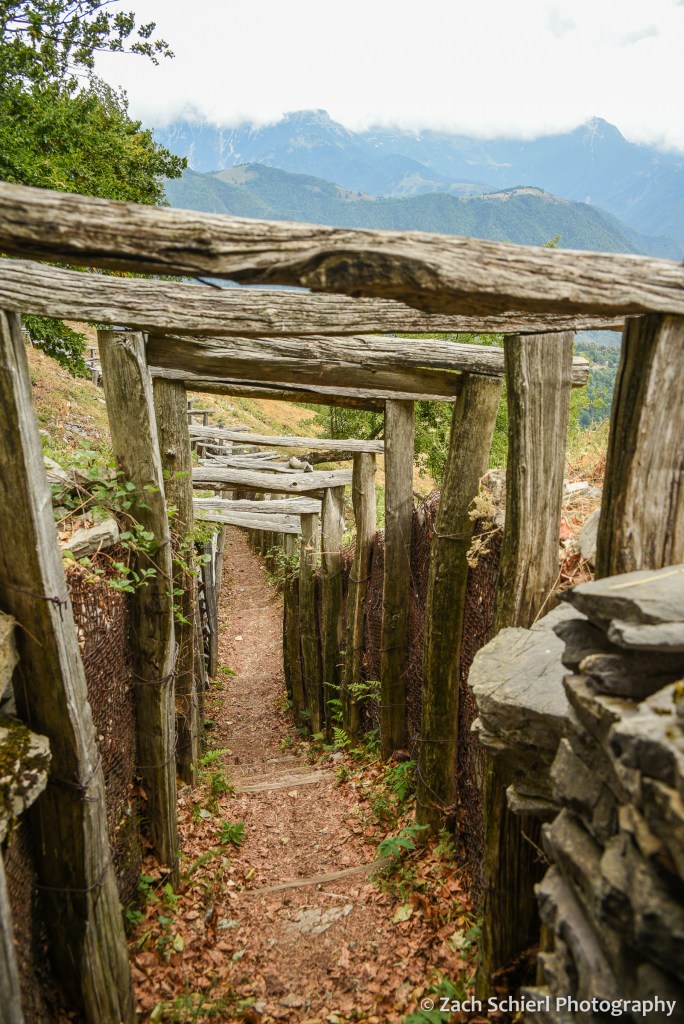
After five exciting days in the Julian Alps, it was time to head back to Ljubljana and return our rental car. En route, we detoured to a small outdoor museum on the border with Italy where you can walk through the remains of WWI trenches, bunkers, and tunnels on a high ridge overlooking the Soča River Valley. It was truly mind-boggling to imagine a massive war being fought in such rugged terrain, especially after seeing photos of the snowpack that accumulates in the winter.
Next up: a journey though three European capitals: Ljubljana, Zagreb, and Sarajevo!
Four Years in the Making: A European Adventure


Almost four years ago, my wife and I started to plan a trip through Europe that we intended to take in the summer of 2019. My term job with the National Park Service was coming to an end, and we were staring at a summer of unemployment anyways, so it seemed like a good time to go on the sort of extended trip we had long desired. I ended up getting a new job sooner than expected, so after a quick 2-week trip to Alaska, we spent the summer visiting family and then schlepping our belongings back to Washington instead. Given that our new jobs included the prospect of time off in the summer, we figured we’d just go the following year. The following summer, of course, turned out to be the summer of 2020, when travel to most countries wasn’t just a bad idea, but actually impossible due to COVID border restrictions. Summer 2021 wasn’t much better.
After biding our time watching travel videos on YouTube for the past several years, sometime this past winter we decided to give it a go in summer 2022. To be honest, for most of this past spring I was skeptical it would actually happen. Even after we booked plane tickets in February, between the ever-evolving COVID-situation, news story after news story about travel chaos in European airports, and a horrible war breaking out just a few countries away from our intended destination, it seemed like it would take a minor miracle to pull off this trip successfully.
In the end though, we completed a fabulous four-week trip through five eastern European countries (Slovenia, Croatia, Bosnia & Herzegovina, Montenegro, and Albania) and the worst thing that happened was a bout of food poisoning in Albania. We didn’t get stranded anywhere, no flights got cancelled, no one got COVID…heck, even the food poisoning happened on the just-in-case “cushion day” we had built into the end of our trip. Everything went as according to plan as we could have hoped for, and for that we are very thankful. It was so exciting to finally make this trip happen!
I’m planning to share photos and insights from our travels in a series of posts over the coming weeks (months? years? who knows…). It was a blast to photograph a natural and cultural environment so different from that of the American West. I anguished over what photo equipment to pack in advance. Our goal was to pack light and my normal kit is…well…not so light. For the last several years I’ve taken most of my photos with a Nikon 24-70 mm f/2.8 zoom lens. It is incredibly versatile, sharp, and excellent in low light, but weighing in at over 2 pounds, I knew it wouldn’t be fun to lug around the streets and trails of Europe for a month.
After much deliberation, I ended up buying a used Nikon 28-200 mm lens off eBay as my primary lens for the trip. While it was a noticeable step-down in quality from the 24-70 mm, it performed adequately in the daytime and replaced nearly the entire focal range of what, for me, is normally four pounds of lens…all in just 12 ounces! I also brought two small, lightweight prime lenses, a 20mm f/1.8 and a 50mm f/1.8, for times when I needed better low-light performance or just better all-around image quality. I was pretty happy with how things turned out. In hindsight, the only thing I might have done differently was bring along a small lightweight tripod.
We utilized almost every possible form of transportation on this trip: plane, train, car, taxi, bus, tram, ferry, kayak, cable car, bike…and LOTS of walking! To get to Europe we flew from Seattle to Calgary to London to Ljubljana, the capitol of Slovenia. We gave ourselves a full 24 hour layover in London in case of flight delays. Fortunately, we arrived right on schedule and had a fun day exploring London. While I had flown through London-Heathrow on a previous trip to Italy, this was the first time I had left the airport in the UK. London was fun, though extremely crowded and a little overwhelming. We basically just walked around for 24 hours in a jet-lagged state. The highlight for me was finding a hole-in-the-wall craft brewery on the south side of the Thames where I got to enjoy a few authentic British cask ales. It was a rather drab and gray (ahem, “grey”) day (we missed the record-breaking heatwave by 24 hours) so not the best environment for photos, but I did get a few nice shots of Tower Bridge in the evening as we meandered back to our hotel:

After our one night stopover in London, it was on to Slovenia and the Julian Alps!
 Zach Schierl Photography